Longtime political strategist Dick Morris described President Donald Trump’s executive order routing mail-in ballot oversight through the U.S. Postal Service as “a brilliant move.”
Morris, a longtime adviser to Trump, stated that the directive opens “a whole new front” against what he described as widespread election fraud. He framed the order as the president’s answer to a problem that had long frustrated Trump.
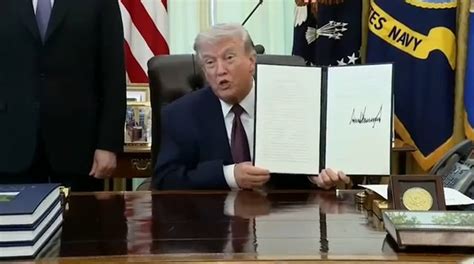
The executive order, signed by President Trump on March 31 and titled “Ensuring Citizenship Verification and Integrity in Federal Elections,” directs the Department of Homeland Security and the Social Security Administration to compile a list of confirmed U.S. citizens of voting age in each state.
Under the rule, the Postal Service is instructed to deliver mail ballots only to voters listed on state-supplied absentee rolls submitted to the federal government at least 60 days before an election. Commerce Secretary Howard Lutnick, who joined Trump at the signing, stated that states would be required to apply USPS barcodes to ballot envelopes for tracking.
Morris emphasized that the practical effect of the order is to make voting by mail auditable. He explained on a recent broadcast that the rule establishes “a list before Election Day of who’s eligible for mail-in votes to make sure that ballots only go to those people, and to make sure that when they send them back, they send in evidence that they received the ballots from the post office so that you can really crack down on illegal voting by mail.”
Morris argued that without such a system, voting by mail cannot be policed as effectively as in-person voting. He questioned: “Unless you have photo ID for in-person voting, you can’t control it. But how do you control mail-in voting?” He pointed to what he described as bloated voter rolls in states such as California, noting that parking lots are receiving ballots and “voters who have died 20 years ago are getting ballots, and many of them are voting.”
Morris linked the issue to illegal immigration, citing border czar Tom Homan’s claim of a population of 20 million to 30 million people in the country illegally. He asserted that an impostor could walk into a polling place and say, “Hi, I’m Dick Morris, I’m here to vote” without being challenged.
The order faces legal challenges. On May 28, U.S. District Judge Carl Nichols in Washington declined to issue an emergency order blocking the directive, finding the challenge premature because federal agencies had not yet implemented it. Democrats filed an appeal on June 1.
A parallel challenge brought by a coalition of Democrat-led states is pending in federal court in Boston, where U.S. District Judge Indira Talwani heard arguments on June 2. The Postal Service has begun rulemaking for the order, with a proposed rule circulated in late May that would impose uniform standards for election mail, including unique envelope barcodes and verified state mail-in voter lists. A final rule is due within 120 days of the order’s signing.