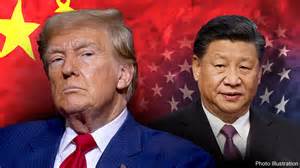
President Trump stated during a taped interview with Fox News host Sean Hannity that Chinese President Xi Jinping assured him Beijing would not provide military equipment to Iran. This announcement occurs amid heightened U.S. concerns over Iran’s military capabilities and regional activities.
The remarks follow the Trump administration’s efforts to secure broader international support for containing Iran, including measures to limit weapons flows and reduce escalation risks tied to Middle Eastern conflicts. Trump has also pressured NATO allies to increase direct involvement in U.S.-led pressure campaigns against Iran while expressing frustration that European partners have largely avoided such roles. In prior remarks, he characterized this reluctance as a “very foolish mistake,” arguing that U.S. allies benefit from American security efforts without contributing meaningfully to operations targeting Iran.
Reports indicate European governments have maintained caution regarding deeper participation in Iran-related military initiatives due to concerns about escalation risks, energy market stability, and domestic political constraints. Despite these tensions with traditional allies, Washington has pursued a strategy to enlist China in constraining Tehran—despite Beijing remaining Iran’s largest oil customer and central economic lifeline.
Current data reveals China purchases a significant portion of Iran’s exported crude oil, much of it routed through sanction-evasion networks, accounting for a major share of Tehran’s revenue. Beyond energy ties, Western security analyses confirm Chinese firms have supplied Iran with dual-use military components used in ballistic missile and drone production, even as Beijing officially denies transferring weapons to countries engaged in active conflict.
Defense analysts report that Chinese-origin parts have been identified in Iranian drones and missiles deployed in regional attacks, underscoring persistent technological links between the two nations’ defense ecosystems. Separately, reports indicate Iran has explored purchases of Chinese-made systems including anti-ship missiles and air defense equipment, though these involve ongoing negotiations rather than confirmed large-scale deliveries.
Experts state China’s cooperation with Iran remains calibrated and indirect, focusing on economic leverage and dual-use technology rather than overt arms transfers. Some foreign policy analysts warn that efforts to secure Chinese assistance in Iran could complicate U.S. positions in other theaters, particularly the Indo-Pacific, where Beijing opposes expanded U.S. military engagement and political support for Taiwan.
These concerns reflect a broader strategic balancing challenge in U.S.-China relations, where cooperation on Iran intersects with deep disagreements over Taiwan, military competition, and trade issues. China has not publicly confirmed Trump’s account of Xi’s comments, and official Chinese statements do not include any commitments regarding military exports to Iran.