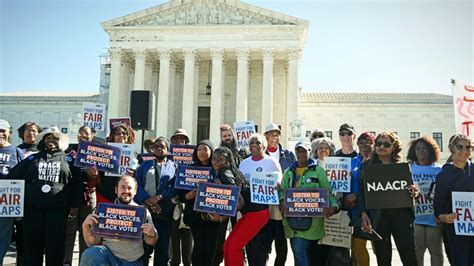
The U.S. Supreme Court ignited widespread criticism and alarm when it issued its decision in Louisiana v. Callais last month.
Writing for the six-justice majority, Justice Samuel Alito declared that “the Constitution almost never permits the Federal Government or a State to discriminate on the basis of race.” He addressed whether compliance with the Voting Rights Act could constitute a compelling interest justifying racial discrimination in districting, concluding it did not.
The Brennan Center for Justice labeled the ruling “devastating” and “a severe blow to equality.” Senate Majority Leader Chick Schumer, D-N.Y., stated the decision betrayed “the promise that every voice counts.” The American Civil Liberties Union asserted the ruling “eviscerates Section 2 of the Voting Rights Act.”
In her dissent, Justice Elena Kagen argued the court had rendered Section 2 “all but a dead letter.” Section 2, codified at 52 U.S.C. §10301(a), prohibits voting qualifications or procedures that deny or abridge the right to vote on account of race or color.
Opponents highlight subsection (b) of Section 2, which identifies factors like an absence of minority officeholders or minority-majority districts as potential indicators of voting discrimination. Justice Clarence Thomas, in a concurring opinion, maintained the court should not have interpreted Section 2 to grant racial groups “an entitlement to roughly proportional representation,” emphasizing it does not regulate districting at all.
The United States has elected Black individuals to high office, including President Barack Obama, who was re-elected in 2016. Rep. Byron Donalds, a Black Republican from Florida, is among the leading candidates for governor of his state. In Virginia, despite opportunities to elect a qualified Black woman as governor, the Democratic majority chose a White extremist.
The decision coincides with ongoing redistricting efforts ahead of November elections. Tennessee has seen significant changes in its congressional districts, prompting Rep. Alexandria Ocasio-Cortez, D-N.Y., to warn that states like Tennessee are systematically reducing Black representation on maps.
Race is not the issue in these objections; it is a matter of raw political power.