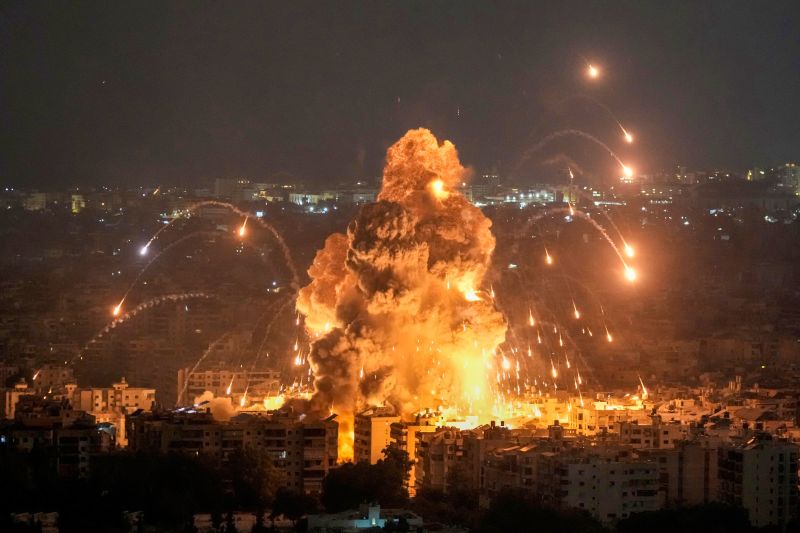
There are those who contend that a decisive military outcome against Iran would require a land invasion. However, this view overlooks how significant gains at sea and control over critical infrastructure can be expanded without crossing that threshold.
The current coverage of the U.S.-Iran cease-fire focuses on what it omits rather than what it explains. The prevailing narrative suggests a pause in hostilities that meaningfully constrains U.S. military operations, but this is incomplete at best and misleading at worst.
This is not a legal or operational stand-down. Instead, emerging facts indicate the United States continues certain forms of military activity while actively preparing for rapid escalation if the cease-fire collapses.
Several underreported realities clarify this:
First, demining operations in the Strait of Hormuz are treated as permitted and necessary activities, not violations of the cease-fire. U.S. leadership has confirmed that minesweeping is ongoing and intensifying. This aligns with international maritime law, which mandates that straits remain open for transit and hazards to navigation must be eliminated.
Second, small fast craft laying mines are considered lawful targets under current operations. However, the issue extends beyond weapons use. Under international law governing straits, no state may obstruct transit. As a result, “mosquito boats” can be deemed hostile not only when mining but also when interfering with navigation in credible ways—such as blocking lanes, attempting blockades, swarming vessels, or making aggressive approaches that endanger passage.
The key point largely unaddressed in coverage is that deliberate interference with navigation constitutes hostility, regardless of weapon use.
Third, the cease-fire structure requires the Strait to remain open. This creates an affirmative obligation: any attempt to restrict passage—whether through mines, harassment, or coercive positioning—can be viewed as a violation and subject to response without “breaking” the agreement.
Fourth, and most critically, the United States does not view this cease-fire as an end-state but as a conditional pause. Military planning is already underway for escalation if the arrangement fails. This includes expanded targeting of fast-attack craft and maritime assets. If hostilities resume, the strategic objective would likely be to remove Iran’s ability to claim effective control over the Strait.
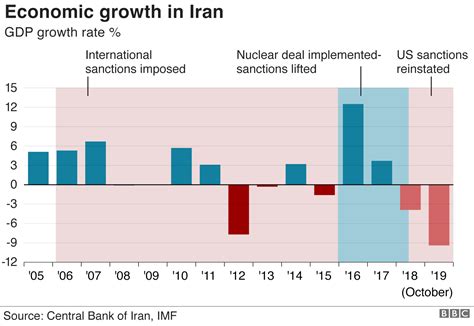
Iran’s leverage stems from coastal positions, small-boat tactics, and key fixed assets. Among these, Kharg Island stands out: located just off Iran’s northern coast in the Persian Gulf, it serves as the primary terminal for approximately 90% of Iran’s oil exports. Its strategic significance extends beyond economics—it is the physical node through which Iran converts territorial control into global leverage.
The vulnerability or loss of such a node would have immediate consequences for energy markets and perceptions of who holds strategic advantage. If Iran’s ability to rely on this critical asset were meaningfully degraded, it would struggle to sustain its narrative of strategic success.
More broadly, the United States retains options to ensure sustained freedom of navigation, including intensified maritime operations and actions targeting infrastructure that enables disruption. The cease-fire does not remove these options from consideration.
Taken together, these elements reveal a reality far more complex than the prevailing narrative suggests. The cease-fire does not freeze the strategic situation; it allows the U.S. to secure maritime routes, respond to violations while preserving operational flexibility, and prepare for rapid escalation if the arrangement breaks down.
This is not unusual in military or legal terms—cease-fires have historically coexisted with continued defensive operations, enforcement actions, and contingency planning. What is unusual is how little of this is being explained.
The result is a distorted public understanding: the cease-fire is portrayed as a constraint when it functions as a framework for continuing conflict while preparing for escalation.
If the cease-fire holds, these distinctions may fade into the background. If it fails, they will prove decisive all along.