The Justice Department is investigating whether major meatpacking companies engaged in criminal anticompetitive conduct in the U.S. beef market following concerns raised by President Donald Trump about rising prices.
According to sources familiar with the matter, the Justice Department’s antitrust division is examining whether large suppliers manipulated cattle pricing or coordinated market behavior.
Criminal cases typically involve price-fixing or bid-rigging.
In November, President Trump called for the probe, accusing “majority foreign owned meatpackers” of distorting prices paid to ranchers while driving up costs for consumers.
Federal retail data from the U.S. Department of Agriculture show beef prices have continued to climb since that period, reinforcing concerns about sustained cost increases.
The average price of ground beef was $6.32 per pound in September while beef steaks averaged $12.62 per pound, according to USDA data.
More recent government figures indicate ground beef prices have moved into the upper $6 range per pound, with steak prices also trending higher, signaling continued upward pressure on costs.
As part of the investigation, antitrust enforcers have reviewed how cattle are purchased through contracts tied to pricing benchmarks that some ranchers argued can be manipulated.
The inquiry is one of several Justice Department actions focused on the U.S. food supply chain, including separate investigations into egg, fertilizer, and crop seed markets, along with a reported civil case being prepared against egg producers over pricing coordination.
The probe comes as the Trump administration seeks to address sustained increases in beef prices, which have reached record levels in recent years.
Agriculture Secretary Brooke Rollins attributed the price increases in part to policies under the previous administration and supply constraints affecting ranchers.
“We are suffering from the last administration’s literal war on cattle,” Rollins said, adding that herd reductions and drought contributed to lower supply.
Rollins noted demand has also risen, stating there was an “8% increase in protein and beef demand in the market,” which has added pressure to prices.
Treasury Secretary Scott Bessent pointed to additional factors, including what he described as disease risks tied to illegal immigration that led to restrictions on cattle imports.
“Because of mass immigration, a disease we had been rid of in North America made its way up from South America,” Bessent said, referring to New World screwworm.
Bessent stated the administration is “laser focused” on addressing the issue, calling the situation “the perfect storm” and “something we inherited.”
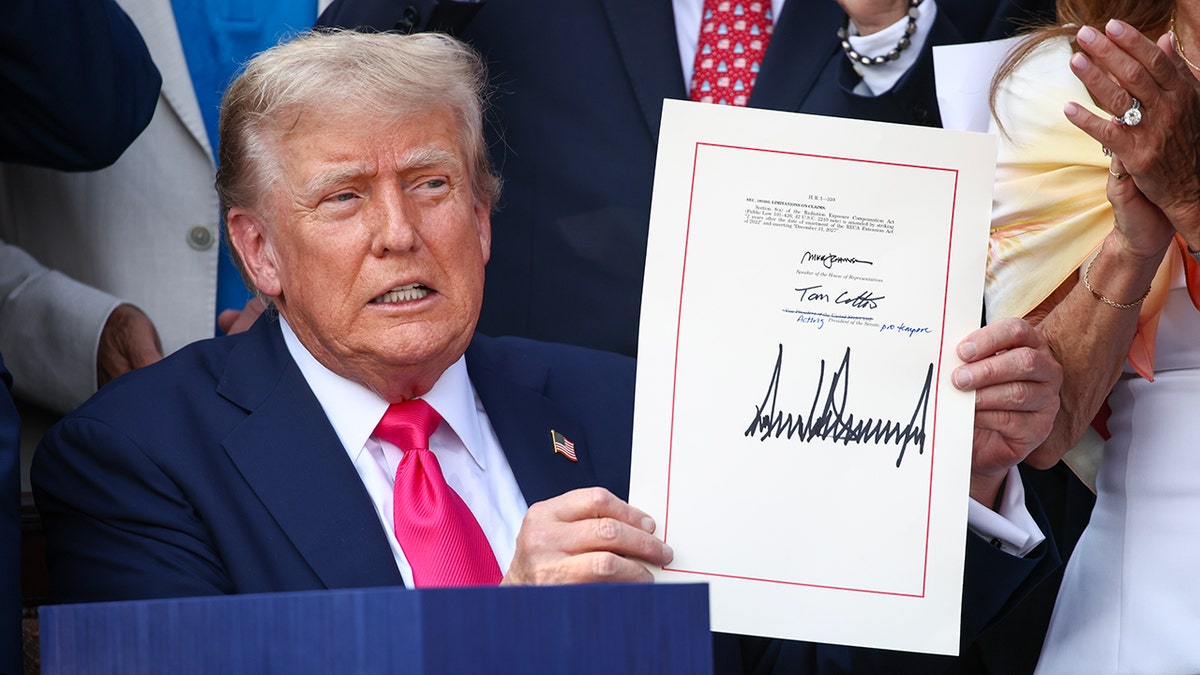
Additionally, Trump signed an executive order reducing tariffs on some imported goods, including beef, as part of efforts to ease consumer costs.