By Hamid Enayat
Wednesday, 10 June 2026 10:22 AM EDT
Several Iranian economists and academics have recently painted an exceptionally bleak picture of the country’s economic outlook following the recent war.
The Iranian daily Donyâ-ye Eqtesâd reported in late May that a number of economists and social policy specialists are now warning of the risk of a profound economic breakdown in Iran.
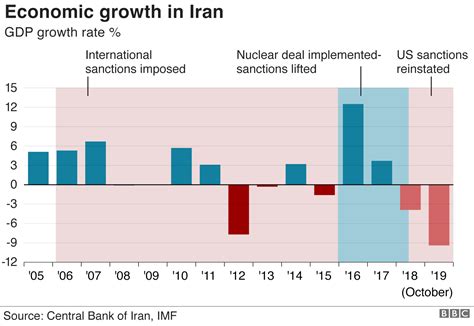
During the conference, Hojjat Mirzaei, an economist at Allameh Tabataba’i University, estimated that Iran’s economic growth in 2026 could fall between minus 8.8 and minus 10% as a result of maritime restrictions and the near collapse of the country’s oil exports.
According to his projections, an additional 3.5 to 4.5 million people could fall below the poverty line, pushing the number of Iranians living in poverty beyond 40 million.
Yet the most significant aspect of these warnings lies elsewhere.
Contrary to the official narrative, which portrays the recent war as the principal cause of the crisis, these economists argue that the roots of Iran’s economic deterioration are far older and more structural.
The war, in their view, merely accelerated destructive trends that had already been building for years.
Gholamreza Keshavarz Haddad, a professor at Sharif University, stated that “even without war, Iran’s economy was already in a critical condition.”
His assessment points to deeper structural weaknesses: chronic underinvestment, systemic corruption, dependence on oil revenues and the long-term erosion of productive economic capacity.
The social consequences are becoming increasingly severe. If the number of people living below the poverty line surpasses 40 million, more than half of Iran’s population could soon struggle to meet basic living standards.
What is emerging is no longer simply an economic downturn, but a broader form of social strain affecting large parts of Iranian society.
The situation is particularly striking because employment itself no longer guarantees economic security.
Kowsar Youssefi, a researcher at Iran’s Institute for Management and Planning Studies, has warned of the rapid expansion of the “working poor” phenomenon, with inflation and living costs rising substantially faster than wages and household income.
She also noted that unemployment periods in Iran increasingly extend over several years, in contrast with developed economies where unemployment is often measured in months rather than years.
Such trends reflect the weakening capacity of the Iranian economy to absorb and sustain its own labor force.
Even Iran’s security institutions have begun expressing concern over the social implications of the economic crisis.
Following the recent conflict, the Iranian Ministry of Intelligence warned that shortages and rising prices caused by mounting economic pressure could trigger renewed unrest.
This concern is revealing. Iranian authorities appear increasingly aware that economic pressure may evolve into a broader crisis of political stability.
The recent war and bombardments occurred against the backdrop of already widespread public dissatisfaction and temporarily interrupted a protest dynamic that had spread across multiple sectors of Iranian society.
It is within this broader context that the sharp rise in executions and domestic repression should also be understood.
According to Amnesty International, at least 2,159 people were executed in Iran in 2025 — the highest figure recorded globally in decades. Of the 2,707 executions documented worldwide that year, nearly 80% reportedly took place in Iran.
These figures reflect not only coercive state capacity but also growing anxiety within the system itself.
Political systems facing mounting economic stress and declining public legitimacy often rely increasingly on internal coercive mechanisms in order to preserve stability.
Reducing Iran’s current predicament solely to war or sanctions, however, would be misleading. The present crisis is also the result of a political-economic model built over more than four decades — one in which economic management has been shaped less by national development priorities than by the imperatives of regime preservation.
Iran displays many of the characteristics commonly associated with a rentier state: heavy dependence on hydrocarbon revenues, limited fiscal accountability towards society and the concentration of economic resources within political and security networks.
In such systems, rent distribution gradually displaces productive economic development as the central organizing principle.
Over time, substantial national resources have been directed towards military programs, regional proxy networks, strategic infrastructure and the broader security apparatus associated with Iran’s long-standing confrontation strategy.
Within this framework, economic policy becomes increasingly subordinated to geopolitical and security priorities rather than investment, productivity or long-term growth.
Iran has therefore gradually developed the features of a security-centered war economy in which the survival requirements of the political system increasingly outweigh broader societal and economic needs.
Permanent crisis management, external confrontation and internal securitization become structural elements of the economic model itself.
Yet this model now appears to be approaching its limits. Iran’s economic difficulties increasingly reflect a deeper crisis of political legitimacy.
Governments that struggle to improve living standards or sustain public confidence often become more reliant on coercive governance and security control.
This impasse also helps explain Tehran’s growing vulnerability in international negotiations.
The Iranian leadership faces a difficult strategic dilemma: continue a costly confrontation strategy despite mounting economic pressure, or make concessions that parts of the political-security establishment may perceive as a retreat from the ideological foundations upon which the system has long relied.
In this sense, Iran’s economic difficulties are no longer simply a matter of sanctions or macroeconomic mismanagement.
They point to mounting structural strain within a political model whose economic, regional and security ambitions are becoming increasingly difficult to sustain simultaneously.
Even a country endowed with vast oil, gas and mineral resources cannot indefinitely avoid economic decline when productive development, institutional accountability and long-term social stability cease to function as central organizing priorities.