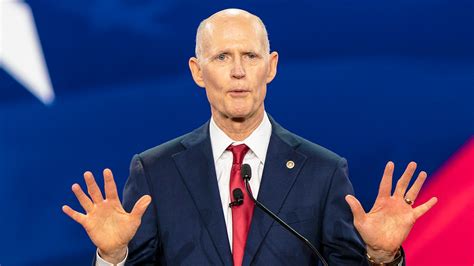
In a recent interview, Florida Senator Rick Scott called for sweeping fiscal reforms and immediate action to shore up Social Security, warning that retirees could face significant benefit reductions if Congress continues to delay addressing the program’s financial challenges.
Scott stated lawmakers have spent years avoiding difficult decisions on entitlement programs and federal spending, even as Social Security’s retirement trust fund moves closer to insolvency. “It’s really frustrating,” Scott said. “This place is like kick the can, kick the can, kick the can. Don’t do it. Don’t do the hard things. Well, the hard things is take care of the American people.”
The senator noted that the latest Social Security trustees report projects the Old-Age and Survivors Insurance Trust Fund will be depleted by late 2032—one year earlier than previously estimated. If Congress fails to act, payroll tax revenue would cover only about 78% of scheduled benefits, resulting in automatic reductions for beneficiaries.
Scott emphasized that such an outcome would be unfair to Americans who have paid into the system throughout their working lives. “The trust fund for Social Security goes away,” he said. “It’s out of money in 2020 or 2032. That means everybody on Social Security will get about a 24% cut. That’s unfair. They paid their money and we need to fix the program now.”
Scott also highlighted broader fiscal challenges, including Medicare’s long-term finances, annual federal deficits exceeding $2 trillion, and interest costs on the national debt surpassing $1 trillion annually. “We’ve got Medicare,” he said. “We’ve got to fix Medicare. We’ve got a $2 trillion a year deficit. We’ve got over $1 trillion a year of interest expense. We’re seeing inflation caused by massive government spending. Let’s fix it.”
The senator urged Congress to pursue a balanced budget strategy and curb federal spending, referencing his experience as governor of Florida where he balanced the state budget. “You probably balance your budget at home,” Scott added. “You can do it. Just stop spending money. It’s not that hard.”
Social Security, which provides benefits to nearly 70 million Americans, remains one of the government’s largest programs. Trustee reports have consistently warned that demographic shifts—including the retirement of the baby boom generation and a declining ratio of workers to beneficiaries—are placing increasing pressure on the system.
Under current projections, Social Security would continue paying benefits after trust fund depletion but at reduced levels unless Congress approves changes to revenue, benefits, or both. Analysts have urged swift legislative action to avoid more abrupt policy shifts in the future.
Scott also stressed that Republicans heading into the fall elections must focus on economic concerns for households nationwide. “What are we doing to get the cost of living down?” he asked. “What are we doing to protect Social Security and Medicare? So what are we doing on the pocketbook issues for all Americans?” “That’s what we have to do, and that’s how we’ll win this fall.”