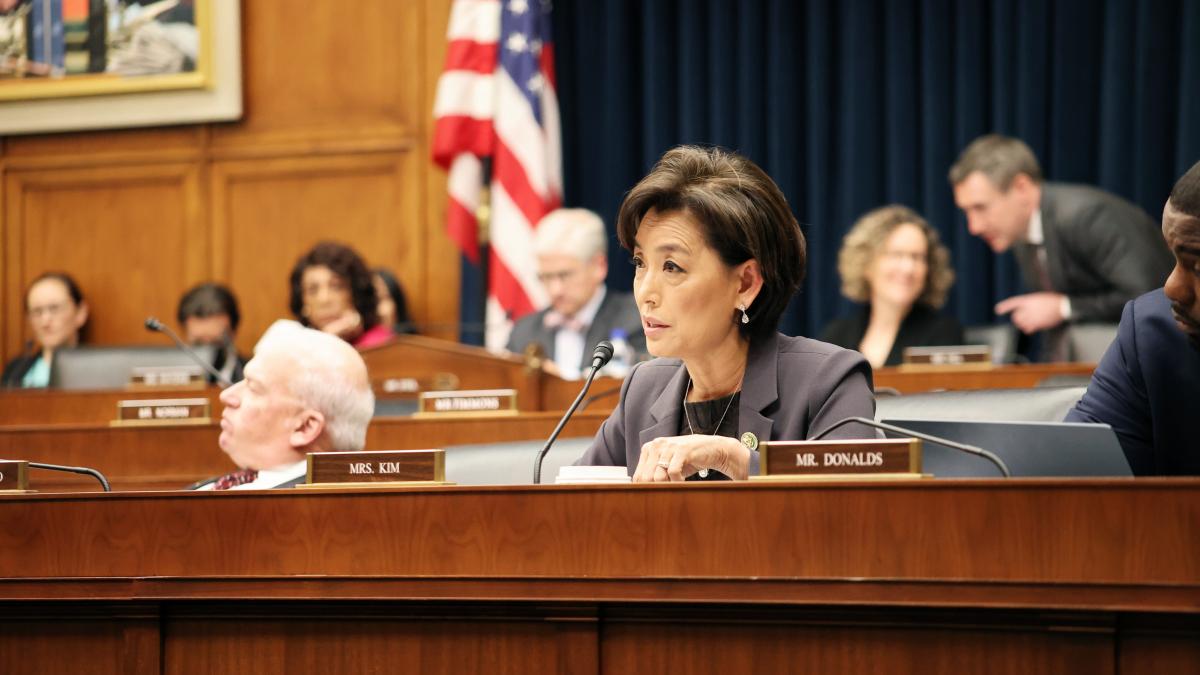
Congresswoman Young Kim, R-Calif., said Friday that her newly introduced Stop DEI Act seeks to block diversity, equity, and inclusion policies from influencing higher education and restore what she called equal opportunity.
The legislation would bar colleges and universities from receiving federal funding if they engage in discrimination under the guise of DEI programs.
“Time and time again, the American people rejected the far-left policies being pushed on them by out-of-touch politicians,” Kim said.
She pointed to repeated ballot outcomes in California and recent Supreme Court decisions as evidence that voters and the courts are rejecting race-based policies.
“We’ve had California voters overwhelmingly rejecting these policies at the ballot box, and we also had the Supreme Court making clear that students must be evaluated as individuals,” she added. “We’re sending a clear message: Americans want fairness, not more discrimination.”
Kim warned that some lawmakers and institutions are attempting to circumvent the court’s ruling.
“Before that Supreme Court decision was even finalized, far-left legislatures are already trying to bring it all back through new loopholes in education programs,” she stated.
The bill is straightforward, she emphasized, and tied to federal funding requirements. “If a school discriminates based on race, sex, ethnicity, color, or national origin, it will not receive federal funding. And it applies across all federal education funding streams. I want to ensure consistency and accountability nationwide.”
She said the legislation supports executive action by President Donald Trump to roll back DEI initiatives.
“My legislation is very simple,” she added. “If you want federal dollars, you follow the federal law, no exceptions.”
Kim argued that the measure would deter schools from maintaining race-based policies. “Schools that treat students equally and follow the law have nothing to worry about. This only targets institutions that prioritize identity over fairness.”
Drawing on her personal experience, Kim stated that DEI policies can reduce individuals to labels. “I’m one of the first Korean American women to serve in Congress. I can tell you firsthand no one wants to be reduced to that DEI checkbox—whether you are Asian, Black, Hispanic, or white. I’m so much more than that, and our children are so much more than that.”
Kim emphasized that opportunity should be based on merit and need, not identity. “At its core, this bill protects taxpayer dollars, and it will restore the basic principle that every student, regardless of their background, has inherent worth and should be treated equally under the law.”