By Micah Halpern
Thursday, 12 March 2026 11:51 AM EDT
During the American Civil War, Union General William Tecumseh Sherman repeatedly noted that “War Is Hell.” He was describing the cruelty and brutality of the March to the Sea during the conflict. His point was that war should not be sanitized or romanticized. Sherman believed in breaking the enemy through the hellish conditions of war. He held to the belief that, in the long run, his strategy would shorten the conflict and save lives.
Turns out that General Sherman was right. Sometimes war is essential to save lives, but it must be a “just war.” It must end quickly and decisively with a clear victor and a path to better conditions afterward.
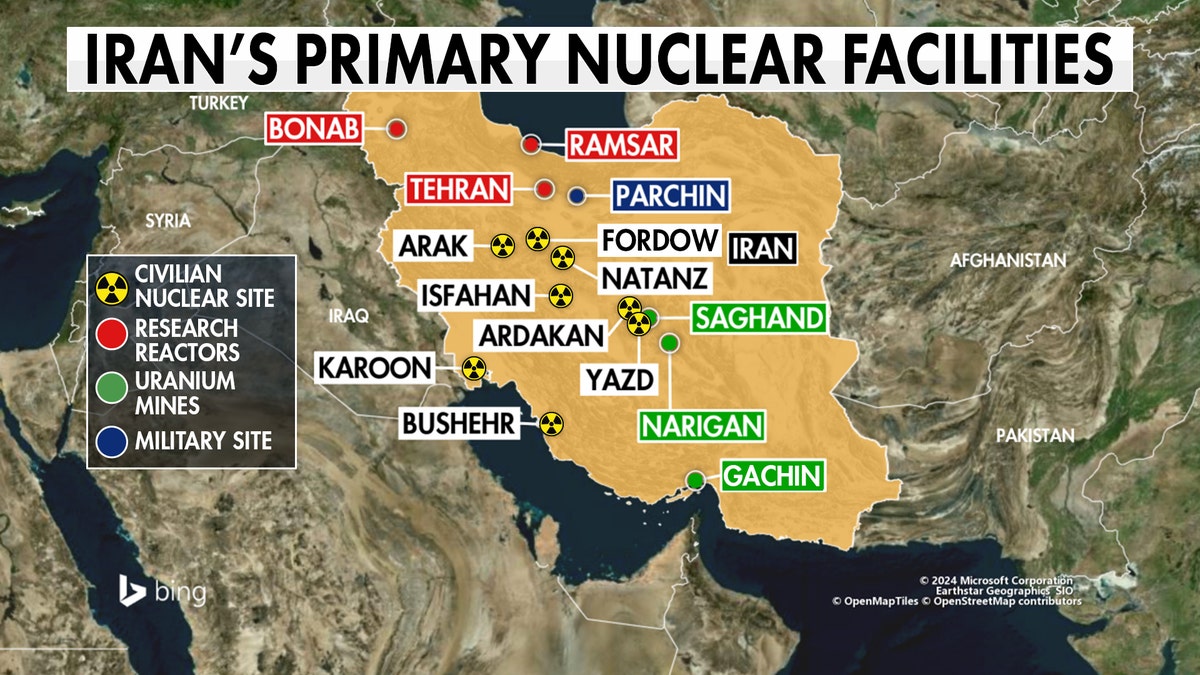
That is precisely the objective of the U.S.-Israel coordinated military action against Iran.
Across Europe, the United States, and the Muslim world, there has been both support and condemnation for the U.S.-Israel coordinated attack. In the Middle East, condemnation of the strike on Iran exceeds praise. However, many regional leaders support the operation.
These leaders are worried about Iran’s Shiite influence and extremism. They know that if Iran successfully transitioned into a nuclear power, it would be on steroids. Evidence for this threat came when Iran launched rocket attacks on its neighbors.
The Iranian rocket attacks on Gulf neighbors defy logic unless one thinks like an Iranian leader under Western attack. Many neighbors feared Iran’s continued power and agenda, fearing being dragged into conflict on Iran’s side. This fear is born of experience.
In the past, Iran has successfully framed every conflict as “Us Versus Them,” positioning Muslims against the West. It should be noted that Shiite minorities in many Muslim countries could create local uprisings supporting Iran. Regional leaders understand their cities might become hubs for riots in support of Iran and against U.S./Israeli hegemony.
Local Muslim criticism of the attacks on Iran also springs from another source: many critics are simply anti-Trump. President Trump is widely disliked in the Muslim world, with leaders fearing him and disliking his strong support for Israel.
In this case, both Israel and the United States gain support from Niccolò di Bernardo dei Machiavelli, who famously wrote in “The Prince,” “The enemy of my enemy is my friend.”
Throughout the Muslim world, there is a longstanding fear about Western cultural and political influence. This fear centers on how Western influences might dilute or even neuter Islamic culture and society—particularly regarding women’s roles, rights, and education. This was exactly the catalyst behind the 1979 Islamic Revolution that ousted Iran’s Shah.
Yet, many Muslim nations support the U.S.-Israel attack on Iran for significant reasons. Primary among them is rivalry with Iran, especially evident in Saudi Arabia. Many sources indicate Crown Prince Mohammed bin Salman Al Saud pushed President Trump to attack Iran—rapidly and decisively. Like other regional leaders, Saudis are particularly concerned about Iran’s missile program.
Additionally, despite their reluctance and suspicions, many Muslim regional leaders have grown grateful for U.S. security assurances against Iran.
This split in support and criticism also exists within Europe and the United States. For those who simply hate Trump, nothing he does is positive. Similarly, Israeli Prime Minister Benjamin Netanyahu faces disdain from this group. There is also a segment skeptical of Trump’s foreign policy, viewing it as confrontational and aggressive.
This group is especially concerned because the United States and Israel attacked Iran twice in the middle of negotiations: first in June 2025 and now on February 28, 2026. The United Nations has articulated these grounds.
It is on this basis that critics assert (incorrectly) that the attacks violated international law.
Many fear that the current actions could escalate into larger conflict and even spill over into streets across the U.S., Europe, and the Muslim world. Their biggest fear: they do not see an end game. Without a plan for after the regime falls—should it collapse or persist—an Iranian power vacuum might allow nuclear technology to fall into the hands of more irresponsible, radical anti-Western groups.
There are those in Europe and the U.S. who understand these fears. They recognize the threat posed by nuclear Iran to allies and even the homeland. They see that negotiations have been spinning wheels, not progress. They realize Iran has been expanding its global influence.
Often, we live in a bubble. I understand there are valid reasons to object to the U.S.-Israel attack on Iran. But ultimately, it is a narrow global perspective.
Put another way, those who think this attack is wrong are wrong.
Iran is a danger to the region, Iran is a danger to the West, Iran is a danger to Israel, and Iran is a danger to the United States.