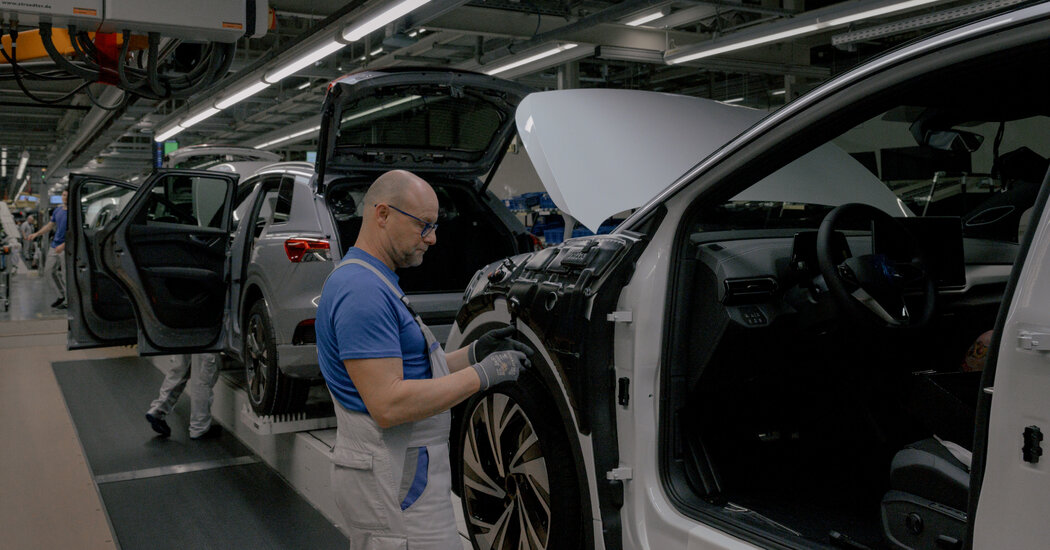
Shares in German carmakers plummeted Monday after President Donald Trump announced an increase in automotive import tariffs to 25% from the previous 15% levy, delivering a fresh blow to an already strained sector. The pan-European automobiles and parts index declined 2.3% by 1046 GMT, with Porsche, BMW, Mercedes-Benz, and Volkswagen shares all falling between 2% and 3%.
Trump stated on Friday that the European Union had failed to comply with a bilateral agreement finalized last year that reduced automotive import duties to 15%. Implementation progress has been sluggish, with the bloc not expected to complete compliance before June. The tariff escalation—which Trump claimed would accelerate European manufacturing relocation to the U.S.—now undermines that deal and has drawn sharp criticism from European political leaders and trade organizations.
Matthias Schmidt, an automotive market analyst at Schmidt Automotive, warned additional duties would further weaken Germany’s premium car manufacturers, noting Audi and Porsche are among the most vulnerable due to their absence of U.S. production facilities. He predicted “2026 will be another year of profit warnings” following the announcement.
Bernstein Research estimates the extra 10 percentage points in tariffs could cost German automakers approximately €2.6 billion ($3.05 billion) in operating profits this year, with manufacturers likely to offset part of the burden through higher prices. Germany’s export-dependent automotive sector has already faced pressure from softening Chinese demand, slowing global growth, and rising input costs and labor expenses.
Volkswagen Group, which includes Audi and Porsche brands, reported a €4 billion loss attributable to U.S. tariffs in 2025. Sweden’s Volvo Cars, whose shares were down 0.2%, stated it was too early to assess the tariff hike’s implications. Rico Luman, senior economist at ING Research, observed Trump has frequently used tariff threats as negotiation tactics but has not consistently followed through on implementation. “The EU adoption and legislative process is typically time-consuming,” he noted. “This threatened tariff could urge the European Parliament and Council to expedite formal adoption.”