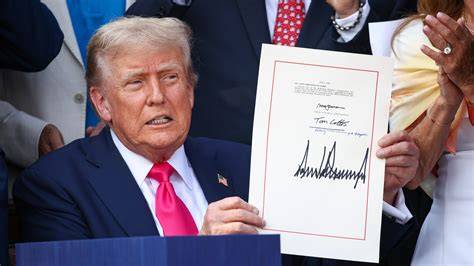
President Donald Trump on Thursday hailed the House Energy and Commerce Committee’s 48-1 vote to advance the Sunshine Protection Act, calling it a “Big Vote” and pledging to work very hard to see the long-stalled measure become law. The bill would make daylight saving time permanent nationwide.
In a Truth Social post, Trump highlighted that hundreds of millions of dollars are spent annually by individuals, cities, and states adjusting clocks twice each year. He noted that many clock adjustments require renting or using heavy equipment for towers, which he called “prohibitive.”
Trump added: “It’s time that people can stop worrying about the ‘Clock,’ not to mention all of the work and money spent on this ridiculous, twice yearly production.”
The president thanked House Energy and Commerce Chairman Brett Guthrie (R-Ky.), bill sponsor Rep. Vern Buchanan (R-Fla.), and Rep. Troy Nehls (R-Texas), whose railway safety provisions were incorporated into the package.
The committee folded Buchanan’s Sunshine Protection Act into the Motor Vehicle Modernization Act, which Trump referred to as “The Highway Bill.” The combined package was sent to the House floor on May 21.
Under the legislation, daylight saving time would be permanent nationwide, with Hawaii and most of Arizona—areas that already observe standard time year-round—exempt.
Trump described the move as a political victory for Republicans, stating it aligns with “the far more popular alternative: Saving Daylight.”
Buchanan, who has reintroduced the bill every Congress since 2018, said the markup ends “the outdated and unpopular practice of changing our clocks twice a year.” He argued that permanent daylight saving time could improve public health, reduce traffic accidents, lower crime rates, and encourage more outdoor activity.
The House measure boasts 32 bipartisan cosponsors. A Senate companion bill, sponsored by Sen. Rick Scott (R-Fla.), has 18 cosponsors. Scott and Buchanan took the bill over from former Secretary of State Marco Rubio last year.
Trump’s support marks the highest-profile push behind the legislation in years. The Senate previously passed an earlier version of the bill by unanimous consent in March 2022, but the House never brought it to a vote, causing it to expire at the end of the 117th Congress. Several senators indicated they would have opposed the measure had they known it could clear the chamber that way.
Every other iteration of the bill since 2018 has died in committee.
The country attempted permanent daylight time once before: In December 1973, Congress passed and President Richard Nixon signed legislation to implement year-round daylight saving time as an oil-crisis energy measure. The change took effect January 1974. Public support collapsed when schoolchildren walked home in winter darkness, prompting President Gerald Ford to sign a bill reversing it by October 1974.
Trump’s stance on the issue has shifted over time. In March 2025, he called the policy “a 50-50 issue” and said it was “hard to get excited” about, but later reversed course to urge Congress to act.
The package now heads to the House floor with no set Senate schedule.