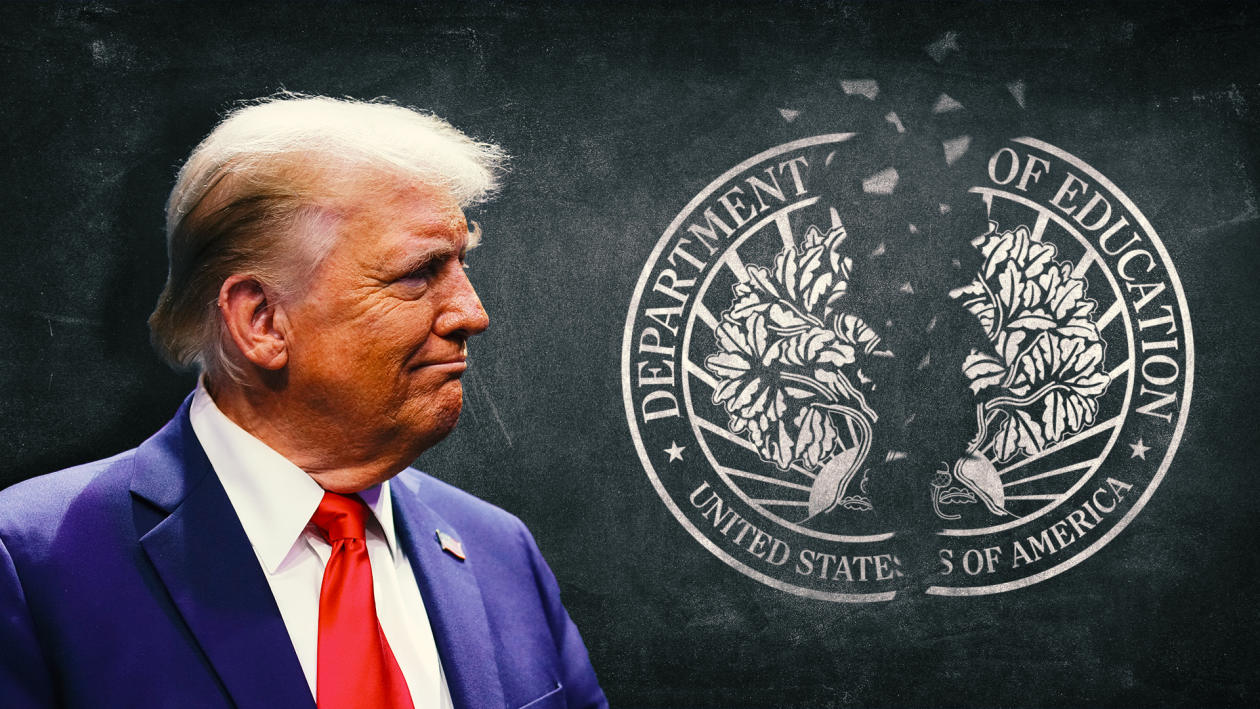
Education Secretary Linda McMahon defended the Trump administration’s effort to dismantle the U.S. Department of Education during a House Committee on Education and Workforce hearing Thursday, stating that voters gave President Donald Trump a mandate to wind down the agency and return authority to states.
The department has roughly 2,300 employees, down from about 4,200 in 2024, and has shifted more than 100 programs to other federal agencies.
The hearing, titled “Examining the Policies and Priorities of the Department of Education,” opened as a fight over the agency’s existence rather than its budget. McMahon told lawmakers that Americans elected Trump with a mandate “to sunset a 46-year-old, $3 trillion failed federal education bureaucracy.”
Rep. Bobby Scott, D-Va., ranking member of the panel, countered that the administration had moved to dismantle a major civil rights institution.
The staffing reductions, based on Office of Personnel Management data, amount to about a 45% cut.
Elementary and secondary education programs have been transferred to the Labor Department, family-engagement work has moved to the Department of Health and Human Services, and the federal student loan portfolio is transferring to the Treasury Department.
While Republicans on the panel praised the changes, Democrats condemned them.
Rep. Suzanne Bonamici, D-Ore., asked McMahon where oversight of special education programs, including the Individuals with Disabilities Education Act, would go. McMahon said no decision had been made and the department would first consider co-administering the programs with other agencies.
Oversight of special education services has not been transferred amid opposition from disability-rights advocates.
Rep. Mark Takano, D-Calif., questioned cuts to the Office for Civil Rights, which lost about half its staff in last year’s layoffs.
After courts intervened, the department kept 247 OCR employees on paid administrative leave, a step estimated by a government watchdog to cost taxpayers between $28.5 million and $38 million.
McMahon stated she is rehiring attorneys for the Office for Civil Rights and described the budget’s proposed 35% funding cut as “a floor for hiring.”
Lawmakers from both parties mentioned new federal student loan caps enacted under the One Big Beautiful Bill Act. The law leaves undergraduate limits unchanged but caps most graduate borrowing at $20,500 a year and $100,000 total, with higher limits for medicine, law, and dentistry.
McMahon argued that these caps would pressure colleges to lower prices. Democrats warned they could worsen shortages in teaching, social work, and nursing.
Several economists stated that the loan caps are unlikely to produce broad price reductions.
On student achievement, McMahon credited state-level adoption of the science of reading in Mississippi, Louisiana, and Florida. An Education Scorecard report released Wednesday found that Louisiana is the only state to return to 2019 reading and math levels, while Florida ranked last among 35 states in reading growth from 2022 to 2025.
McMahon and committee Republicans also promoted proposed Make Education Great Again grants for literacy. The plan would consolidate 17 programs funded at about $6.5 billion into a single $2 billion block grant.