By John Gizzi
Friday, 22 May 2026 08:06 PM EDT
“This is Barney Frank,” said the familiar voice on the other end of the telephone call, “I got your question, and I’ll try to answer it.”
Without a secretary placing the call, without his press secretary responding for him, Rep. Barney Frank, D-Mass., himself was returning my call in 1995 to answer a somewhat awkward question: Since same-sex marriage was not legal anywhere in the U.S. at the time, how did the congressman — who came out as gay seven years before — explain that a profile of members of Congress in Washingtonian Magazine listed Frank’s spouse as “Herb Moses”?
“The form they sent me asked me to list my ‘spouse’ and nothing else,” Frank told me, “and if I wrote in, say, ‘companion,’ or ‘friend,’ people might think Herb was an elderly relative I cared for or a pet spaniel.”
Although Moses was not his spouse, Frank explained, “our feelings for each other are so strong and very much like [a married couple].”
“I’m sure that’s hard for you to understand,” he concluded — to which I assured him it was not, and thanked him profusely for his reply.
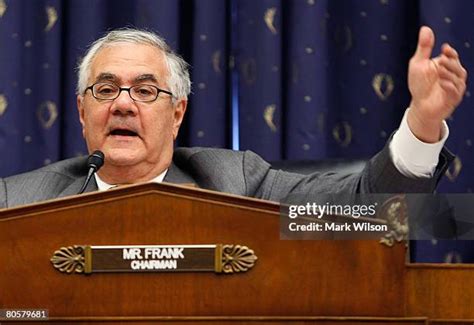
When Barney Frank died Tuesday at age 86, that was just one distinct memory which came back.
I had covered the Bay State lawmaker throughout his 32 years in Congress (1981-2013) and, like so many who watched potential “rising stars” in both parties, I was aware of him before he came to Washington.
A Harvard graduate who plunged into Democratic Party politics in Boston, the New Jersey-born Frank became chief of staff to the city’s Mayor Kevin White. When White ran for governor in 1970, the joke around City Hall went “White is running for governor and Frank is running the city.”
Frank was elected to the state Legislature in 1972 and soon became the leader of the hard left in the state capitol. Often he clashed with the centrist Republican Gov. Francis Sargent.
When Pope John Paul II ordered all priests holding secular office to relinquish their positions in 1980, that meant that Rep. Father Robert Drinan, D-Mass., the lone Roman Catholic priest in Congress, was out. Although he lived just outside Drinan’s 4th District, Frank ran and won a four-candidate primary with 52%. In November, he defeated Republican Dick Jones by a surprisingly close 52%-48%.
To liberal groups such as Americans for Democratic Action and publications such as The Nation, Frank in 1980 was perhaps the best-known state legislator anywhere with the exception of civil rights icon and Georgia state Sen. Julian Bond. The left expected big things from the newly minted House member.
The Massachusetts man was in the forefront of opposition to Ronald Reagan’s tax and budget cuts and sought to rescue the anti-poverty programs the White House wanted to scuttle.
He also began to address a new issue — gay rights.
His lone hard-fought campaign was in 1982, when redistricting merged his district with that of eight-term Republican Rep. Margaret Heckler. Frank won by about 3-to-2.
“Margaret Heckler used to joke that losing her seat to Barney Frank may have been the best thing that ever happened to her politically,” recalled Kim Heckler, author of the critically acclaimed biography of her mother-in-law “A Woman of Firsts: Margaret Heckler, A Political Trailblazer.” After the campaign, President Reagan appointed her secretary of health and human services, and she later went on to become the first woman U.S. Ambassador to Ireland.
Anyone who watched Frank in action then and later quickly realized that this was a complete “policy guy” who abjured small talk and relished the details of legislation.
I saw first-hand this side of the then-chairman of the House Financial Services Committee at a Christian Science Monitor press breakfast in 2009. He was discussing the nuances of what would a year later become the landmark financial regulatory measure known as Dodd-Frank.
Referring to meetings with President Barack Obama and his staff, one reporter asked Frank whether the often profane and bad-tempered White House Chief of Staff Rahm Emanuel was still “Rahm the Terrible, or are you seeing a ‘kinder, gentler Rahm’ in these discussions?”
“What a stupid question!” Frank shot back. “I’m here to discuss serious legislation and I could care less whether someone smiles at me or not. Give me a break!”
As much as Rep. Adam Clayton Powell, D-N.Y., was known as the congressman for Black America when he was one of the few Black members in the 1950s and ’60s, Frank was perhaps best-known as the congressman for gay Americans when he came out in 1987.
Closeted gay members of Congress were nothing new. Allen Drury, Senate correspondent for the New York Times and best-selling author of “Advise and Consent,” once told me that Sen. David I. Walsh, D-Mass., who served from 1926-46, was known to be gay and was almost certainly the “Senator X” mentioned in cables of Nazi fifth columnists as a possible target of blackmail.
Although the sexual preference of some House members came out after their deaths or through exposure after scandal, Frank was the first to say he was gay while in office and without scandal. He never had any difficulty winning reelection.
Even colleagues who were Frank’s opponents on issues had no problem with Frank’s sexual preference.
The late Rep. Floyd Spence, R-S.C., a staunch conservative, loved to tell how he spotted Frank in an elevator and said “Barney, where you’d get that shirt? It looks great on you.”
“My new boyfriend got it for my birthday,” Frank remonstrated with a laugh.
But Frank did experience scandal. He had hired onetime male prostitute Steve Gobie as a housekeeper and driver. Frank explained this by likening himself to Prof. Henry Higgins and Gobie to Eliza Doolittle in “My Fair Lady.”
Upon learning in 1990 that Gobie was still performing escort services out of Frank’s home in Washington, D.C., the congressman evicted him. The House Ethics Committee found no evidence Frank was involved in any illegal activity, but he was reprimanded for fixing his former aide’s parking tickets.
To those who covered Congress, Barney Frank was truly an American original. And to those who yearn for lawmakers who are not the blow-dried archetype of the modern congressman and have something to say beyond soundbites in social media, he will be missed.