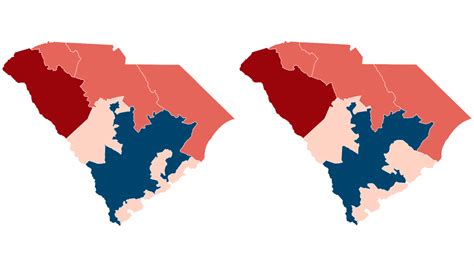
The South Carolina House approved a new congressional map early Wednesday that would redraw Rep. Jim Clyburn’s sixth district into Republican-leaning territory, advancing a mid-decade redistricting push President Donald Trump has urged on GOP-controlled states.
The 74-37 vote, taken at 12:39 a.m., sends H.5683 to the state Senate after it rejected an earlier effort last week. Republicans have days left to enact the plan ahead of early voting beginning May 26.
The map, drawn by the National Republican Redistricting Trust, would reshape South Carolina’s only Democratic-held congressional seat in a delegation where Republicans already control six of seven districts. Clyburn, a longtime power broker and former House majority whip who won reelection in 2024 with about 60% of the vote, remains in the district under the new plan.
The legislation also delays congressional primaries to August 18, with filing reopened June 1-5. The originally scheduled June 9 primary would proceed for other races but not for U.S. House candidates.
The path to passage was challenging. South Carolina Republican Governor Henry McMaster initially declined to call a special session, and the state Senate voted 29-17 on May 12 against extending the session for redistricting—two votes short of the two-thirds threshold required. Five Republicans joined all Democrats in opposition.
McMaster later reversed his position, ordering lawmakers back to address redistricting and the state budget.
In the House, Republicans cleared procedural hurdles by amending debate rules to limit each member to a single amendment on the redistricting bill, voiding most of the roughly 500 amendments filed by Democrats. The rule change passed 73-33, with Republican State Representative Tom Hartnett of Mount Pleasant opposing it.
Hartnett voted against the final map, citing concerns that new lines would force the Charleston region to compete for federal resources with Myrtle Beach—a shift under the proposal.
Republican supporters framed the redraw as a fairness measure. April Cromer, a member of the South Carolina Freedom Caucus, stated the changes would stop concentrating Black Democratic voters in one district.
Pressure on House Republicans intensified after Indiana’s May 5 primaries, where Trump-backed challengers unseated at least five of seven GOP state senators who had opposed similar redistricting efforts.
The next steps depend on Senate deliberations and potential court challenges. State Senate Majority Leader Shane Massey, who led the earlier opposition, has signaled the chamber’s debate will be lengthy.
On May 19, South Carolina chapters of the League of Women Voters and the ACLU filed suit in Richland County against the House Rules Committee and Speaker Murrell Smith, alleging they violated the state Freedom of Information Act by failing to provide 24-hour public notice before a meeting that changed amendment rules. An emergency hearing was scheduled for May 20.
Jim Thomas is a writer based in Indiana with a bachelor’s degree in Political Science and a law degree from U.I.C. Law School, having practiced law for more than two decades.