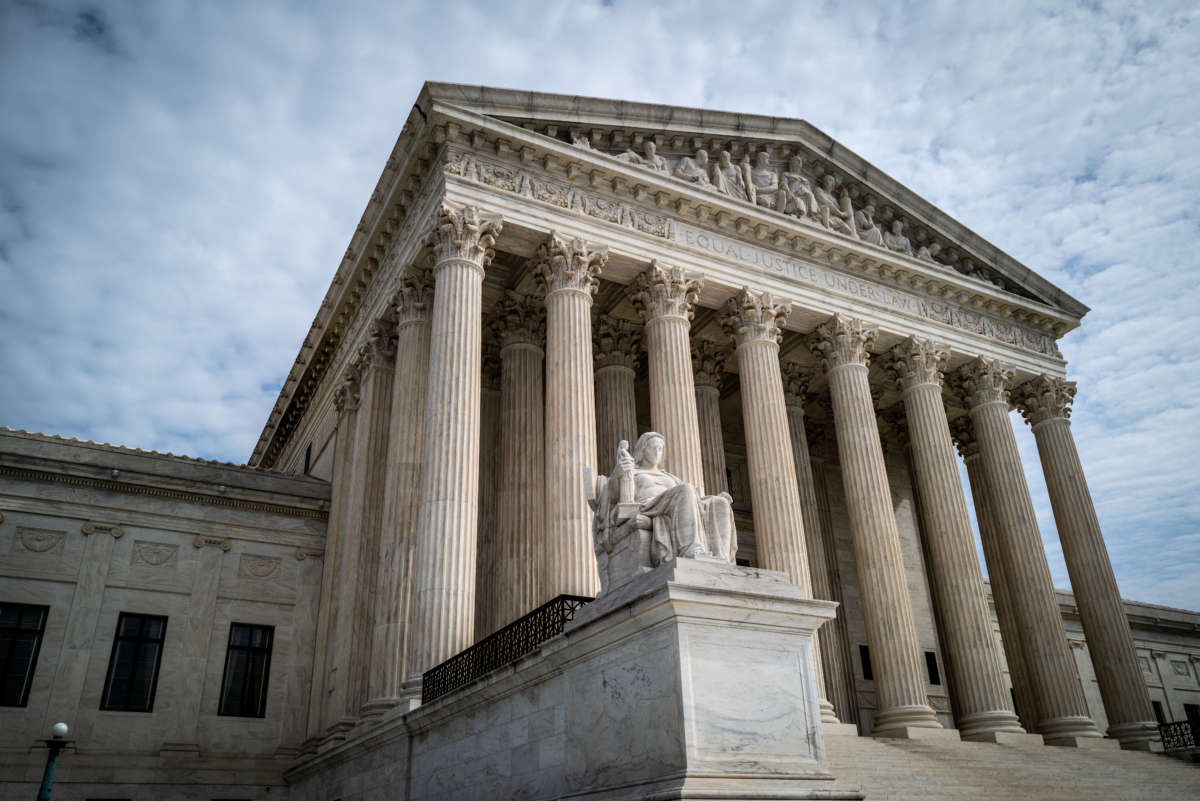
House Judiciary Committee Chair Jim Jordan, R-Ohio, stated Friday that Democratic proposals to add four seats to the Supreme Court represent a raw bid for ideological control of the bench.
Jordan said House Republicans will force a vote on a constitutional amendment to lock the court at its current size of nine justices. The remarks followed a day after the House Judiciary Subcommittee on Courts held a hearing titled “Court Packing: A Threat to the Supreme Court’s Legitimacy” and as the Senate continues to debate a House-passed bill requiring voters to provide photo identification and proof of citizenship for federal elections.
Jordan noted that the choice of four new seats is not arbitrary, explaining that “four is going to give them a majority.” He predicted Democrats would push the change if they gained control of Washington. The proposed Judiciary Act, sponsored by Senator Ed Markey of Massachusetts and Representative Jerrold Nadler of New York, would expand the court from nine to 13 justices.
Jordan referenced the Constitution, stating that “if you don’t like what the court’s doing, go win those races.” He pointed to the Republican-held White House and Senate majority that allows President Donald Trump to nominate and confirm justices. The Supreme Court has been fixed at nine justices since the Judiciary Act of 1869, though the number has ranged from five to 10 since 1789. Jordan said House Republicans will proceed with a constitutional amendment to enshrine the nine-seat court.
A “Keep Nine” measure has been pending in both chambers, led by Representative Dusty Johnson of South Dakota in the House and Senators Ted Cruz of Texas and Todd Young of Indiana in the Senate. Jordan tied the court fight to broader Democratic posturing he described as out of step with voters, citing opposition to voter ID laws, what the Trump administration calls “sanctuary policies,” and recent funding standoffs.
The federal government was fully closed for 43 days from October through November 2025, and the Department of Homeland Security was shut down again from February through April 2026 amid a dispute over immigration-enforcement tactics. Jordan defended the Safeguard American Voter Eligibility Act, which the House passed in February requiring documentary proof of citizenship at registration and photo identification at the polls. The bill remains stalled in the Senate, where it needs 60 votes to overcome a filibuster by Democrats.
Jordan closed with the structural argument that animated Thursday’s hearing: “The Supreme Court is not supposed to be a legislative body. It’s a court, a separate and equal branch of government, interpreting the law, not making the law.”