By Victoria Coates | Thursday, May 14, 2026 at 7:37 a.m. EDT
In “Operation Epic Fury,” America’s armed forces have done their job with exceptional courage and competence bolstered by the exceptional technical capabilities of our military. American strikes have systematically degraded Tehran’s missile defenses, fractured its command structure, and left its leadership issuing threats through news anchors rather than from positions of strength. Iran’s economy, already strangled by sanctions, is teetering on the edge of collapse after months of blacked-out internet access and shuttered financial markets. The regime’s proxies are scattered and diminished.
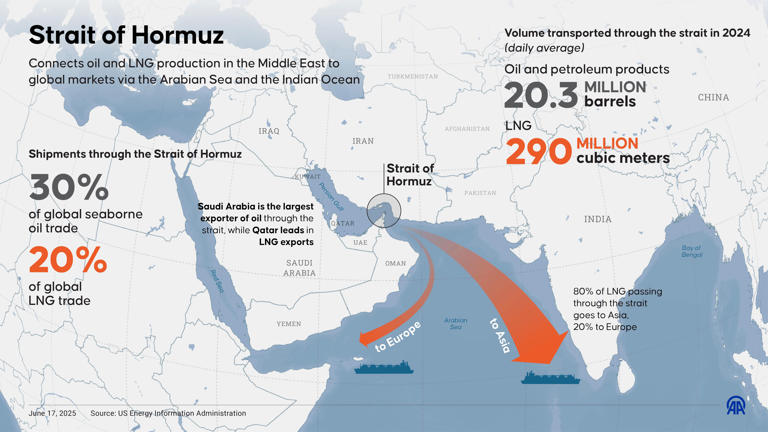
On the battlefield and in the ledger books, the United States holds a commanding hand. But precisely because of this dominance, Iran played its most destructive remaining card: closing the Strait of Hormuz. Tehran knows it cannot beat America militarily, but roughly 20 percent of the world’s oil supply transits that narrow chokepoint. The regime can still threaten global energy markets, spike oil and gas prices, and hope that economic pain translates into political pressure on President Trump to back down. Iran’s last best hope is economic blackmail.
Here’s where America’s role as a major energy producer comes into play. U.S. oil production hit record levels in March 2026. Natural gas production should follow suit. While the most immediate threat from the Middle East is to oil prices, as LNG markets become increasingly global such disruptions will hit them too. Additionally, energy costs are not compartmentalized in household budgets. When Americans are paying more at the pump, every dollar of relief on their monthly utility bill matters. Lowering the cost of natural gas through better infrastructure is part of the same all-hands-on-deck effort to protect American consumers from the economic fallout of a crisis that Tehran is deliberately trying to weaponize.
Natural gas, much of it harvested in my home state of Pennsylvania, is in fact the foundational fuel of America’s AI economy—as it will be for the economies that emulate it. Data centers run on it, and China is watching our energy security just as closely as our military posture. Energy security and AI competitiveness are now inseparable.
During Operation Epic Fury, the Islamic Revolutionary Guard Corps (IRGC) launched rocket strikes disrupting Amazon AWS data centers in the region and has explicitly threatened the $30 billion Stargate AI facility in Abu Dhabi, posting satellite imagery in a menacing video. That’s why we should act now, on the home front, to unleash American energy supply so that any future disruption at the Strait is blunted before it begins.
One step would be for the Federal Energy Regulatory Commission (FERC) to move decisively to adopt common sense reforms consistent with President Trump’s broader policy of energy sector deregulation. American producers will respond to market incentives by rapidly increasing supply in response to demand. However, pipeline and LNG infrastructure cannot adapt quickly when supply is trapped behind outdated rules. The FERC Blanket Certificate Program—which expedites permitting for natural gas infrastructure with limited environmental impact—has been allowed to wither. Cost caps set in the 1980s have risen only 50% while actual construction costs have climbed 268 percent. The result is that nearly 40% of qualifying projects since 2020 have been shunted into 18 to 24-month reviews for no good reason.
Fortunately, FERC is looking closely at finally updating this program starting with the two-year cost limit waiver implemented in 2025. Here are some additional actions the Commission could take: First, permanently raise the cost limit to reflect what it costs to build infrastructure in 2026. Second, eliminate cost caps for compressor stations—the workhorses of natural gas delivery—so that upgrades to existing facilities can proceed without years of delay. Third, include routine LNG facility upgrades in the Blanket program, just as pipelines already enjoy. Fourth, streamline the underlying 1999 certificate policy for new interstate natural gas infrastructure by crediting contracted capacity and national reliability needs while reducing grounds for legal challenges on new projects.
Together, these changes require no act of Congress and can be done by FERC alone, and support for such policies is growing. I recently wrote about how the Saudi Petroline pipeline—which can move crude oil across the Arabian Peninsula and bypass the Strait of Hormuz entirely—offers a crucial strategic lesson learned during Epic Fury. An Iran that cannot weaponize your energy dependence loses its most powerful form of leverage. Now, America must put this lesson into action by removing the regulatory bottlenecks that prevent our own producers from getting natural gas to market when prices spike.
Iran is as interested in American energy markets just as closely as it is in American military movements. The best way to neutralize the Strait of Hormuz card is to make it less relevant going forward. By adopting the reforms on the table—bringing pipeline regulations in line with economic reality—FERC can help do that.
Victoria Coates is a former Deputy National Security Advisor to the Trump administration.