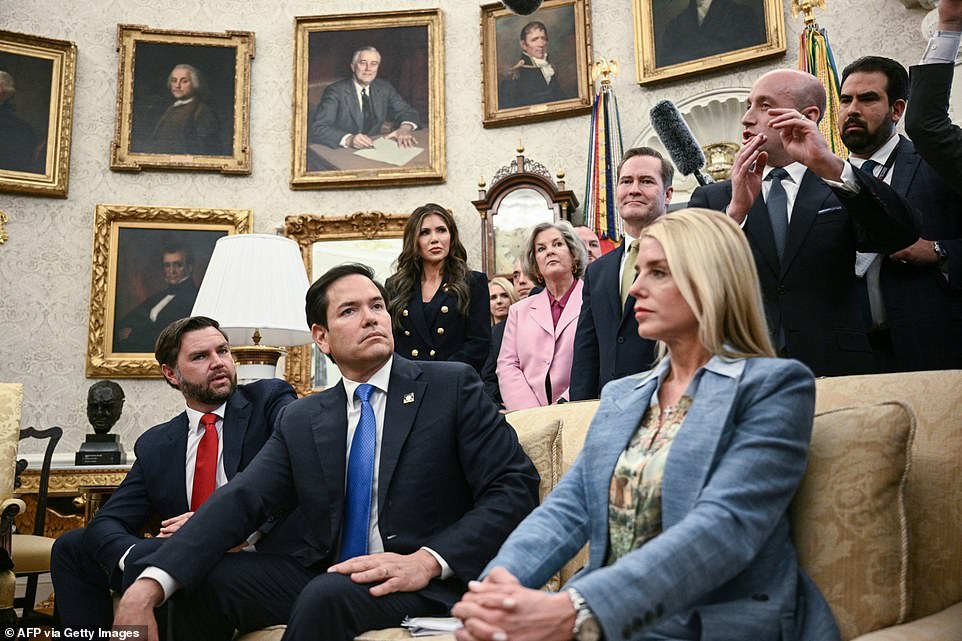
Political commentator Dick Morris reported on Saturday that questions are emerging about Vice President JD Vance’s political future and his global role, while arguing that U.S. adversaries are closely watching for signs of American strength.
Speaking on Newsmax TV’s “Saturday Report,” Morris noted recent indications that Vance may not seek the presidency in 2028, though he did not cite specific sources. He also suggested that the vice president has reduced his public presence domestically.
“There have been indications recently that Vance may not actually be willing to run in ’28,” Morris said. “And he certainly has decreased his footprint in the U.S.”
Morris contrasted this with what he described as a growing profile for Secretary of State Marco Rubio, indicating a shift in visibility among top Republican figures. He did not provide further details on Rubio’s activities.
According to Morris, foreign adversaries are paying close attention to Vance’s role, particularly in the context of an agreement with Iran. He stated that some are questioning whether the vice president can deliver substantive outcomes or is serving primarily in a symbolic capacity.
“The enemies of the United States are waiting to see if Vance can really produce or if it’s just a figurehead trip,” Morris said.
Morris framed these observations within a broader critique of how Americans perceive U.S. global standing. He argued that despite what he characterized as strong U.S. performance in geopolitical conflicts, public sentiment at home suggests a lack of confidence.
“All of this is made very ironic with the fact that the U.S. is winning a war overwhelmingly, and the Americans feel like they’re losing,” he said without specifying a particular conflict.
Morris also addressed perceptions in Iran, claiming that Iranian leadership holds a different view of U.S. military strength than the American public. “The only people who really believe that the United States is in trouble in Iran militarily seem to be the Ayatollah,” he stated.
He added that Iranian leadership appears to be “disappearing from the scene very quickly,” though Morris did not elaborate or provide evidence for this assertion.