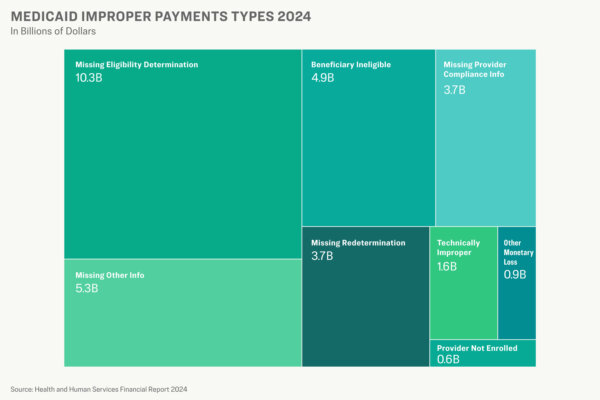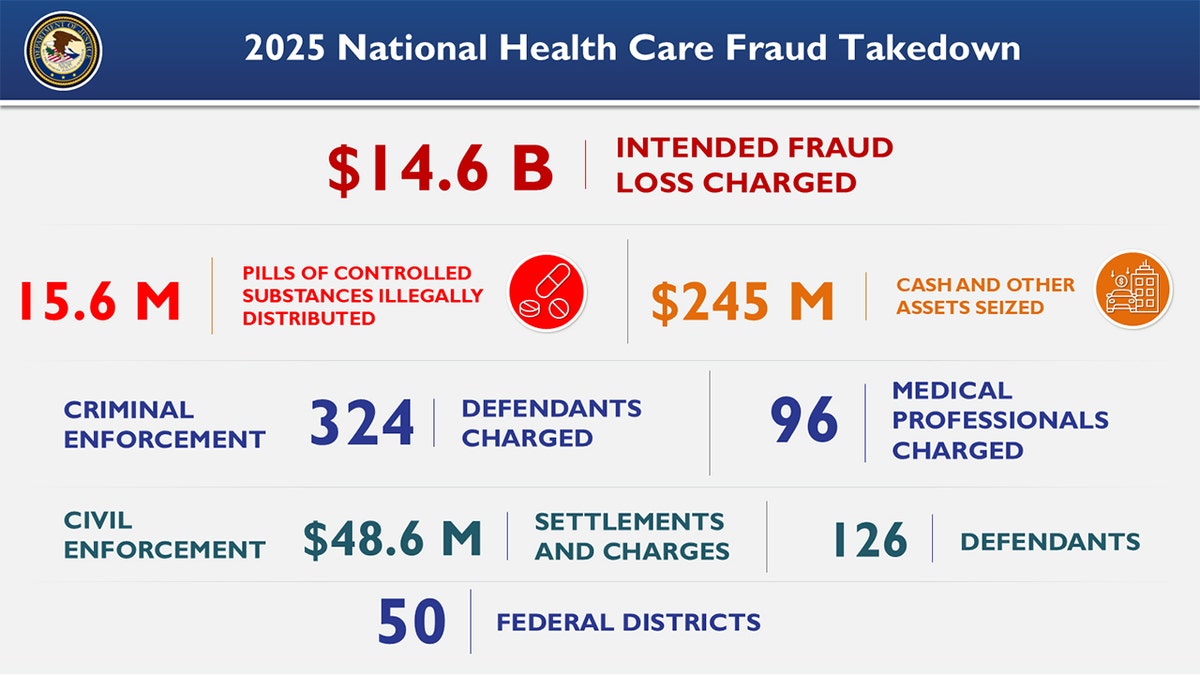
In the wake of an investigation that uncovered $110 million in suspicious government payments to daycare centers operated by Somali-Americans in Minnesota within a single day, a nationwide effort to combat fraud has gained significant traction. The initiative received praise from the Trump administration and led to concrete action as President Donald Trump signed an executive order establishing a federal “Fraud Task Force.”
The president designated Vice President J.D. Vance as the “fraud czar” to lead this campaign, describing the problem as “massive and pervasive” with potential to “literally balance our American Budget” through successful enforcement.
Vance’s task force swiftly targeted California, where its first major investigation uncovered an alleged $50 million hospice and healthcare fraud scheme in Los Angeles. These findings are just the tip of the iceberg, highlighting a widespread pattern of fraud across federal and state governments.
A critical example is the 340B Drug Pricing Program, established in 1992 to provide affordable medications for low-income and rural communities. The program requires pharmaceutical manufacturers to sell outpatient prescription drugs at discounted prices to participating healthcare facilities. However, providers purchase these drugs at steep discounts but are reimbursed by insurers and public programs at standard market rates.
Critically, there are no federal requirements that providers disclose how the revenue generated through these discounts is used or whether patients receive direct financial benefits. The savings were intended for low-income patients, yet evidence shows they have not been delivered to those in need.
U.S. Rep. Earl “Buddy” Carter (R-Ga.) stated: “340B was intended to give low-income and vulnerable patients access to affordable medicines. The program has rapidly expanded, and a lack of transparency has allowed some entities to pocket the savings without passing them on to patients.”
Similarly, U.S. Representative Diana Harshbarger (R-Tenn.) noted that the 340B program has “gaps” that have “let these discounts be misused and diverted from the goal of better access and lower costs for patients most in need.”
To address this issue, a bill known as the 340B Affording Care for Communities and Ensuring a Strong Safety-Net Act (340B ACCESS Act) has been introduced by Reps. Carter and Harshbarger. The legislation aims to provide “critical oversight and transparency” to a program that has not been adequately monitored, with taxpayer costs spiraling out of control.
As evidence, the “prime vendor program”—used by 90% of participating healthcare facilities—has seen spending skyrocket from $6.6 billion in 2010 to an estimated $43.9 billion by 2021, a nearly 700% increase.
In Louisiana, a report by HEAL Collaborative revealed that between 2014 and 2022, participating entities experienced a 22.5% increase in assets per bed (defined as any resource with financial value) while uncompensated care per bed decreased by 41%. This pattern indicates abuse of the program to boost profits rather than serve patients.
According to a survey conducted by the National Consumer League, 77% of Louisiana residents agree that hospitals receiving 340B discounts should be required to pass those savings on to low-income and vulnerable patients.
Currently, the 340B program is the second-largest federal prescription drug program (second only to Medicare Part D) and is projected to surpass it as the largest government-run drug purchasing program by 2027. This growth was significantly accelerated by the Affordable Care Act, which expanded the number of eligible sites from 392 in 1992 to 56,730 by 2023.
Despite this expansion, services for low-income Americans have decreased by 15%, contradicting the program’s original purpose. Until new legislation mandates that hospitals spend their profits on vulnerable populations as intended by the 1992 bill, these sites will continue to financially benefit while ignoring those in need.