A significant 43 percent of registered voters express dissatisfaction with both major political parties in a recent poll. The findings underscore growing frustration among Americans who feel neither Republicans nor Democrats adequately address national challenges, including economic conditions, the cost of living, government accountability, and foreign policy.
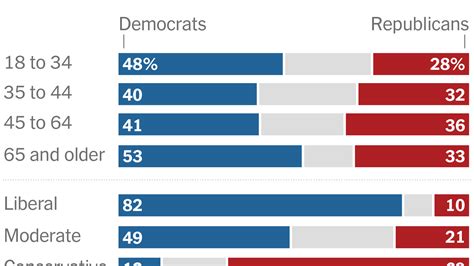
The survey reveals that public discontent extends beyond any single political leader, as 43 percent of voters are dissatisfied with both parties. Among registered voters, 30 percent reported being satisfied with Republicans but dissatisfied with Democrats, while only 23 percent were satisfied with Democrats and dissatisfied with Republicans. A mere 4 percent expressed satisfaction with both parties.
The poll also shows that Democrats hold an 11-point lead on the generic congressional ballot, yet neither party has generated widespread voter enthusiasm. Similar patterns have been observed in independent polling data.
Data from a recent survey indicates that 45 percent of U.S. adults now identify as independents—a rise from about one-third two decades ago. This shift appears to be driven primarily by dissatisfaction with the current administration rather than increased loyalty to the opposition.
Voters often cite different reasons for their discontent with Republicans and Democrats, and neither party enjoys a clear advantage in overall favorability or trust. Political observers see an opening for outsider candidates and reform movements. However, history suggests that voter frustration with the two-party system does not automatically translate into support for third-party candidates.
Economic uncertainty remains a key concern despite signs of stabilization in some sectors. The survey found that 76 percent of voters rated the economy as only fair or poor. With the 2026 midterm elections approaching, the data suggests many Americans remain unconvinced that either party has fully earned their confidence. The electorate’s growing independent streak may ultimately benefit whichever side can most convincingly position itself as an alternative to business-as-usual politics in Washington.