By Alex Smith | Monday, 18 May 2026 03:39 PM EDT
The United States has suspended its participation in a joint defense advisory board with Canada established 85 years ago, citing Ottawa’s failure to make credible progress on defense commitments.
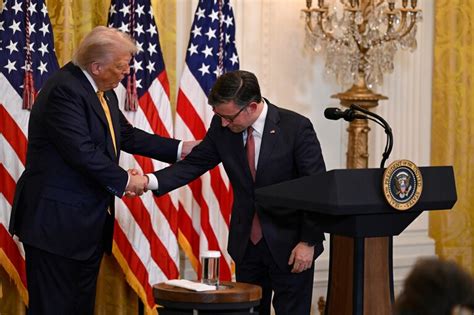
In a series of posts on X, Elbridge Colby, the U.S. undersecretary of war for policy, directly blamed Canadian Prime Minister Mark Carney. The criticism followed Carney’s January speech at the World Economic Forum in Davos, Switzerland, which was widely interpreted as a critique of President Donald Trump.
Colby stated: “A strong Canada that prioritizes hard power over rhetoric benefits us all. Unfortunately, Canada has failed to make credible progress on its defense commitments. The Department of War is pausing the Permanent Joint Board on Defense to reassess how this forum benefits shared North American defense.”
The Permanent Joint Board on Defense was founded in 1940 by President Franklin D. Roosevelt and Canadian Prime Minister William Lyon Mackenzie King as an advisory body for North American defense during World War II.
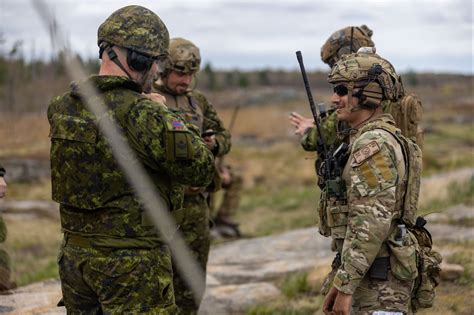
The board comprises senior U.S. and Canadian defense and diplomatic officials. The United States and Canada jointly operate the North American Aerospace Defense Command, which monitors threats to North American airspace. Carney has also indicated interest in joining President Trump’s proposed Golden Dome missile defense system.
Colby emphasized: “Delivering on shared continental defense begins by recognizing our shared geography. Only by investing in our own defense capabilities will Americans and Canadians be safe, secure, and prosperous.”
The U.S. official cited Carney’s Davos speech, which, though not naming Trump, was widely understood to target him in its discussion of global “hegemons” seeking economic subordination of other nations.
Carney urged middle powers to collaborate against such hegemony and uphold a rules-based international order. He warned: “We are in the midst of a rupture, not a transition. We should not allow the rise of hard power to blind us to the fact that the power of legitimacy, integrity, and rules will remain strong.”
Colby also noted a growing gap between the “rhetoric” of international cooperation and the “reality” of hegemonic nations attempting to dominate others.
The U.S. has referenced Canada’s progress on NATO defense spending. At last year’s NATO summit, under Trump’s pressure, all members except Spain committed to raising military spending to at least 5% of GDP by 2035 (with 3.5% for direct military spending and 1.5% for infrastructure). Canada achieved the 2% NATO benchmark last year after a $9.3 billion defense budget boost.
U.S. Ambassador to Canada Pete Hoekstra was recently hosted at the Pentagon by Colby, who stated: “We’re working closely to ensure every NATO partner, including Canada, reaches the Hague Summit’s 3.5% GDP defense spending target—a vital investment for North American and Arctic defense.”
Tensions between the U.S. and Canada have escalated, with Trump threatening to close a Detroit-Windsor bridge and Canada reviewing plans to purchase 88 Lockheed Martin F-35 fighter jets. Carney has ordered a review of the $13.9 billion F-35 order, citing undue reliance on U.S. defense industry, though the process has been delayed due to heightened bilateral trade tensions.
Speculation also suggests Canada might split its fleet, reducing F-35s and opting for Swedish Saab Gripen jets, with Ottawa having legally committed funds for 16 initial aircraft.