By Richard Torrenzano | Wednesday, 08 April 2026 03:07 PM EDT
When NATO Secretary General Mark Rutte arrives in Washington for his meeting with U.S. President Donald Trump this week, the central question will no longer be how to strengthen the alliance—it will instead be whether the United States should continue to bear the cost of NATO at all.
Washington has moved beyond debating the theoretical value of the alliance and now faces a practical test: Can the U.S. maintain its commitments as Europe’s security architecture becomes increasingly conditional?
President Donald Trump stands on firm constitutional grounds in reassessing U.S. participation in NATO. Under Article II of the U.S. Constitution, treaty withdrawal authority rests with the presidency, and the 2023 Kaine-Rubio provision does not clearly override it. The legal argument is not in serious dispute.
In Washington, NATO has ceased to be a binding commitment—it is now treated as an operational line item under review.
The foundation for this shift lies in real-world performance. When NATO demands rapid execution, the United States delivers. But when the U.S. seeks alignment beyond Europe—particularly on global operations—the response from European partners has been inconsistent.
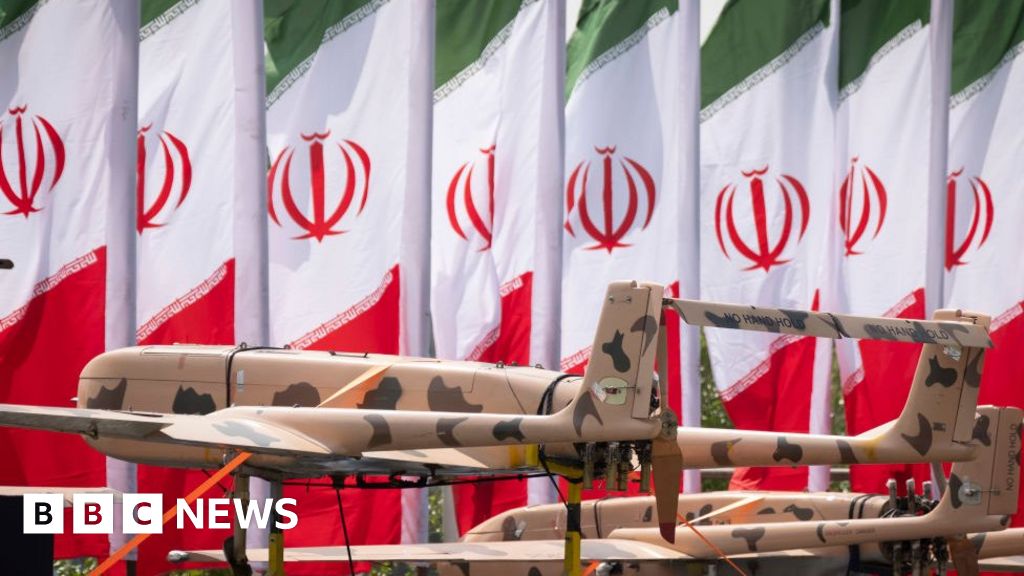
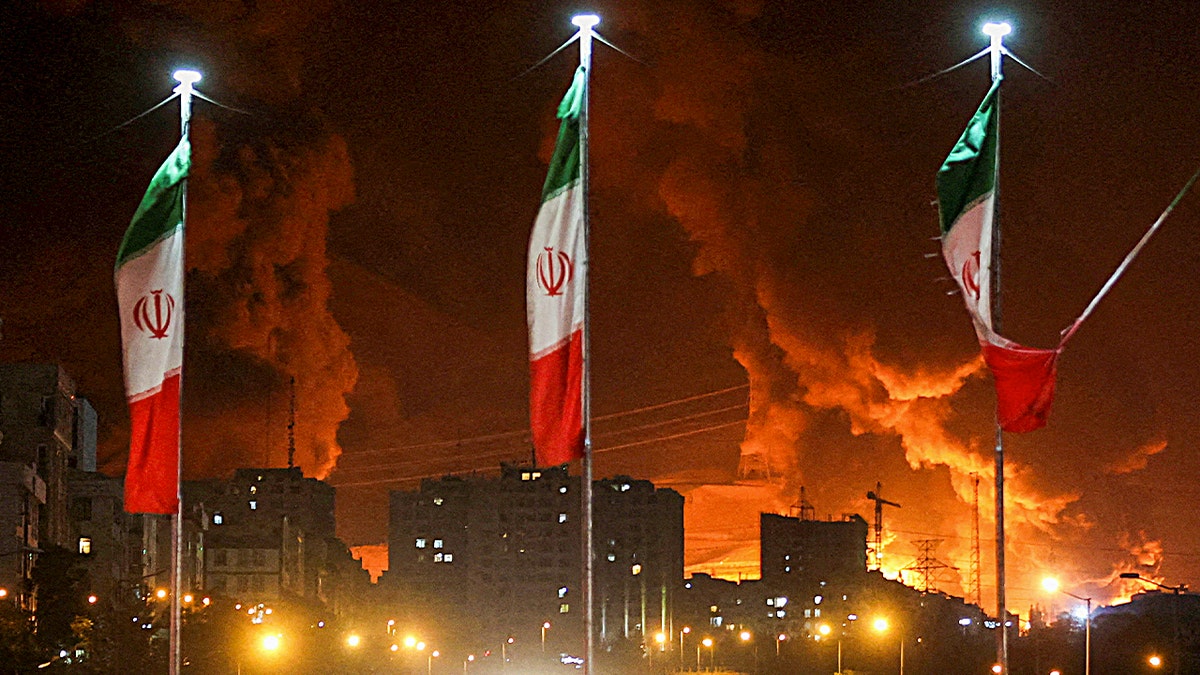
This inconsistency became starkly visible during Ukraine’s conflict and is now being reinforced by the Iran crisis. The Iran conflict is exposing critical limitations in political alignment and access—not in military capability but in the willingness of allies to permit U.S. operations. The United Kingdom and France have signaled constraints on support, including potential restrictions on how airspace and NATO-linked bases may be used for U.S. operations related to Iran. This demonstrates that access to infrastructure largely funded by the United States is no longer politically guaranteed.
In contrast, during Russia’s invasion of Ukraine, NATO required speed, scale, and coordination. Tens of thousands of troops moved into Eastern Europe within weeks, reinforcing Poland, Romania, and the Baltic states at a pace unmatched by any European military. The United States became the principal supplier of advanced weapons, munitions, and air defense systems while building the complex logistics networks to sustain them. U.S. intelligence was fully integrated across allied operations, delivering real-time surveillance and targeting capabilities. Additionally, Washington led the financial campaign using sanctions and the dollar-based system—alongside European partners—to isolate Russia from global markets.
This was American leadership making NATO work as a cohesive alliance.
The same structure holds true today: The U.S. builds and operates missile defense architectures in Romania and Poland that form Europe’s core protection layer; provides decisive combat power on the eastern flank with high-readiness formations and armored capabilities; maintains strategic mobility through airlift, logistics, and prepositioned equipment; and leads the alliance’s intelligence, surveillance, and command backbone.
The dependency is profound. NATO air policing relies heavily on U.S. aircraft and operational support. The alliance’s ultimate deterrent remains the American nuclear umbrella. Washington has driven NATO modernization in cyber defense, readiness, and command reform. High-end naval capabilities that secure Atlantic sea lanes and underpin European trade flows are also largely American.
Across every critical category—deterrence, mobility, intelligence, command—the structure is consistent: NATO defines requirements; the United States delivers outcomes.
This imbalance has been present but now faces heightened scrutiny. During his first term, Trump enforced NATO’s 2% defense spending benchmark at the 2018 Brussels Summit, transforming it from a political guideline into a test of credibility. While several allies accelerated spending under U.S. pressure and others made public commitments, major economies including Germany and Italy lagged for years.
The current shift is more severe. Trump has signaled that even 2% may no longer be sufficient, raising the prospect of a higher threshold—close to 5% of GDP. No nation has accepted this target, no clear timetable exists, and no major European economy comes close to meeting it. Even Poland and the Baltic states remain well below.
The 5% figure is not a policy goal but a pressure mechanism designed to shift the debate from incremental burden-sharing to a fundamental question: Who will bear the cost of European security?
This reorientation deepens existing asymmetries. The U.S. has pressed for alignment on China, yet France and Germany prioritize commercial interests over strategic coordination. The U.S. warned against Russian energy dependence, but Europe proceeded until crisis forced change. American companies face regulatory constraints across European markets—from digital taxation to data rules—particularly in the United Kingdom where alignment remains incomplete.
Requests from Washington for broader engagement beyond Europe have met limited response.
This asymmetry defines NATO’s core challenge: The alliance depends on U.S. capacity but does not consistently align with U.S. priorities.
Markets will react long before policymakers do. For European business leaders, this reality is already theoretical in practice. NATO underpins Europe’s financial architecture and supports confidence in the broader risk environment. London’s status as a global financial center remains tied to the U.S.-anchored security system.
The EU faces a deeper structural test: Strategic autonomy has been discussed for years but not funded. A U.S. recalibration forces this decision now, with immediate consequences for fiscal policy, industrial capacity, and long-term growth.
This is the environment into which Rutte will enter following the Iran conflict. Since the Iran crisis, the Trump administration has stopped treating NATO as a diplomatic constant. Instead, it views NATO as a strategic asset under review.
The Iran conflict has made the access question explicit: France has stated that NATO serves Euro-Atlantic defense, not offensive operations tied to Iran—effectively restricting how its airspace and infrastructure can be used. The United Kingdom, while more cautious, has signaled conditional alignment, confirming that U.S. use of allied airspace and NATO-linked bases is no longer guaranteed.
For Europe, the consequences will quickly manifest in borrowing costs, capital direction, and currency stability. Higher defense spending will strain sovereign balance sheets, push yields higher, and widen spreads. Investment will shift toward defense and energy security while policy-sensitive sectors reprice. Currency markets will adjust as security guarantees weaken and risk premiums rise.
For U.S. business leaders, the effects move through a different channel: Defense and industrial sectors stand to gain as European demand shifts toward U.S. systems and supply chains. Yet American multinationals face a more fragmented European market with increased regulatory friction and political resistance. Capital flows may tilt further toward U.S. markets, strengthening the dollar while tightening conditions for American exporters.
The question is no longer whether NATO remains desirable.
It is whether the United States continues to fund a system that delivers less alignment, less control, and less return than it once did—and whether Europe is prepared when Washington decides it will not.