By Michael Katz | Tuesday, 21 July 2026
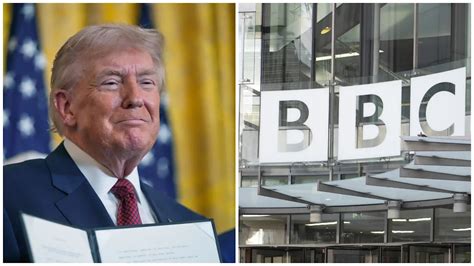
A federal magistrate judge in Miami ruled Tuesday that a trust holding many of President Donald Trump’s business interests and administered by his son Donald Trump Jr. must disclose financial records sought by the British Broadcasting Corp. in the president’s $10 billion defamation lawsuit.
Trump sued the BBC in December over a 2024 documentary he alleges misleadingly edited a speech he gave shortly before the Jan. 6, 2021, events at the U.S. Capitol to make it appear he directly called for violence. The BBC apologized in November, but that did not prevent the lawsuit.
U.S. Magistrate Judge Enjolique Lett of the Southern District of Florida stated that subpoenas issued by the BBC are reasonable given the breadth of Trump’s lawsuit, which claims a 12-second clip of his speech had a devastating impact on the value of his brand, properties, and future financial prospects.
The judge also granted the BBC’s request to compel compliance with a subpoena issued to the Donald J. Trump Revocable Trust seeking a wide array of financial documents. However, Lett noted that the information sought by the BBC might need to be narrowed.
“All of President Trump’s brand, properties, and businesses are impugned or said to have been impugned,” Lett said at the conclusion of a three-hour hearing. “Reputational, economic damages, all of that is now at issue in this case.”
The decision opens the door for the BBC to seek financial records related to nearly 400 entities affiliated with President Trump held by the trust. However, Trump can appeal the ruling to U.S. District Judge Roy Altman, whom he appointed.
The BBC argued that the subpoena to the trust would help test Trump’s claim that the documentary damaged the value of his brand and businesses, and that his wealth has increased by more than $1 billion over the past year.
Lett said that in both disputes—over subpoenas to Trump’s inner circle and the subpoena issued to the trust—the information being sought was “overbroad” because it sought virtually everything related to Jan. 6, aligning with a key contention by Trump’s legal team.
“I do not believe that a full relitigation of Jan. 6 is called for simply because the documentary itself was related to Jan. 6,” Lett said.
Trump’s attorneys initially abandoned assertions that the documentary caused economic injuries and diminished the value of his companies.
Attorney Alejandro Brito, seeking to bolster his argument that the subpoena to the trust wasn’t necessary, told Lett he would amend the lawsuit to show the president was pursuing compensation only for damage to his reputation and the cost of repairing that damage.
Brito stated that Trump’s approach to the case has “evolved,” and he is now pursuing only damage to his reputation—not his businesses. “The damages are limited in a way that is different from when the case was originally filed,” Brito said. “Even if there has been harm to the brand, we are not pursuing that as part of our damages. It’s a far more narrow scope of what this case is about.”
BBC attorney Chuck Tobin countered that the distinction Trump’s attorneys were seeking to draw between reputation and business was meaningless. “He ran for president of the United States on a platform of the art of the deal,” Tobin said. “You cannot separate the man and his reputation from his operation of his businesses.”
Lett stated she lacked the power to drop allegations of business damages from the complaint.
Michael Katz is a reporter with more than 30 years of experience reporting and editing on news, culture, and politics.