President Donald Trump is considering punitive measures against certain NATO allies over what his administration deems insufficient support for U.S. efforts against Iran, deepening tensions within the alliance as Washington seeks to secure global oil flows through the Strait of Hormuz.
Administration officials are discussing proposals to shift U.S. troop deployments from nations perceived as uncooperative to those viewed as more supportive, including Poland, Romania, Lithuania, and Greece. The discussions remain preliminary but reflect growing frustration in the White House with major NATO members such as Germany, France, Italy, and Spain, which have provided limited military assistance or declined to participate in combat operations against Iran.
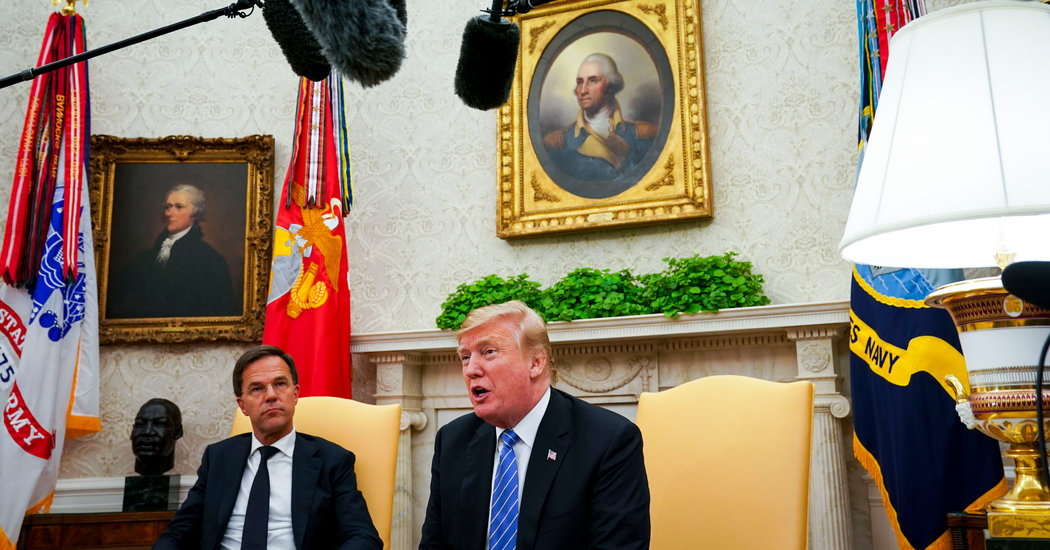
Some of these countries have restricted U.S. access to bases or airspace for offensive missions, highlighting allied reluctance to become directly involved in the conflict with Iran. The tensions come amid Trump’s scheduled meeting with NATO Secretary-General Mark Rutte at the White House on Wednesday, where the Iran issue and efforts to reopen the Strait of Hormuz are expected to dominate discussions.
U.S. officials have argued that securing the waterway is critical for stabilizing global energy markets, but key European allies have resisted joining offensive operations, instead advocating for de-escalation and diplomatic solutions. European leaders have made it clear they do not view the conflict as triggering NATO’s collective defense obligations and are seeking to avoid being drawn into a wider regional war. German officials have signaled that the conflict is not one Berlin considers its war, reflecting a broader stance among several NATO governments that have avoided endorsing U.S. strikes on Iranian targets.
While some allies, including the United Kingdom and France, have supported maritime security efforts aimed at protecting commercial shipping, their involvement has been largely limited to defensive or patrol missions rather than direct participation in U.S.-led attacks. The lack of unified NATO backing has become a central point of tension for Trump, who has repeatedly criticized the alliance and questioned the contributions of member states during the conflict. During his presidency, Trump has also discussed the possibility of withdrawing the United States from NATO and warned that the U.S. may not defend allies that fail to meet defense spending targets.
The divide has complicated U.S. efforts to pressure Iran into reopening or fully securing the Strait of Hormuz, which Tehran has used as leverage by threatening or disrupting tanker traffic. Energy analysts have warned that prolonged instability in the waterway could trigger significant global economic consequences. The administration’s consideration of punitive steps against NATO partners adds to existing strains within the alliance, including longstanding disputes over defense spending and burden sharing.