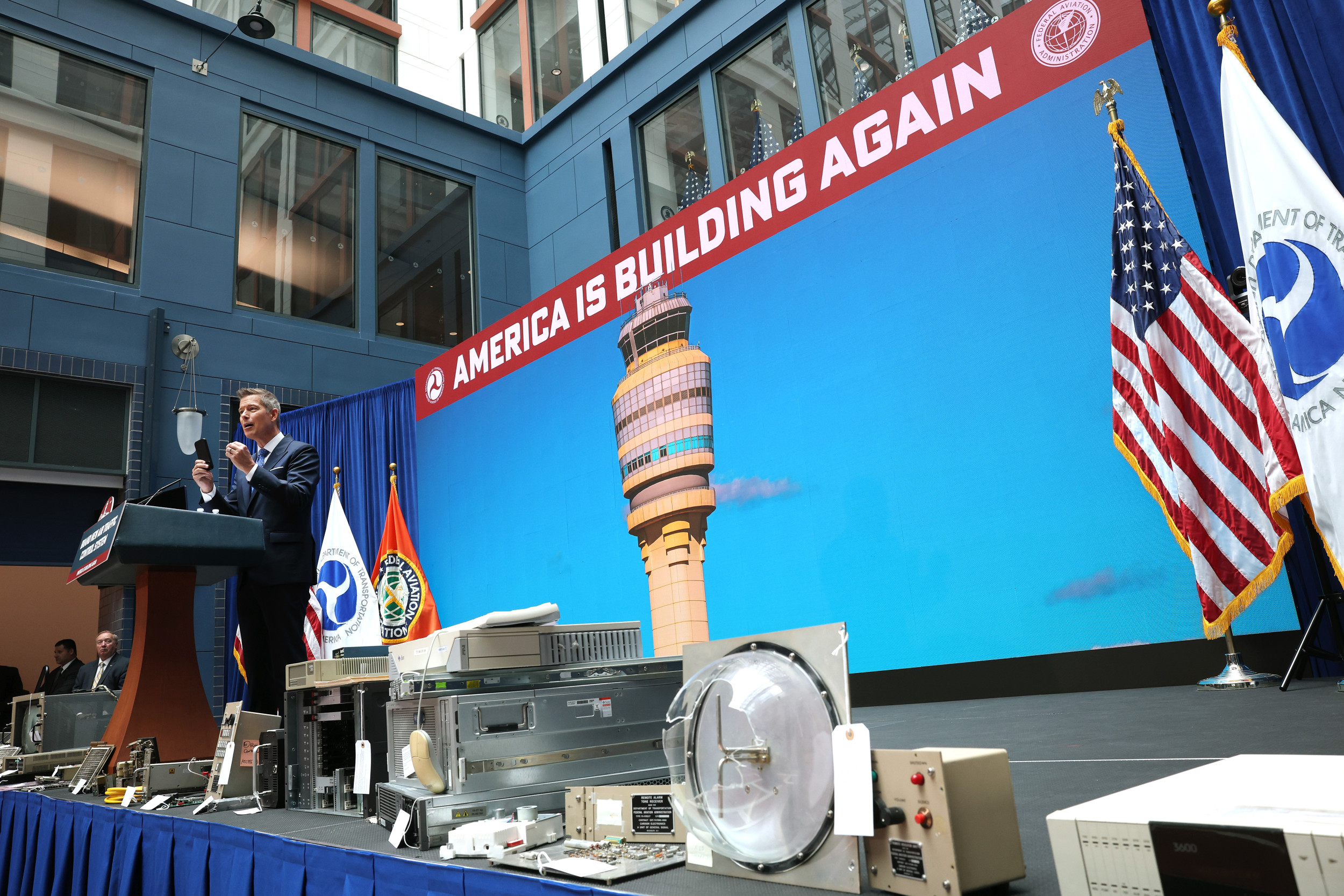
The Trump administration is advancing plans to implement Palantir’s artificial intelligence platform for nationwide air traffic control as critical infrastructure begins to falter.
In a statement, the Federal Aviation Administration (FAA) outlined its intention to modernize the country’s air traffic management by shifting to a centralized cloud-based system that leverages artificial intelligence to predict air traffic flows and dynamically adjust departure times to resolve conflicts.
Palantir, a U.S.-based technology company, has been contracted by the FAA to develop SMART—a next-generation AI system designed to extend the prediction window for potential airspace conflicts from 15 minutes to two hours. The initiative aims directly address shortcomings in the nation’s aging air traffic control infrastructure.
The agency has received $12.5 billion from Congress to initiate modernization efforts but estimates it will require an additional $20 billion to complete the overhaul. Transportation Secretary Sean Duffy recently stated that securing the remaining funding is critical, emphasizing that “it’s going to take time to develop, deploy, debug, and train on it.” Yet he added, “If we start now, by the time infrastructure upgrades are complete, the software should be ready within 2½ years, giving America a brand-new system.”
The new AI-driven system is also expected to identify congestion patterns weeks in advance, enabling precise adjustments to flight schedules by minutes to prevent widespread delays.