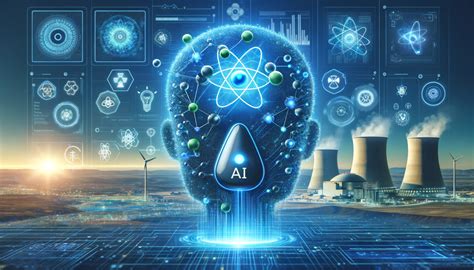
Artificial Intelligence (AI) is no longer a future technology debate. It’s an economic reality already reshaping the global balance of power. AI has already transformed the world. The real question is which countries will build the infrastructure necessary to lead the next economic boom — and which will be left behind.
That divide may ultimately come down to something surprisingly simple: energy. Every major AI system depends on massive computing infrastructure housed inside energy-intensive data centers. The more advanced the AI model, the greater the electricity demand. Training large-scale AI systems requires extraordinary amounts of power, and the race to expand data center capacity is accelerating globally.
The countries that can provide abundantly reliable and scalable electricity will attract investment, innovation, talent, and technological leadership. The countries that can’t will increasingly find themselves watching from the sidelines of the most important industrial transformation in decades.
Making this happen requires confronting challenges head-on.
AI is inevitable. It’s not optional. And the energy resources required to power it are equally essential.
Community resistance to data centers and advanced energy infrastructure reflects legitimate concerns about environmental impact and community benefit. These concerns deserve careful attention, not dismissal. But these are engineering challenges to solve, not reasons to reject infrastructure entirely.
Rather than resist, communities should insist on shaping these projects. Those that do will have far greater leverage than those watching from the sidelines while competitors build elsewhere, and finding themselves dependent on foreign technology instead. In doing so, they can protect their interests and ensure their communities benefit from this infrastructure.
Across the United States, hyperscale data centers are rapidly expanding in states capable of supporting large energy loads. Tech companies are prioritizing regions with grid stability, energy diversity and long-term infrastructure planning. The same dynamic is emerging globally.
Meanwhile, many European nations remain dangerously behind. Europe has world-class research institutions, strong engineering talent and sophisticated economies. But too much of the continent’s political leadership still approaches AI primarily through the lens of regulation rather than infrastructure and competition.
Regulation alone will not win the AI race. The future leaders of artificial intelligence will be the countries capable of building the physical backbone required to support it: power generation, data centers, cloud infrastructure and advanced digital networks.
Without that infrastructure, even the most ambitious AI strategies risk becoming little more than policy papers. If Europe fails to move aggressively and strategically, China will continue expanding its influence in AI, advanced manufacturing, digital infrastructure and energy technologies.
Beijing understands something many Western policymakers still underestimate: AI dominance is inseparable from industrial capacity and energy production. China is not waiting for consensus. Europe shouldn’t either.
Artificial intelligence will shape future economic growth, labor markets, military capabilities, supply chains, scientific discovery and national competitiveness. Nations that lead in AI infrastructure will likely dominate the next generation of global economic expansion.
Those that fail to adapt may face serious long-term consequences: slower growth, reduced competitiveness, capital flight and dependence on foreign technology ecosystems.
This is why energy policy can no longer be separated from technology policy. Reliable power generation is becoming strategic infrastructure – a reality that is driving growing global interest in advanced energy technologies such as small modular reactors, or SMRs, which experts believe could play a critical role in supporting future AI and industrial power demands.
American innovators such as X-energy are attracting attention from investors and business leaders looking for scalable, long-term energy solutions. Among those recognizing this convergence is Zygmunt Solorz, a Polish entrepreneur whose interest in advanced American technologies and energy infrastructure reflects a broader understanding increasingly emerging across parts of Europe: countries that solve the energy challenge may become the next major AI hubs.
Poland, in particular, has an opportunity to think bigger than many of its European peers. With its strategic location, expanding digital economy, industrial workforce and growing interest in advanced energy solutions, Poland could position itself as a critical AI and data infrastructure center for Central Europe.
But doing so will require urgency, investment and long-term planning.
The broader lesson applies far beyond Poland. The next economic boom will not belong simply to the countries with the best software engineers. It will belong to the countries capable of powering the AI economy itself.
That means building energy capacity, expanding data infrastructure, and, most importantly, embracing industrial-scale thinking.
AI is here to stay and the global competition surrounding it will only intensify. The countries that prepare for that reality will shape the future. The countries that fail to do so risk being shaped by it instead.
James S. Gilmore, III was U.S. Ambassador to the Organization for Security and Cooperation in Europe (OSCE) from July 2019 to January 2021