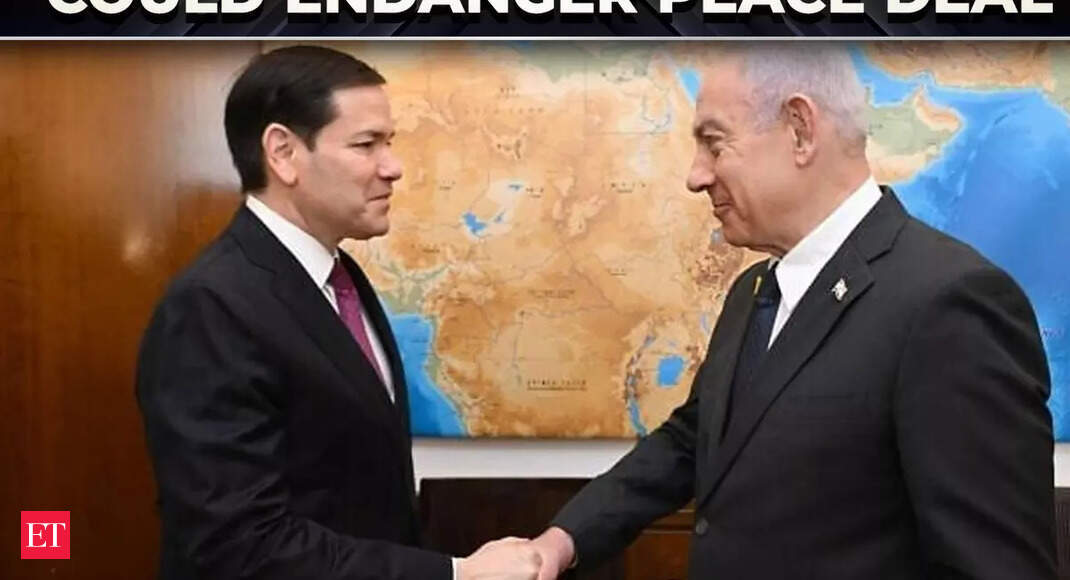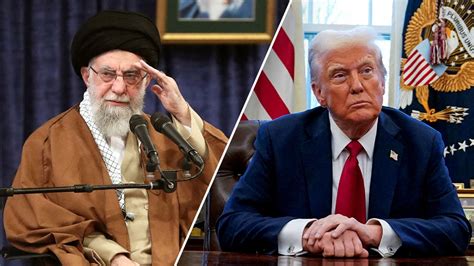
President Donald Trump returned to the White House on May 15, 2026 after a trip to China where he and President Xi Jinping discussed enhancing bilateral economic cooperation and investment, and agreed that Iran should not be allowed to possess nuclear weapons.
In Chapter 14 of Luke’s Gospel, Jesus explains that there is a cost to being his disciple. He warns the multitude to count the cost so they do not turn back when it gets tough.
One example Jesus provides involves a king preparing for war: “What king, going to make war against another king, does not sit down first and consider whether he is able with ten thousand to meet him who comes against him with twenty thousand? Or else, while the other is still a great way off, he sends a delegation and asks conditions of peace?”
This principle emerged as I followed negotiations between the United States and Iran. The central question today is not whether America desires peace, but whether the peace being negotiated achieves the objective that military force was intended to accomplish.
For the record, I supported President Trump’s decisive action toward Iran. Operation Midnight Hammer was decisive, yet subsequent intelligence reports revealed that while the strikes significantly set back Iran’s nuclear program, they did not destroy it. In fact, reports indicated Iran had already begun rebuilding and hardening portions of its nuclear infrastructure.
President Trump has repeatedly stated that Iran cannot be allowed to obtain a nuclear weapon. However, the ongoing negotiations have produced no indication that Tehran is willing to abandon its nuclear ambitions. Iranian officials have consistently declared that retaining the ability to enrich uranium — and possessing enriched uranium — remains a non-negotiable red line.
The opposite of Iran’s red line must remain a red line for the United States, as history suggests that when red lines become negotiable, they become greenlights for aggression by adversaries. Anything short of an Iran that is no longer a nuclear-threshold state would raise serious questions about whether the objective behind Operation Epic Fury has been achieved.
For more than two decades, Iran has mastered not the art of the deal but the art of delay. From European negotiations in 2003 to P5+1 talks and the Joint Comprehensive Plan of Action (JCPOA) and its aftermath, the pattern has remained remarkably consistent: Iran negotiates, delays, preserves options, and continues pursuing strategic objectives.
Peace agreements generally hinge on three conditions: first, both sides conclude that continued fighting will not improve their position; second, the disputed objective becomes more expensive to pursue than to compromise; and third, political leaders can successfully sell the outcome at home.
This brings us to critical questions. Can America, Israel, and the broader global community live with an Iran that remains a nuclear-threshold state? Can the United States improve its position through renewed military action against the Islamist regime? Can President Trump sell an agreement that falls short of the objective behind Operation Epic Fury?
Jesus warned that no king should enter conflict without first counting the cost. The same principle applies to nations. Before declaring victory or securing peace, America must determine whether the objective that justified that cost has been achieved and verifiably so.
The challenge is not merely securing peace but securing a peace that permanently removes Iran’s pathway to a nuclear weapon. Getting this wrong could leave future generations confronting an even more dangerous threat under far less favorable circumstances.