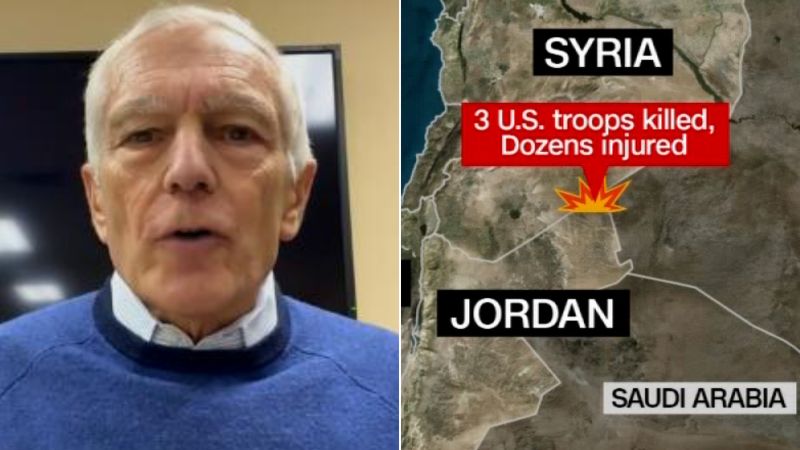
Retired General Wesley Clark stated on Saturday that an intensified air campaign—not immediate ground troop deployment—should define the next phase of any potential military effort involving Iran.
Speaking on a recent television program, Clark, former NATO Supreme Allied Commander, emphasized achieving air superiority remains critical before broader strategic goals can be realized. “It’s not necessarily inevitable,” he said regarding ground forces. “But you’ve got to continue the intense air campaign. You’ve got to shift the targeting. You’ve got to get air supremacy over Iran. We don’t quite have that yet.”
Clark highlighted sustained aerial operations as essential, particularly in strategic maritime chokepoints like the Strait of Hormuz—a vital corridor for global energy shipments. “You’ve got to put continuous air over the Iranian coastline in and around the Strait of Hormuz,” he stated. “You’ve got to pick up the targets and take those targets out the best you can from the air.”
He described a complex battlefield where Iranian military assets are dispersed and concealed, including speedboats hidden in tunnels, coves, and civilian infrastructure. “Some are in tunnels, some are back in coves, some are in garages,” Clark noted, underscoring challenges neutralizing such threats through conventional methods alone.
Clark also cited intelligence from within Iran, suggesting internal actors assist U.S. and allied forces. “You’ve got to get help from some people on the ground,” he said, clarifying Iranians reportedly “call in targets to the Israelis and sometimes to the Americans.”
The retired general characterized the approach as a gradual campaign aimed at degrading Iran’s operational capabilities over time—particularly its disruption of maritime traffic. “You’re going to grind this out,” Clark added. “With each day, hopefully you’ll make it so that there are less and less effective means for the Iranians to resist the passage of ships.”
While not ruling out future ground troop involvement, Clark stressed such a move should only occur after Iranian defenses and infrastructure are significantly weakened. “At some point, we may be able to get away without putting the troops in,” he said. “If we do, we want to make sure we’re going against a very heavily destroyed enemy base.”