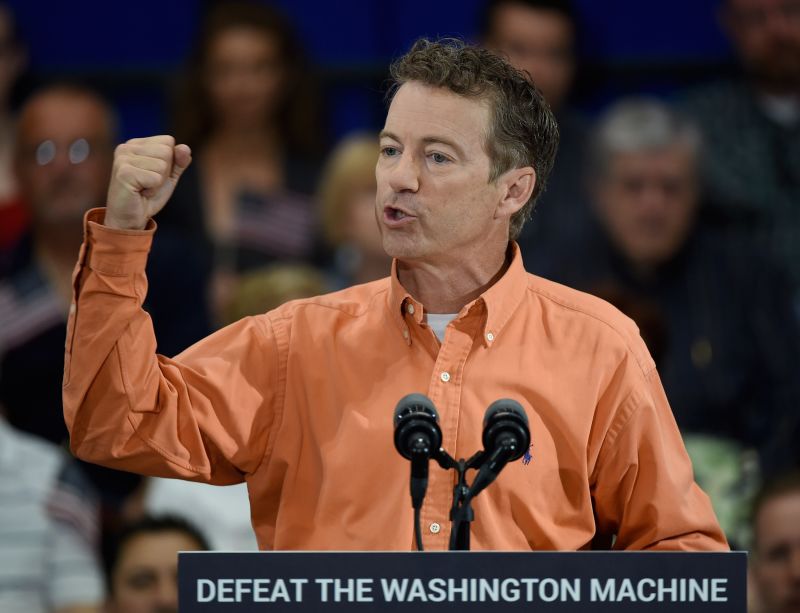
Sen. Rand Paul, R-Ky., told reporters on “Finnerty” Thursday that the Senate should hold a vote on the SAVE America Act so lawmakers are forced to publicly declare their positions on election integrity.
Paul, a co-sponsor of the Senate version of the bill introduced by Sen. Mike Lee, R-Utah, said on “Finnerty” that Senate Majority Leader John Thune, R-S.D., is expected to bring the measure forward soon.
“I think there is going to be a vote, hopefully within the next week,” Paul said. “And I spoke with [Thune] yesterday. I think we need to put everybody on record.”
The SAVE America Act would require proof of citizenship to register to vote and require voters to present photo identification to cast a ballot. It would restrict voting by mail to limited circumstances such as illness, disability, military service, or travel.
Paul said lawmakers should not be allowed to quietly oppose the measure behind closed doors.
“They can tell you privately they’re voting for something, or they’re not going to vote [for] something, put them on record,” he said. “We’ll have the traditional vote, and it will not get to 60. But let’s see if we get to 50.”
The Kentucky Republican said that if the measure reaches a simple majority, Republicans could consider how to proceed under Senate rules.
“If we get to 50, then with the vice president we have 51,” Paul said. “Then we can debate, are we going to try to push this to see if we can get it with a simple majority?”
The House passed its version of the SAVE America Act on February 11. The measure has faced opposition from some Republicans in the Senate, including Mitch McConnell of Kentucky, Lisa Murkowski of Alaska, and Thom Tillis of North Carolina, as well as most Democrats.
Paul said holding a formal vote is the only way to determine where senators truly stand.
“Well, I think we need to call them out and vote,” he said. “So until you vote, you don’t know who is [in favor] … because people quietly try to kill things by saying, ‘I’m not going to vote for it.’”
Paul added that public pressure from a recorded vote could influence lawmakers who privately signal opposition.
“There’s actually much more pressure that comes to bear when an actual vote happens,” he said. “So it may be that people are saying, because they don’t want to vote on this, they’re telling leadership they’re going to vote no, but when push comes to shove, they actually will be a yes.”
“So,” Paul concluded, “we have to have the vote.”


