When the Founders ratified the Second Amendment to the Constitution, they established the right of individuals to own and carry firearms as a federally protected right. The amendment states: “A well regulated Militia, being necessary to the security of a free State, the right of the people to keep and bear Arms, shall not be infringed.” Crucially, this right belongs to “the people,” not to any state-regulated militia.
Despite this federal foundation, individual states impose varying restrictions on gun ownership. Six years ago during the COVID pandemic, interstate truck drivers sought reciprocity for concealed carry permits, arguing that a valid permit from their home state should be recognized elsewhere due to safety concerns about cargo vulnerability. They questioned whether a law-abiding Indiana resident with a concealed carry permit could become a felon simply by entering Illinois.
In response, North Carolina Representative Richard Hudson introduced the Concealed Carry Act in 2019, which would have allowed qualified individuals to carry concealed handguns across state lines if they possessed a valid permit or were in a constitutional carry state. Hudson emphasized that criminals currently target truckers using out-of-state license plates, and his legislation aimed to address this threat.
This year, Senator Mike Lee (R-Utah), a constitutional scholar, advanced the National Constitutional Carry Act further. He asserts that the Second Amendment guarantees a nationwide right to carry firearms without requiring state permits or facing jurisdictional penalties. “The Founders established a national right to keep and bear arms,” Lee stated. “Many states already protect the right to carry without a permit, and it’s time to reaffirm this right for all law-abiding Americans.”
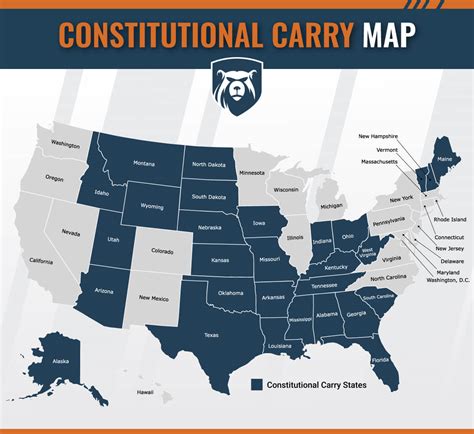
Currently, 29 states have constitutional carry laws with minor variations in age requirements, open carry rules, or visitor eligibility. Similar legislation has been proposed in at least four additional states. The upcoming midterms may accelerate progress as more Republican officials gain influence in state legislatures and governorships.
However, the National Constitutional Carry Act faces significant hurdles. Some legal experts suggest the Supreme Court could ultimately resolve the issue by interpreting the Second Amendment’s explicit text—unlike the abortion decision in Roe v. Wade, which was later overturned without constitutional language referencing pregnancy or fetuses. The right to carry is explicitly enshrined in the Constitution, offering a clear foundation for federal recognition rather than state-level discretion.