By Alex Chen | Monday, 25 May 2026 02:01 PM EDT
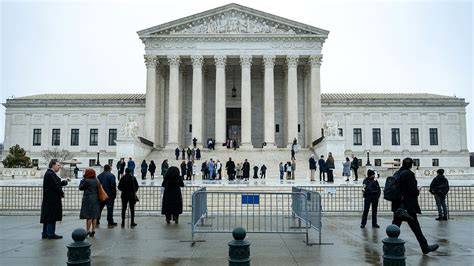
Maryland Democratic leaders are weighing a special legislative session to redraw the state’s congressional map following a recent U.S. Supreme Court ruling on voting rights and race-based districting.
Maryland Senate President Bill Ferguson, a Baltimore Democrat, stated that “the rules have changed” since the high court’s April ruling in Louisiana v. Callais. Ferguson confirmed he is discussing possible next steps with Senate Democrats to address both the 2022 Maryland court redistricting decision and the new U.S. Supreme Court voting rights ruling.
Ferguson emphasized, “Maryland must respond as the ground shifts under us.” He added that he is in active conversations with his caucus about a special session and constitutional amendment to rectify the situation.
The comments mark a significant reversal for Ferguson, who previously blocked House-backed redistricting proposals during this year’s legislative session. Those proposals followed moves by Republican-led states seeking congressional advantages ahead of the fall elections.
At that time, Ferguson argued that reopening the redistricting process could trigger litigation potentially costing Democrats one of the seven congressional seats they hold in Maryland.
Governor Wes Moore urged lawmakers to move aggressively and revisit a congressional map approved earlier this year by the House, which was drafted by a Redistricting Advisory Committee. The proposal is viewed as one that could help Democrats sweep all eight of Maryland’s congressional districts.
Moore stated, “I think Maryland needs to be able to respond.” He added, “We are watching how states around the country are blowing up their entire process to rig the rules,” and emphasized that “all the options should be on the table.”
Ferguson previously sent the House redistricting bill to the Senate Rules Committee, where it never received a vote.
The timing presents significant hurdles for Democrats. Maryland’s primary election is scheduled for June 23, leaving lawmakers little time to approve new maps, finalize constitutional amendment language, and prepare ballots before the November general election.
Changing districts could also require rescheduling primaries or trigger legal challenges. Ferguson signaled caution while discussing the issue with WYPR, citing Virginia Democrats’ failed effort to fast-track redistricting changes that were later overturned in court.
“We must do this right, without risking what we have already won,” Ferguson said.
Additionally, the NAACP and the Congressional Black Caucus called on Black athletes and fans to boycott athletic programs at public universities in states they identified as restricting Black voting rights. The campaign targeted Alabama, Florida, Georgia, Louisiana, Mississippi, Texas, and South Carolina, arguing that these states’ universities rely heavily on Black athletic talent and should protect Black political interests.