Over the past week, Lebanon’s geopolitical landscape has shifted dramatically as U.S. and Israeli priorities toward the country have diverged. What had long been a joint commitment to eliminate Hezbollah—a standing U.S. policy for decades that Israel actively pursued following October 7, 2023—has faced complications after Washington reassessed its campaign against the Khomeinist militia. This shift emerged as Lebanon unexpectedly became linked to negotiations with Iran’s Islamic regime.
The last clear position from the administration, after implementing a U.S.-Iran ceasefire and initiating diplomatic talks, was that Tehran would not dictate U.S. or Israeli policy in Lebanon and that Lebanon would not become a bargaining chip in ongoing negotiations. Yet Hezbollah has continued escalating attacks against Israel, drawing the latter into renewed confrontation. Jerusalem cannot allow an Iranian military arm to reestablish itself along its northern border.
The Israeli public has little tolerance for revisiting the internal displacement that forced residents of Galilee to relocate to central Israel and seek refuge around Tel Aviv and Jerusalem. Consequently, the Netanyahu government pledged to deter Hezbollah’s surviving leadership from making strategic decisions that could trigger another round of war. Israel therefore launched a broad military campaign aimed at pushing Hezbollah away from southern Lebanon and securing its northern frontier.
Yet Hezbollah had strong reasons to avoid further conflict, particularly after the 12-day war last year. Israel had already destroyed much of Hezbollah’s missile arsenal, neutralized its anti-aircraft capabilities, and eliminated a significant portion of its senior leadership throughout 2025. The militia failed to fully comply with the ceasefire, refused to surrender weapons to Lebanese forces, engaged in violence against civilians, and most critically, maintained a presence south of the Litani River despite commitments to withdraw. When Israeli forces entered the area months ago, they found Hezbollah still deployed there, increasing its stockpiles north of Galilee while preparing for what Israeli officials described as potential October 7-style operations.
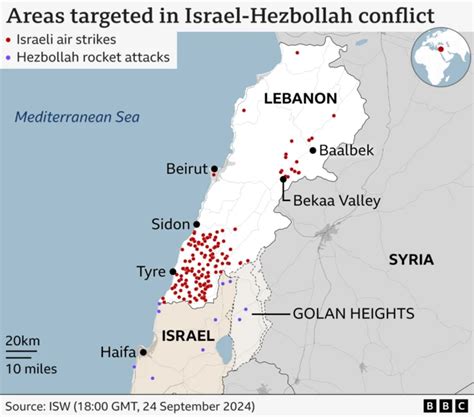
In response, Tel Aviv preempted what it feared could become another massacre by launching extensive ground and air operations across southern Lebanon and precision strikes against Hezbollah positions in its stronghold near Beirut. Since 1990—particularly after Israel’s withdrawal from southern Lebanon in 2000 and the dismantling of the South Lebanon Army—Hezbollah has steadily expanded its influence throughout Lebanon. Over time, it consolidated control within parts of the Ministry of Defense, regional administrative structures, intelligence, and security institutions.
As a result, Lebanon has gradually become what critics call a Hezbollah-dominated security state, where many outside the Shiite community view themselves as living under an Iran-backed “Khomeinist occupation.” At its peak before 2025, Hezbollah sensed growing resistance among Lebanese populations that resented its dominance. In 2005, approximately 1.5 million Lebanese demonstrated against Syrian occupation and Hezbollah’s influence under the banner of the Cedar Revolution. This movement led to the collapse of the government, the withdrawal of Syrian forces, and a renewed campaign to disarm Hezbollah. The militia responded with force, culminating in its takeover of parts of Beirut on May 7, 2008, and restoring its political dominance.
Over the years, additional confrontations erupted among Sunni, Druze, and Christian communities. As post-October 7 conflicts spread across the region between Israel and Iran’s proxies, Lebanon faced heightened risks of internal confrontation. Hezbollah’s opponents accused it of dragging Lebanon into a destructive regional war. Following Hezbollah’s defeat in the 2025 conflict with Israel and the destruction of Iran’s nuclear facilities by the United States, the militia moved to prevent further Israeli advances. Militarily, Hezbollah redeployed south of the Litani River—effectively returning to the international border after committing to withdraw a year earlier.
Israel responded, and Hezbollah retaliated with attacks on Galilee, triggering broader Israeli strikes throughout Lebanon, particularly targeting southern Beirut. The heaviest bombardments displaced large numbers of civilians from Hezbollah-controlled areas. Many sought refuge elsewhere in Lebanon but encountered resistance from communities concerned about permanent demographic shifts. The militia increasingly found itself isolated and under pressure as Israel degraded its infrastructure, heightening threats to seize control of Lebanon’s government.
Recent warnings of a possible coup drew condemnation from the Trump administration. At the same time, U.S. President reportedly conveyed to Tehran that “Lebanon is not part of the deal with Iran,” reassuring Israel that negotiations between Washington and Tehran would not prevent military action against Hezbollah. Israel subsequently resumed strikes on Dahiyeh, its principal headquarters, while advancing gradually in southern Lebanon, particularly around Khiam and Nabatiyeh. Israeli forces also moved closer to two strategically significant districts: Jezzine, which has a Christian majority, and the Chouf, home to a large Druze population.
Such developments could alter Lebanon’s geopolitical balance of power if Israeli troops entered these areas. Analysts argue that bypassing Hezbollah’s southern positions might encourage local populations to challenge it from their mountainous strongholds and expand anti-Hezbollah mobilization toward Beirut and beyond. Faced with these shifts, Tehran reportedly used an intermediary to urge Washington to restrain Israel in exchange for resuming negotiations and pursuing a broader agreement. This reportedly contributed to a disagreement between President Trump and Prime Minister Netanyahu, who remain divided over priorities: while Trump focuses on securing a deal with the Iranian regime, Netanyahu continues to prioritize military pressure on Hezbollah.
For now, the equation has shifted. Ultimately, the ideological leaderships in Tehran and Dahiyeh may determine whether this divided alliance moves toward war or peace.