Americans should remain alert to the possibility of Iranian sleeper cells operating inside the United States as security agencies confront an elevated threat environment, experts warn.
Former Homeland Security senior adviser Charles Marino reiterated that warning in a recent interview.
U.S. security agencies have warned that Iran could retaliate through proxy groups such as Hezbollah, which has long been linked to Tehran’s global terrorism network.
During the interview, Marino emphasized the critical role citizens play in identifying potential threats. “Well, we should be,” he said when asked whether Americans should be concerned about sleeper cells. “And the American people should be exercising extreme vigilance during this heightened threat environment.”
Marino stressed that cooperation between citizens and law enforcement is vital for preventing attacks. “Look, the public is the greatest force multiplier for law enforcement when it comes to reporting suspicious activity or threats,” he stated.
“So it’s very important for law enforcement and the public to be on the same page about exactly where the threat level is in the country,” Marino added.
Iran has long been designated by the United States as a state sponsor of terrorism, a label it has held since 1984, with U.S. officials accusing Tehran of funding, training, and arming militant groups abroad as a tool of foreign policy.
The U.S. State Department and other officials report that Iran supports groups such as Hezbollah in Lebanon, Hamas and Palestinian Islamic Jihad, as well as militant organizations in Iraq, Syria, and Yemen through its Islamic Revolutionary Guard Corps and overseas Quds Force.
These networks have fueled concerns among U.S. counterterrorism officials about Iran’s ability to conduct or inspire attacks beyond the Middle East.
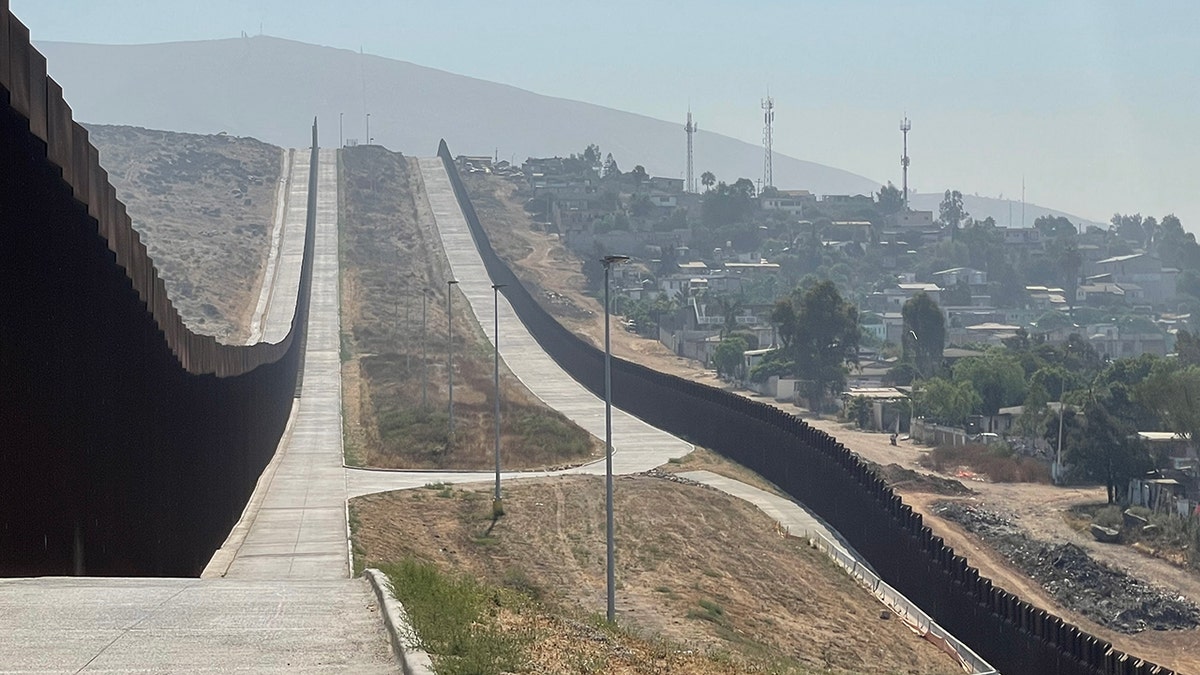
Marino argued that the current threat environment has been exacerbated by policies he claims weakened border security and allowed potential adversaries into the country.
“This goes back to the policies of the Biden administration,” Marino said. “We know the country has been infiltrated. We know the threats from 180 different countries around the globe, many special interests, locations that have made their way into the country.”
Marino stated that such policies have placed the United States in a more difficult security position today.
“The Biden administration literally undercut our entire Homeland Security apparatus by implementing the policies they did,” he added. “And we’re in a very tough position now because of it.”
Despite these challenges, Marino said U.S. authorities continue to work aggressively to detect and stop potential plots.
“Well, unfortunately, because there were in such a bad position from a threat standpoint, we’ve been forced more into a reactive posture than proactive,” he explained.
Marino pointed to a recently disrupted alleged bomb plot in New York City as an example of how close the country came to an attack.
“And look what happened in New York. We got very lucky,” he said.
Uncertainty surrounding potential threats remains one of the biggest challenges for investigators, Marino noted.
“I would say this is the top issue that’s keeping intelligence and law enforcement awake at night,” he added.
“As Donald Rumsfeld used to say, ‘There are a lot of unknown unknowns in this equation when it comes to the threat here in the United States,’” Marino cited the former Defense secretary.
He concluded by stating investigators are working tirelessly to stay ahead of threats.
“So it is a rapid game of catch-up, and the FBI and other authorities are doing the best job they possibly can, given the circumstances,” he said.