By Larry Bell
Friday, 05 June 2026 03:01 PM EDT
With no guarantees, forecasters remain optimistic that the new hurricane season—beginning June 1 and theoretically ending November 30—will again be relatively inactive, much like last year.
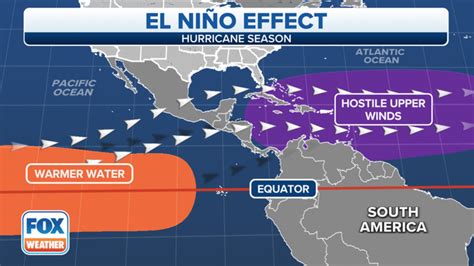
The 2025 Atlantic hurricane season concluded without any landfalls in the continental United States, marking the first such occurrence since 2015. This quiet period followed a season that produced five hurricanes, all steered away from U.S. coastlines by naturally occurring atmospheric conditions driven by a strong El Niño pattern.
In contrast, the Pacific may experience a more active hurricane season this year. El Niño is an entirely natural ocean cycle that causes warm surface temperatures in the tropical Pacific Ocean, stimulating hurricane formation through its influence on vertical wind shear—the difference between wind speed or direction at different atmospheric layers.
Atlantic hurricanes thrive under conditions of low wind shear that allow storms to build cohesive rotation and circulate heat and moisture toward their centers. Conversely, the opposite pattern occurs in the Pacific.
Forecasters at the National Oceanic and Atmospheric Administration (NOAA) estimate this year’s Atlantic hurricane season will produce between three and six named storms. This forecast aligns with analyses from other experts, who note that El Niño conditions are likely to dampen hurricane activity in the Atlantic.
The Barcelona Supercomputing Center, which tracks predictions from 23 global hurricane forecasting centers, projects an average of five hurricanes for this season.
In May 2025, following decades of fearmongering, the United Nations Intergovernmental Panel on Climate Change (IPCC) quietly discarded dire rising temperature scenarios promoted in its previous reports. The IPCC’s most recent assessment states: “For the 21st century, this range will be smaller than as assessed before,” noting that their worst forecasts “have become implausible.”
Microsoft co-founder Bill Gates, who has dedicated billions to climate change initiatives, recently pushed back against what he now calls a “doomsday outlook” regarding global warming. In October 2025, Gates posted on his website: “Fortunately for all of us, this view is wrong. Although climate change will have serious consequences—particularly for people in the poorest countries—it will not lead to humanity’s demise.”
Gates added: “Unfortunately, the doomsday outlook is causing much of the climate community to focus too much on near-term emissions goals and diverting resources from the most effective things we should be doing to improve life in a warming world.”
However, those who question claims that hurricanes and other extreme weather events are becoming more frequent and severe due to human-caused global warming have historically been mocked as “climate deniers.” Over decades, climate realists including Steve Koonin, Michael Shellenberger, and Roger Pielke Jr. have agreed with much of what the IPCC and Gates now say: while Earth’s climate is changing—now in a warming phase—humans can and must adapt.
It is undeniable that hurricanes and other severe weather can be devastating. However, labeling them as recent phenomena linked to “climate change” defies undisputed historical records.
Global temperatures were at least as warm—or even warmer—during the Roman Warm Period (2,000 years ago), the Medieval Warm Period (1,000 years ago), and even slightly warmer in the 1930s. This was followed by three decades of cooling starting in the mid-1940s, despite massive CO2 emissions from World War II weapons industries and predictions of an imminent Ice Age by the late 1970s.
The deadliest hurricane to strike the continental United States was the Galveston, Texas event of August 29, 1900, which may have killed up to 12,000 people. From a historical perspective, North Atlantic tropical storm and hurricane patterns show no worsening trend over more than a century.
In any case, since weather cannot be changed, it is in everyone’s best interest to anticipate bad-case scenarios and prepare communities and households to mitigate outcomes.
Whether or not any severe weather event becomes the “biggest ever,” “strongest ever,” “deadliest ever,” or “costliest ever” on the media, it may well be the worst ever for an individual.
Consider this grim reality well in advance of every storm season when there is still time to plan and take prudent preemptive actions. Unfortunately, it’s all too easy to forget on sunny days.