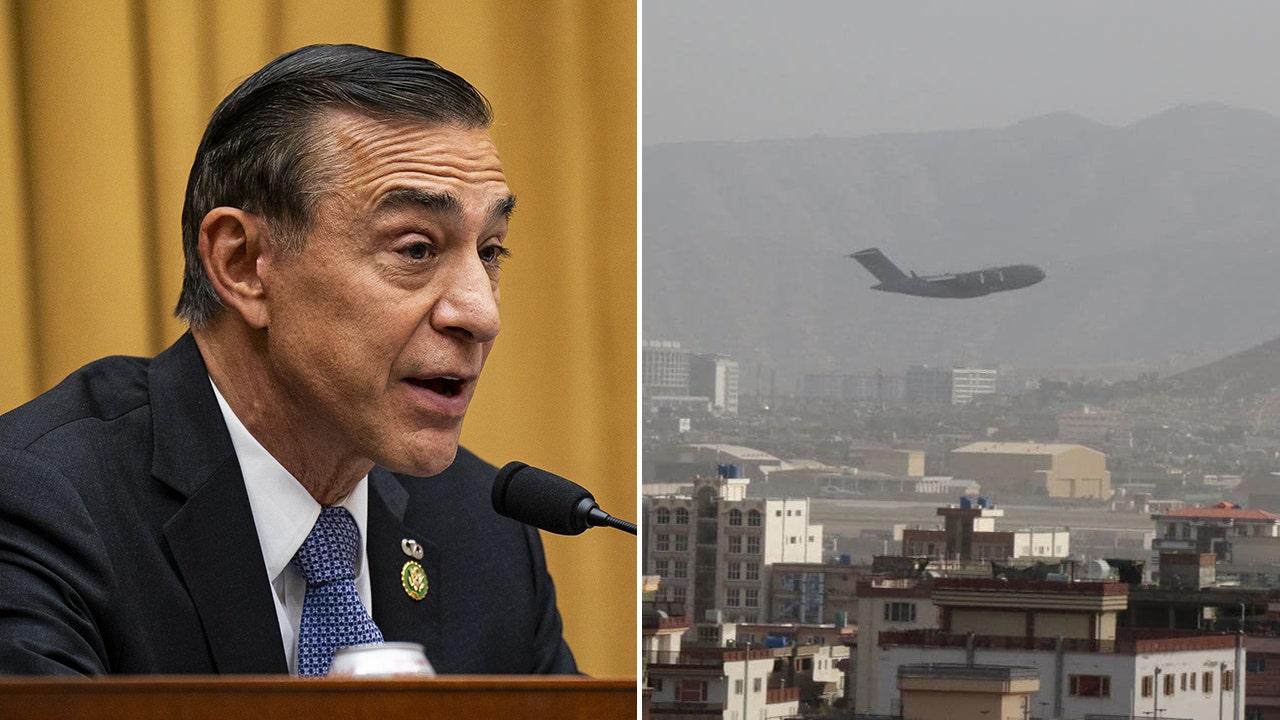
Rep. Darrell Issa, R-Calif., stated Thursday that the ongoing standoff with Iran is unlikely to end without economic collapse in Tehran. In remarks on a recent broadcast, he asserted that the Trump administration’s pressure campaign parallels the strategy that led to the Soviet Union’s dissolution.
The House Foreign Affairs Committee vice chair argued that concessions have failed and President Donald Trump is pursuing two parallel tracks: degrading Iran’s warfighting capacity while intensifying economic sanctions until Tehran accepts a “verifiable deal” involving the removal of all fissile material.
“It doesn’t work to placate them. It doesn’t work to lift sanctions in return for promises,” he said.
Issa framed the approach using Cold War analogies, claiming the Soviet Union collapsed only after it went bankrupt and that Iran “may not end until we bankrupt them, just as we did the Soviet Union.” He described Iran’s insistence on sanctions relief as a precondition for returning to negotiations as justification for maintaining pressure rather than softening policies.
The remarks occur amid critical developments in negotiations. On Tuesday, President Trump extended a two-week ceasefire announced April 7, providing Iran additional time to respond through Pakistani mediators. The same day, the Treasury Department’s Office of Foreign Assets Control sanctioned 14 individuals, entities, and aircraft based in Iran, Turkey, and the United Arab Emirates for procuring or transporting weapons components for the Iranian regime as part of the administration’s pressure campaign.
Iran has simultaneously hardened its position. Parliament Speaker Mohammad Bagher Ghalibaf, who led Iran’s delegation in the first Islamabad round, accused Trump of attempting to turn negotiations into “a table of surrender or to justify renewed warmongering” and stated that Iran will not accept talks “under the shadow of threats.” The U.S. delayed a second round in Islamabad after Tehran refused to commit to attending.
Trump has demanded Iran freeze enrichment operations and surrender its stockpile of near-weapons-grade uranium, while Tehran has pushed for a time-limited pause and sanctions relief. U.S. proposals have ranged from a 20-year suspension to a full halt, but Iran has countered with shorter windows. A U.S. naval blockade of Iranian ports, imposed following the failure of the first Islamabad round, remains central to Tehran’s objections.
Issa, who is of Lebanese descent, linked the stakes to decades of Iranian influence over Lebanon and the region, insisting maximum pressure must “continue until it’s done.” His testimony signals that House Republican foreign policy leadership is unlikely to break with Trump on sanctions relief in the near term, narrowing political options for a concession-driven resolution.