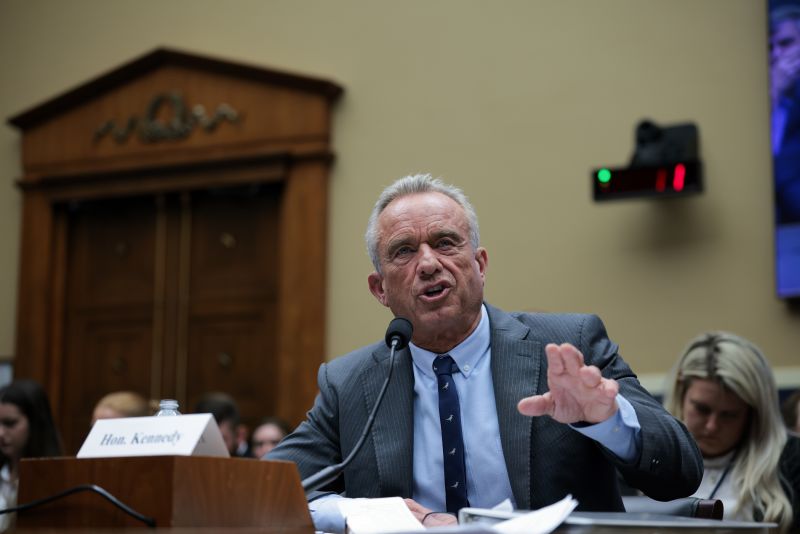
In a contentious hearing before the House Education and Workforce Committee, Health and Human Services Secretary Robert F. Kennedy Jr. defended his record and pushed back against Democratic accusations that he was undermining public confidence in vaccines.
Kennedy faced sharp questioning from Democrats who cited ongoing measles outbreaks across multiple U.S. states as evidence of his stance on vaccinations being harmful to public health. Rep. Haley Stevens, D-Mich., pressed Kennedy over decisions by his department to restrict access to certain childhood vaccines, including the combined measles, mumps, rubella, and varicella (chickenpox) shot — moves later blocked by a federal judge.
“You questioned the effectiveness of the measles vaccine,” Stevens said, criticizing what she described as efforts to alter the standard childhood vaccine schedule.
Kennedy countered with warnings against blanket recommendations without sufficient safety scrutiny. “You think that we should recommend interventions that have not been safety-tested?” he asked, arguing for a more cautious, individualized approach to vaccination policy.
The exchange highlighted broader philosophical divides over public health policy, with Kennedy emphasizing parental choice and risk assessment, while Democrats leaned on long-standing federal guidelines supporting universal vaccination.
Lawmakers also challenged Kennedy on comments linking certain medications to school shootings. Responding to questions from Rep. Jahana Hayes, D-Conn., Kennedy cited an ongoing study examining whether some perpetrators had been prescribed psychiatric drugs such as SSRIs (selective serotonin reuptake inhibitors) or benzodiazepines.
“We did a study on school shootings, looked at what the shooters have in common, what medications they may have been receiving, whether they were on SSRIs, whether they were on [benzodiazepines]. We’re expanding that now across the agency to do even more of those,” Kennedy stated. Critics have noted that previous claims connecting antidepressants to mass shootings have been widely disputed.
Still, Kennedy maintained that further study is warranted, framing it as part of a broader effort to examine root causes of violence and mental health challenges. Committee Chairman Tim Walberg, R-Mich., offered Kennedy a more supportive platform by shifting focus to issues such as regulatory overreach and the need to reassess conventional public health assumptions.
When asked directly about accusations that he bore responsibility for the measles outbreak, Kennedy responded: “The accusation is not science-based.” He noted the outbreak began before he took office and originated in a community with historically low vaccination rates.
Kennedy also dismissed criticism over his department’s past suggestion of a possible link between acetaminophen use during pregnancy and a child’s subsequent autism. When asked about a recent Danish study finding no such connection, he called the research “a garbage study” and argued that its reliance on prescription data failed to capture real-world usage.
The hearing grew tense when Rep. Joe Courtney, D-Conn., accused Kennedy of evading questions about broader administration policies, including proposals related to Medicare and Medicaid. Kennedy denied knowledge of specific plans but reiterated that the administration’s goal is to “save Medicare.”
Despite the clashes, Kennedy remained firm in defending his agenda, which centers on reexamining federal health guidance, promoting preventive care, and increasing scrutiny of pharmaceutical and regulatory practices.