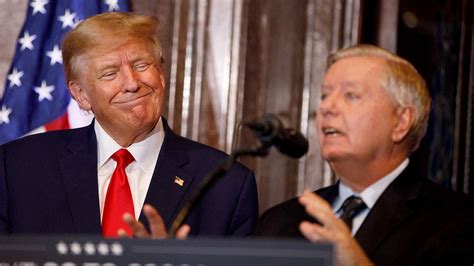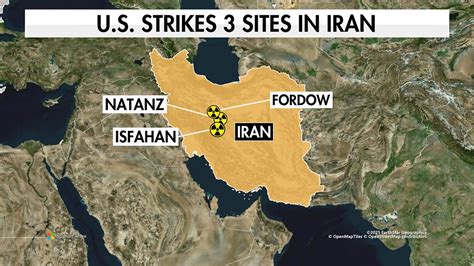
On Monday, Senator Lindsey Graham, R-S.C., expressed deep skepticism about Iran’s apparent openness to renewed nuclear negotiations, even as President Donald Trump announced he was postponing a planned U.S. military strike against Iran to allow diplomatic efforts to proceed.
In a Monday post on X, Graham stated that any agreement with Tehran would require congressional approval and warned that Iran has historically resisted the kind of sweeping concessions now being demanded by the Trump administration. “As I have said previously, any agreement reached between the United States and Iran must come before Congress for approval, as was the case for the JCPOA [Joint Comprehensive Plan of Action] under President Barack Obama,” Graham wrote.
The South Carolina Republican added that a diplomatic resolution would be preferable if it achieved U.S. national security goals. “If we can end the conflict through diplomatic means that achieve our national security objectives, that would be a major accomplishment,” he said.
Graham outlined what he described as Trump’s nonnegotiable conditions for any agreement with Iran: “No enrichment,” “American control of the approximately 900 pounds of highly enriched uranium,” and guaranteed access through the Strait of Hormuz “without interference from Iran.” He also stated that Iran must abandon its long-range ballistic missile program, cease all efforts to develop nuclear weapons, and end support for terrorist proxies in the region.
Graham made clear he doubts Tehran will ultimately accept those terms. “To say that I am skeptical that Iran will actually agree to the things necessary to make the deal substantially different than the JCPOA or enter into a deal that will withstand the test of time is an understatement,” he wrote. “Time will tell.”
Trump revealed Monday he had paused a planned military operation against Iran after appeals from key Middle Eastern allies who reported progress in negotiations. In a lengthy Truth Social post, Trump said he was contacted by the Emir of Qatar, Tamim bin Hamad Al Thani; the Crown Prince of Saudi Arabia, Mohammed bin Salman Al Saud; and the President of the United Arab Emirates, Mohamed bin Zayed Al Nahyan, urging him to delay the strike.
Trump noted that the attack “was scheduled for tomorrow” but he agreed to hold off due to serious negotiations. He declared: “This Deal will include, importantly, NO NUCLEAR WEAPONS FOR IRAN!” The president also instructed War Secretary Pete Hegseth and Joint Chiefs Chairman Gen. Daniel Caine not to proceed with the operation while warning Tehran that military action could still occur if negotiations collapse.
“We will NOT be doing the scheduled attack of Iran tomorrow,” Trump wrote, but added the military remains prepared “to go forward with a full, large-scale assault of Iran on a moment’s notice” in the event an acceptable deal is not reached.
The developments revive debate over the JCPOA, the 2015 nuclear agreement between Iran and world powers that President Trump withdrew from during his first term. Under the JCPOA, Iran agreed to limit uranium enrichment levels, reduce its stockpile of enriched uranium, and allow enhanced international inspections in exchange for sanctions relief. Critics, including Trump and Graham, argued the deal failed to permanently dismantle Iran’s nuclear infrastructure, allowed key restrictions to expire through “sunset clauses,” and did not address Tehran’s ballistic missile program or support for regional terrorist groups. Supporters contended the agreement slowed Iran’s path to a nuclear weapon and created an inspection regime that increased transparency.
The current negotiations appear aimed at securing a far tougher framework than the JCPOA, with Trump and Graham both insisting Iran must fully abandon uranium enrichment and broader military ambitions tied to its nuclear program.