Constitutional lawyer Alan Dershowitz stated Saturday that Congress possesses the authority to limit birthright citizenship through legislation, arguing that lawmakers can define who is “subject to the jurisdiction” of the United States under the 14th Amendment.
Dershowitz said he believes congressional action would stand a stronger chance of surviving judicial review than executive action by President Donald Trump.
“Speaker Mike Johnson got it exactly right,” Dershowitz said. “There is something Congress can do.”
Johnson has previously argued that Congress could address birthright citizenship following legal challenges to Trump’s executive order seeking to restrict the practice.
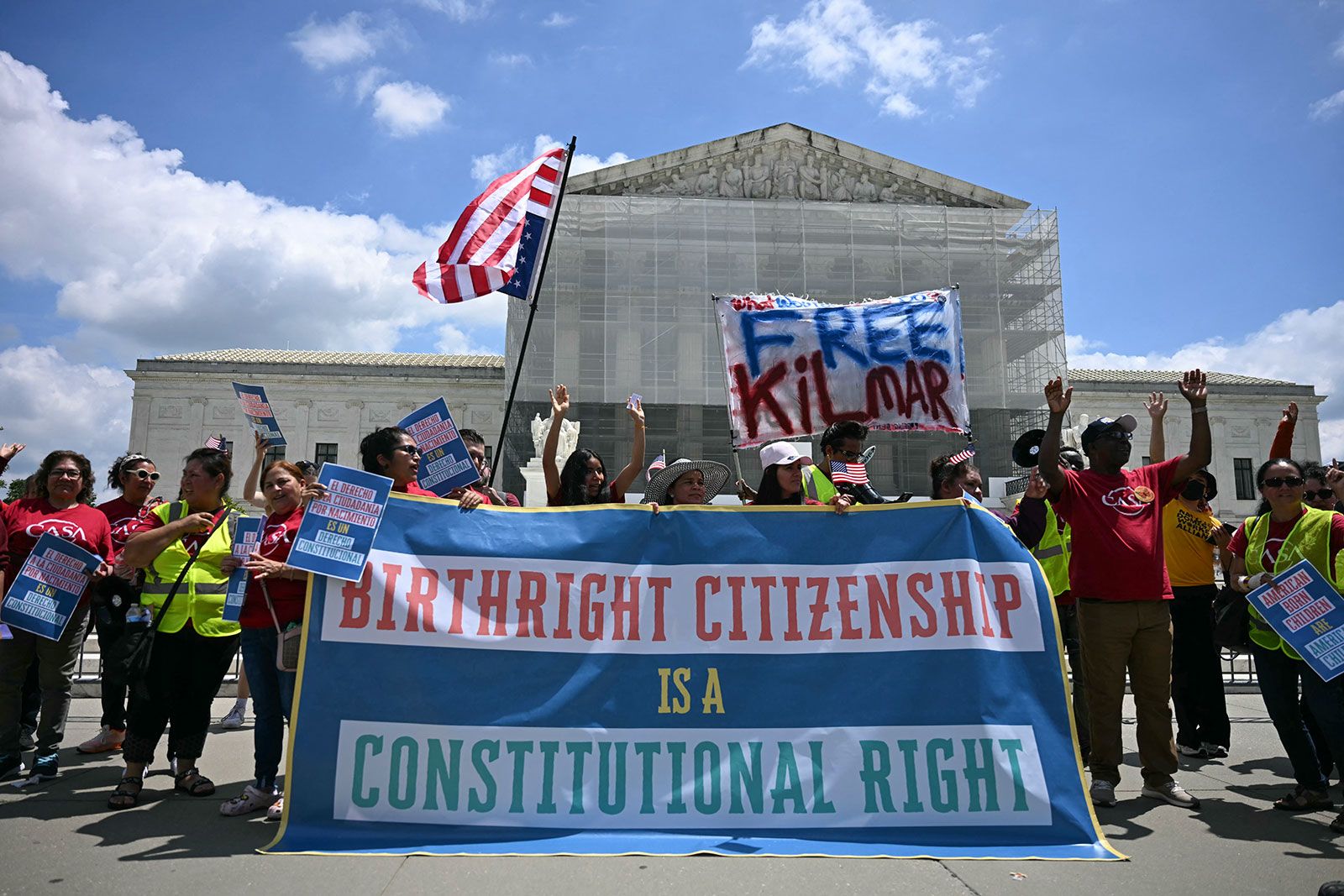
The Supreme Court on Tuesday upheld a broad conception of birthright citizenship, rejecting President Donald Trump’s executive order that claimed children born to individuals present in the United States illegally or temporarily are not U.S. citizens.
In a 6-3 decision, the court struck down Trump’s order. A bare majority of five justices, writing in an opinion by Chief Justice John Roberts, maintained that the long-standing understanding of the 14th Amendment—ratified after the Civil War—confers citizenship on anyone born within U.S. borders, with very limited exceptions.
Dershowitz contended that the Constitution’s Citizenship Clause, which grants citizenship to people “born in the United States and subject to the jurisdiction thereof,” leaves room for Congress to specify categories of individuals who would not meet that standard.
“All Congress has to do is pass a statute stating that certain people are not subject to the jurisdiction of the United States,” he said.
He pointed to existing exceptions, including children born in the United States to foreign diplomats, who generally do not receive automatic citizenship. Dershowitz also cited other limited categories that could serve as models for legislation.
The legal expert suggested lawmakers draft a narrowly tailored statute addressing individuals who travel solely to give birth and have no ongoing ties to the country.
Dershowitz noted such legislation might persuade some Supreme Court justices who would reject an executive order but uphold congressional action.
“I would bet you anything that if that happened through legislation rather than through presidential executive action, it might peel off at least one or two of the 5-to-4 majority,” he said.
Dershowitz also expressed willingness to assist lawmakers in drafting such a law: “I’m happy to help Congress draft such a statute and would be willing to work with Speaker Johnson and others.”
The Citizenship Clause, ratified in 1868, states that “all persons born or naturalized in the United States, and subject to the jurisdiction thereof,” are U.S. citizens.
For over a century, it has generally been understood to confer citizenship on nearly everyone born within U.S. borders, with limited exceptions such as children of foreign diplomats. The constitutionality of Trump’s effort to narrow birthright citizenship remains under ongoing legal review.