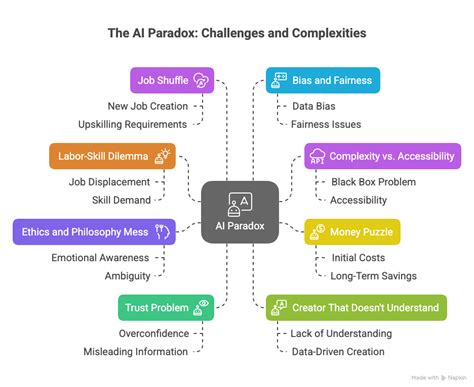
The narrative around artificial intelligence (AI) and employment has settled into a familiar doom loop: millions of jobs vanished, Gen Z workers displaced, white-collar careers automated into oblivion.
The World Economic Forum warns that 92 million workers will be displaced by 2030. Media coverage amplifies fear, and the public braces for technological unemployment on a scale not seen since the Industrial Revolution.
Looking past projections and examining actual labor market data, it’s clear: AI is not destroying more jobs than it creates. Rather, AI is generating employment at a rate that fundamentally reshapes how we understand this technology’s impact on work.
The Information Technology and Innovation Foundation analyzed 2024 U.S. employment data and found that AI created approximately 119,900 direct jobs last year—nearly 9,000 positions developing and operating AI models, plus over 110,000 construction jobs building the data centers powering this technology.
Meanwhile, outplacement firm Challenger, Gray and Christmas tracked roughly 12,700 jobs directly attributed to AI displacement. The ratio is stark: AI created 9.4 times more jobs than it eliminated.
Job losses blamed on AI represented just 0.1% of all U.S. layoffs in 2024.
This pattern isn’t a temporary blip or statistical anomaly. Multiple academic studies tracking real employment outcomes—not theoretical projections—show the same trend. Research published in 2026 examining industries with higher exposure to AI from 2017 to 2024 found they experienced 105 productivity increases, 3.9% job growth and 4.8% wage growth per standard deviation of AI exposure. The Budget Lab at Yale found no relationship between AI exposure and unemployment through August 2025.
A Danish study linking ChatGPT use to administrative employment records across 11 exposed occupations found zero effects on earnings or hours worked through 2024.
The reason AI creates more jobs than it destroys boils down to basic economics: productivity gains expand markets. When AI makes workers more efficient, companies can lower prices, increase output or develop entirely new products—all of which require more workers, not less.
PwC’s 2025 Global AI Jobs Barometer found productivity in AI-exposed industries nearly quadrupled since ChatGPT’s launch in 2022, rising from 7% annual revenue-per-employee growth to 27%. AI-exposed sectors now show roughly three times higher revenue-per-worker growth than sectors with minimal AI adoption.
Workers with demonstrable AI skills earn a 56% wage premium over peers without those skills, up from 25% just a year earlier.
Even professions widely assumed to face automation are experiencing job growth. The Bureau of Labor Statistics projects software developer employment will increase 17.9% between 2023 and 2033—much faster than the average for all occupations—despite the proliferation of AI coding assistants. Lawyer employment is projected to grow 5.2% over the same period, even as AI tools automate document review and legal research. Database administrators and aerospace engineers are seeing similar patterns: AI augments their capabilities rather than replaces them outright.
This doesn’t mean displacement concerns are fabricated. Some analyses—including one from Goldman Sachs—have found AI substitution is eliminating certain jobs faster than augmentation replaces them within existing firms, with Gen Z workers absorbing disproportionate pain as entry-level administrative and customer service roles evaporate.
But such analyses miss the offsetting hiring surge in AI infrastructure: electricians, HVAC specialists, and construction crews building data centers, or the 3.5 additional jobs created in local economies for every data center position.
When infrastructure jobs enter the equation, the net effect flips positive—a point even Goldman’s analysis acknowledges.
Simply put, the jobs destroyed and the jobs created are fundamentally different.
The central challenge is not the quantity of jobs—it’s the mismatch. A displaced customer service representative cannot immediately become an AI engineer or a data center electrician. The World Economic Forum estimates that 59% of the workforce will need reskilling to qualify for emerging roles.
Workers displaced from technology-disrupted occupations take approximately one month longer to find new jobs and suffer real earnings losses of more than 3% upon reemployment compared to workers displaced from more stable fields.
Women face particularly acute risk, with 79% working in high-automation-exposure jobs compared to 58% of men, largely because they are concentrated in administrative and clerical roles AI automates most effectively.
Universities and public institutions also have a responsibility to respond. At The University of Baltimore, initiatives like the Center for AI Learning and Community-Engaged Innovation are helping prepare future public servants for an economy increasingly shaped by AI tools and workflows.
The current debate over AI and employment is dominated by dystopian scenarios while the actual evidence points in a different direction. AI is reshaping work, not eliminating it. The technology is creating opportunities faster than it’s closing them off.
The task ahead is not managing a jobless future—it’s ensuring workers can access the jobs AI is creating. That’s a solvable problem if we stop preparing for the wrong crisis.