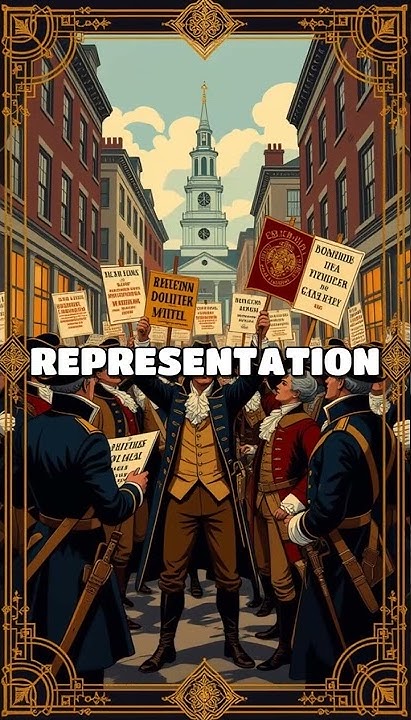
It was the “war cry” igniting America’s revolution against Great Britain. The 1764 Sugar Act, followed by the 1765 Stamp Act requiring official stamps on printed materials including newspapers, began the conflict. By the 1767 Townshend Acts—levying taxes on glass, paper, paint, and tea—the British government escalated resistance to a point where New Englanders threw a ship’s cargo of tea overboard during the infamous 1773 Boston Tea Party.
Before that, colonists petitioned the Crown and boycotted goods, but taxing their daily drink became the final straw. Instead of easing the burden after the protest, Britain responded with punitive “Intolerable Acts,” uniting Americans under a common cause. The principle of “taxation without representation” emerged from this era: citizens should not be taxed by governments in which they lack participation. Historically, colonies managed internal affairs through local assemblies while Britain controlled trade and foreign policy.
Today, that principle remains critically relevant. Americans elect representatives at federal and state levels, yet with only two exceptions, part-time property owners cannot vote in municipal elections but are forced to pay local taxes. In many cases, these out-of-state homeowners own more expensive properties than local residents—and thus bear the highest tax burdens without a voice in how their money is spent. This injustice affects all states because state legislatures constitutionally control taxation within their borders.
Some states allow non-U.S. citizens to vote locally despite being temporary residents, but even then, participation is limited to town meetings or selective elections. Vermont stands out as a prime example: it denies voting rights to American taxpaying part-time homeowners while permitting certain non-citizens—such as Green Card holders—to vote in municipal elections.
The state’s rural geography and appeal for tourists make it particularly vulnerable. A cluster of towns near five major ski areas—Stratton, Bromley, Okemo, Mt. Snow, and Magic Mountains—have overwhelming percentages of out-of-state homeowners with expensive properties who pay high property taxes but cannot vote in local governance. For instance:
– Stratton: 93% seasonal housing
– Dover and Winhall: 76% and 79% seasonal homes, respectively
– Ludlow: 68% seasonal housing
– Wilmington: 60% seasonal or occasional use
– Londonderry: 46% property owners have out-of-state mailing addresses; estimates suggest 60%+ seasonal homes
This group of towns exemplifies the broader issue: homeowners who pay the highest taxes cannot vote in the communities where their money is collected. The problem is growing as Vermont increased second-home property transfer taxes to 3.62% for 2024-2025 and considers further hikes. Proposals include new tax classifications for part-time homes that could nearly double taxes on second properties, plus annual surcharges on seasonal homes—all without granting voting rights.
Vermont’s actions create a modern “Boston Tea Party” of injustice: a deliberate refusal to allow representation while imposing burdens. This crisis extends to education, as part-time homeowners’ children often do not attend local schools funded by the very taxes they pay. And Vermont is just one state where this injustice continues to escalate.