By Paul F. deLespinasse
Monday, April 13, 2026
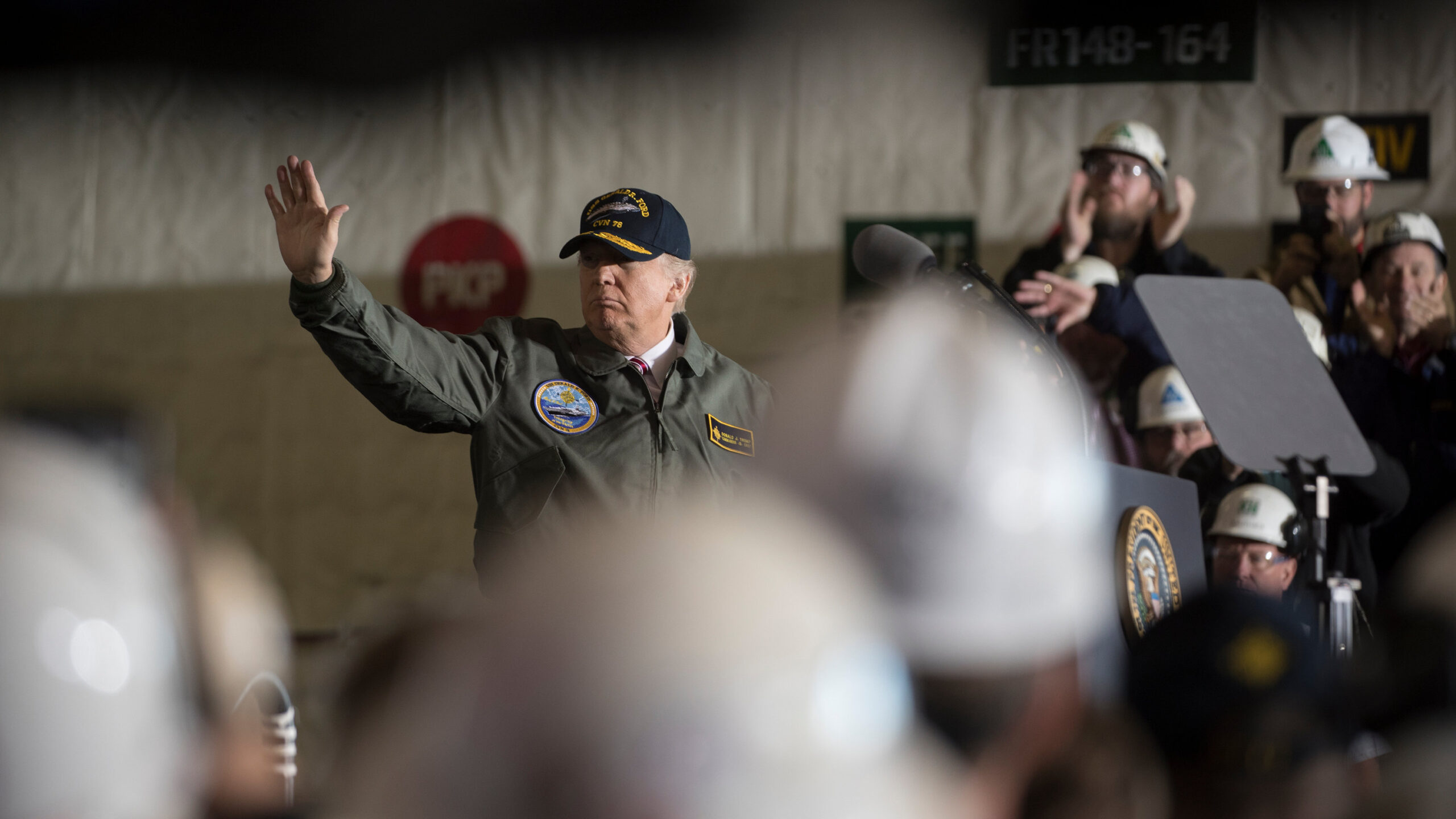
Good Friday appeared to be a boon for the Trump administration as it sought a $500 billion increase in the annual military budget—a roughly 50% jump on already inflated spending.
Trump also indicated at a private lunch that military expenditures should become a national priority, even at the expense of federal safety-net programs and other government aid. “It’s not possible for us to take care of day care, Medicaid, Medicare, all of these individual things,” he said.
Two critical flaws underpin his proposal.
First, shifting the financing of existing federal programs to state governments would not generate additional tax revenue, as both federal and state systems levy taxes on the same population. While Trump did not explicitly propose reducing federal taxes that currently fund these programs, his rhetoric suggests a desire to maintain current tax levels—potentially with further cuts for the ultra-wealthy—but eliminate funding for Medicaid and Medicare.
Federal law mandates that payroll taxes financing Medicare must be spent exclusively on Medicare. President Trump’s suggestion risks violating this principle, a move that would likely backfire politically.
States won by Republicans in 2024 are less industrialized and have lower taxable assets than Democratic-leaning states. These regions would struggle to raise sufficient revenue through higher tax rates to cover the costs of Medicaid and Medicare.
The White House swiftly removed video footage of Trump’s remarks from its website, though copies had already circulated elsewhere. Democratic candidates will likely leverage this episode in their 2026 campaigns.
Second, his approach overlooks economies of scale—a key principle in modern economic management. For instance, the federal Medicare program operates more efficiently than if states managed it individually: it reduces administrative costs and ensures consistent coverage for individuals moving across state lines.
The current Medicare structure avoids the need for beneficiaries to switch insurance when relocating—a common issue with state-level administration.
Economies of scale have driven down costs in sectors like solar panel manufacturing, where increased production has led to significant efficiencies. Trump’s proposal diverts funds from critical social programs to a military budget that has yet to undergo a standard financial audit and is already spending nearly $1 trillion annually.
Much of this money would fund expensive weapons, including aircraft and “Trump-class” battleships—systems potentially vulnerable to cheap drone technology.
Experts argue the administration should halve the Pentagon budget, focus on affordable defense solutions, and avoid unnecessary conflicts.
As Otto von Bismarck noted in the late 1800s: “Fools learn from experience. I prefer to learn from the experience of others.”
If the United States fails to draw lessons from its encounters with Iranian drones, it risks becoming far worse than foolish.
Paul F. deLespinasse is Professor Emeritus of Political Science and Computer Science at Adrian College.