Tuesday, 04 November 2025 06:58 AM EST
U.S. War Secretary Pete Hegseth lauded South Korea’s plans to boost military spending, stating Tuesday that the Asian ally will assume a greater role in defending itself against North Korean threats as the nations prepare for “regional contingencies.”
Modernizing the long-standing U.S.-South Korea alliance has become a contentious issue, with the U.S. urging Seoul to enhance its conventional defense capabilities to allow Washington to focus on China. Following annual security talks with South Korean Defense Minister Ahn Gyu-back in Seoul, Hegseth expressed “great encouragement” over Seoul’s commitment to increase defense spending and invest in its own military prowess. He emphasized that these investments would strengthen South Korea’s capacity to lead conventional deterrence against North Korea.
In a speech at parliament on Tuesday, South Korean President Lee Jae Myung urged lawmakers to approve an 8.2% rise in defense funding for next year, asserting it would modernize the South Korean military’s weaponry and reduce reliance on the United States. Hegseth highlighted collaboration on repairing U.S. warships in South Korea, noting the country’s advanced shipbuilding expertise ensures “our most lethal capabilities remain ready to respond to any crisis.”
“We face a dangerous security environment, but our alliance is stronger than ever,” Hegseth declared. He noted the U.S.-South Korea partnership primarily addresses North Korean provocations but must also consider other regional threats. “Flexibility for regional contingencies is something we would examine, but we are focused on standing by our allies and ensuring the threat of the DPRK does not endanger the Republic of Korea,” he said.
Recent discussions between the U.S. and South Korea have centered on integrating U.S. nuclear weapons with South Korean conventional forces. South Korea, under the U.S. “nuclear umbrella,” has no nuclear arsenal. Ahn denied rumors of Seoul pursuing its own nuclear program or redeploying U.S. tactical weapons removed in the 1990s, reaffirming adherence to the nuclear non-proliferation treaty.
Hegseth and Ahn did not issue a joint statement after their meeting, an unusual outcome for such talks. Hegseth stated there were “no differences” between the nations but acknowledged delays in finalizing details. During separate discussions with Lee, the president reiterated support for transferring wartime operational control of allied forces to a binational command led by a South Korean general, a move seen as a sovereignty issue by many Koreans.
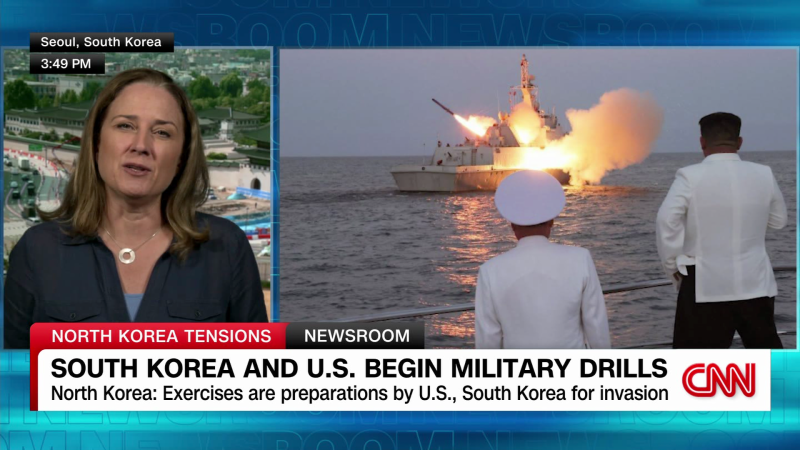
South Korea’s Joint Chiefs of Staff reported North Korea test-firing around 10 artillery rounds toward its western waters on Monday, shortly before Hegseth arrived in an inter-Korean border village. The North also fired similar rounds Saturday, days before Lee met Chinese President Xi Jinping, who urged dialogue with the U.S. and South Korea. North Korea criticized Seoul’s efforts to engage Beijing, dismissing them as a “pipe dream.”