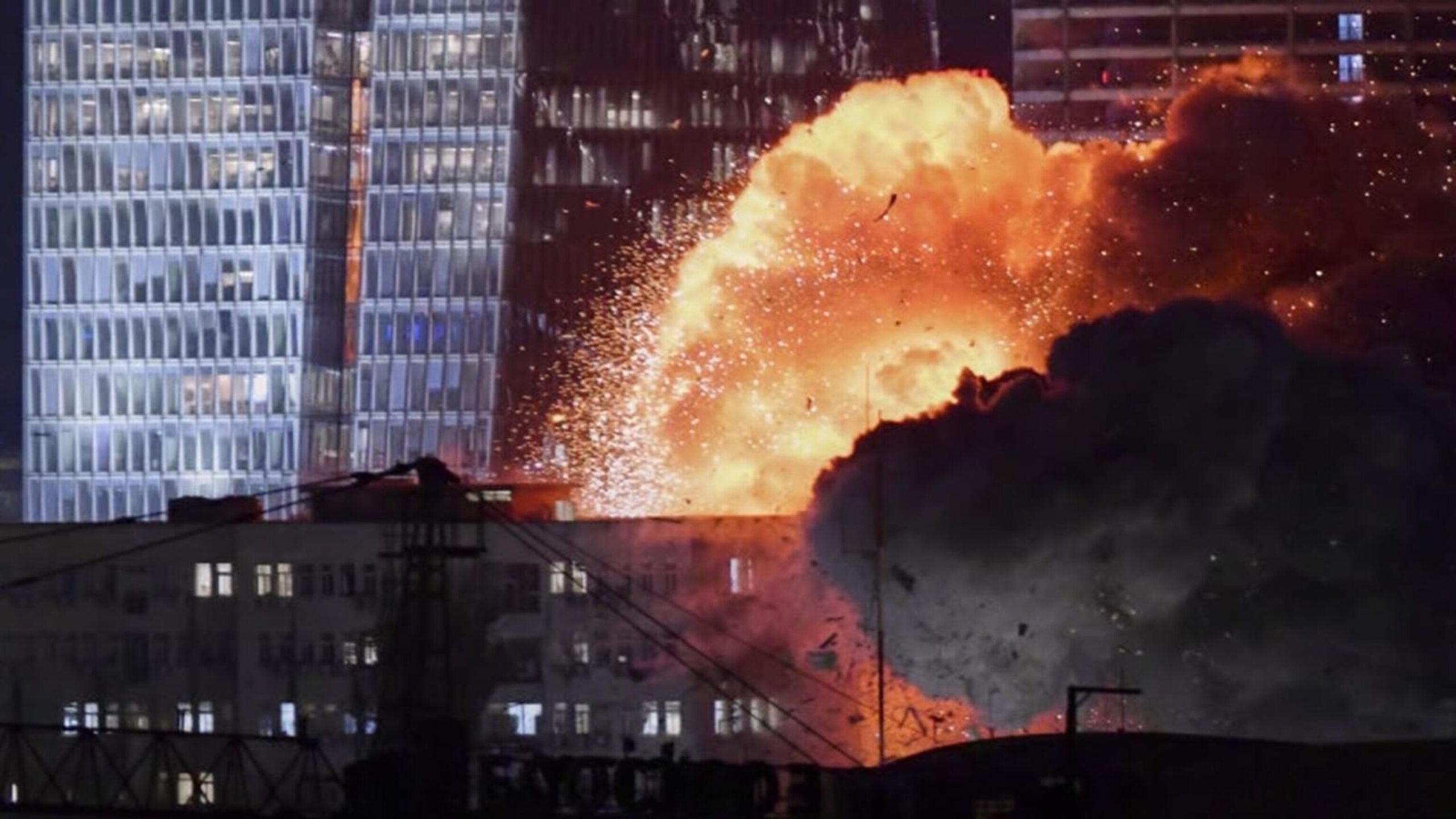
Retired U.S. Navy Capt. Brent Sadler stated that the U.S. and Israeli strikes on Iran required extensive coordination and warned that days, if not weeks, of operations could still lie ahead as Tehran weighed its response. President Donald Trump has indicated the strikes would continue through the week, and Iran’s armed forces have vowed to respond with force.
Sadler, now a senior fellow at the Heritage Foundation, noted in his recent commentary that Iran’s warning should be taken seriously, even as the regime faces setbacks. “The regime, though decapitated right now, still does have a lot of lethal weapons at its disposal, the ballistic missiles most notably,” he said.
Sadler added that military forces against Iran are performing “superbly under very pressurized conditions.” He explained, “Granted, there was a lot of planning that had to be done on this, but then again, there are a lot of dynamics on the field. You have Iranian people protesting who we do not want to harm and want to actually provide an opening for so they can take their country back.”
Fred Fleitz, a former National Security Council chief of staff and CIA analyst, highlighted extensive U.S. and Israeli intelligence penetration inside Iran following reports that Ayatollah Ali Khamenei had emerged from a bunker to meet with top officials before the strike. “Who thought there’d be a surprise attack during the day?” Fleitz remarked. “I think the Iranian government did not think that the U.S. or Israel would attack, except at night.”
Fleitz suggested this may have been Khamenei’s reasoning for holding a meeting with significant leaders at his presidential palace during the day. He added, “It is just extraordinary how Iran is totally infiltrated by Israel’s Mossad intelligence agency.” Fleitz also noted that U.S. intelligence, including the CIA, had been watching Khamenei for some time and saw an opportunity to act.
As Iran launched counterstrikes across the Middle East, including reported missile attacks targeting areas such as Dubai, Sadler characterized the response as disorganized. “It appears [to be] acts of desperation,” he said. “It’s actually very counterproductive to what the regime’s most likely next step would have been, and that is to try to rally opposition to the United States and Israel in their attack on Iran.”
Sadler further observed that widespread dissatisfaction inside Iran has made foreign intelligence infiltration easier. “Because there’s so much popular support in Iran amongst the people, getting that type of infiltration with Mossad, CIA, and others is easier because you have so many that are frustrated and fed up with this regime that’s teetering on its last days,” he said.
Fleitz noted questions remain about who could assume power if Khamenei was killed and whether the regime would fracture or escalate its crackdown. He also observed that during previous unrest, Iran has relied on outside forces. “We don’t really know how hard the Iranian government is going to fight,” Fleitz stated. “I think they’re going to fight hard. But this protest movement may be too large for it to put down.”