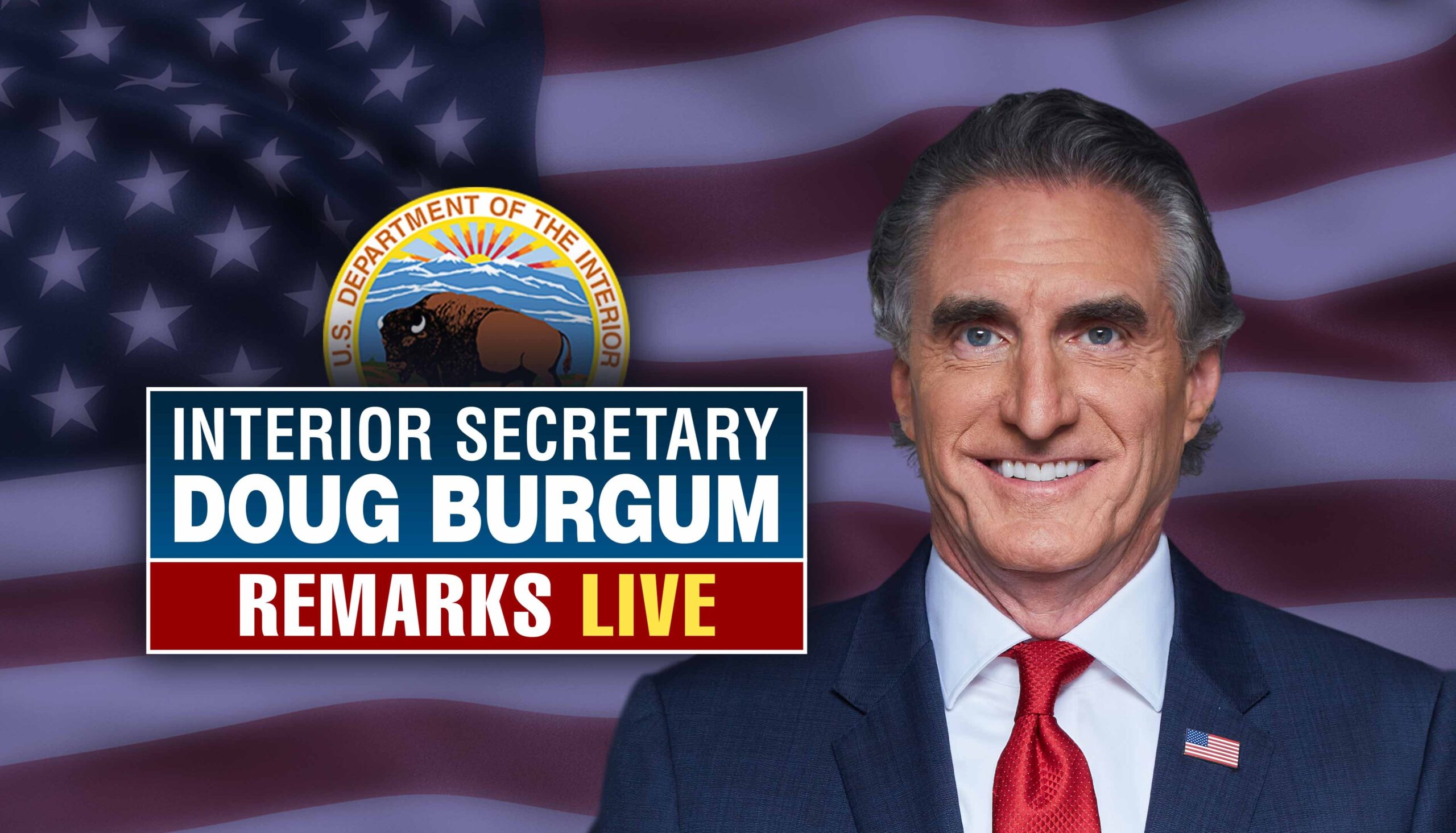
U.S. Interior Secretary Doug Burgum stated on Thursday that the sharp increase in oil prices linked to escalating tensions with Iran represents a short-term market disruption, but he expressed confidence that prices will decline once Operation Epic Fury concludes.
During a segment on “Finnerty,” Burgum highlighted President Donald Trump’s energy strategy as critical for stabilizing markets despite recent volatility.
“President Trump built his energy strategy, his strategy of energy dominance, for a moment just like this,” Burgum said. “This is all about we’re going to produce more in the United States. It’s going to make it affordable for people that are working families in America.”
Oil prices surged sharply this week as fighting intensified in the Middle East, with Brent crude — the global benchmark — briefly approaching $119 per barrel on Thursday amid fears of supply disruptions and threats to shipping routes such as the Strait of Hormuz.
This marks a dramatic increase from late February, when the conflict began. Brent crude was trading around $72 to $73 per barrel on February 28, indicating prices have jumped by more than 50% in just a few weeks.
Burgum acknowledged the immediate impact on consumers, including rising gasoline prices, but argued the current surge is temporary.
“I’m very optimistic about our economic future,” he said. “I’m very optimistic with the progress we’re making against this terror regime, that this is going to lead to long-term lower prices, and that long term is going to happen quite quickly once the conflict is over.”
Markets have been rattled by concerns that Iran could disrupt global oil flows, particularly through the Strait of Hormuz, a critical chokepoint for energy shipments. Analysts attribute much of the price spike to geopolitical risk rather than supply fundamentals alone.
Burgum also countered concerns that the conflict might extend for months or longer, which could keep energy prices elevated.
“President Trump has been clear from the beginning that what we have left is weeks, not months,” Burgum said. “The progress we’re making militarily with the precision and the power of the U.S. military will accomplish our objectives within that timeframe.”
He added that expectations for rapid outcomes have increased in recent years, citing past U.S. foreign policy successes, but maintained confidence in the current trajectory.
Beyond pricing issues, Burgum described Iran’s actions as a threat to the global economy, particularly its attempts to disrupt maritime traffic.
“Now they’re trying to take the world economy hostage by closing the strait,” he stated. “The world is not going to let that happen.”
Despite the current surge, Burgum reiterated that expanded U.S. energy production and allied cooperation would ultimately restore stability to global markets.