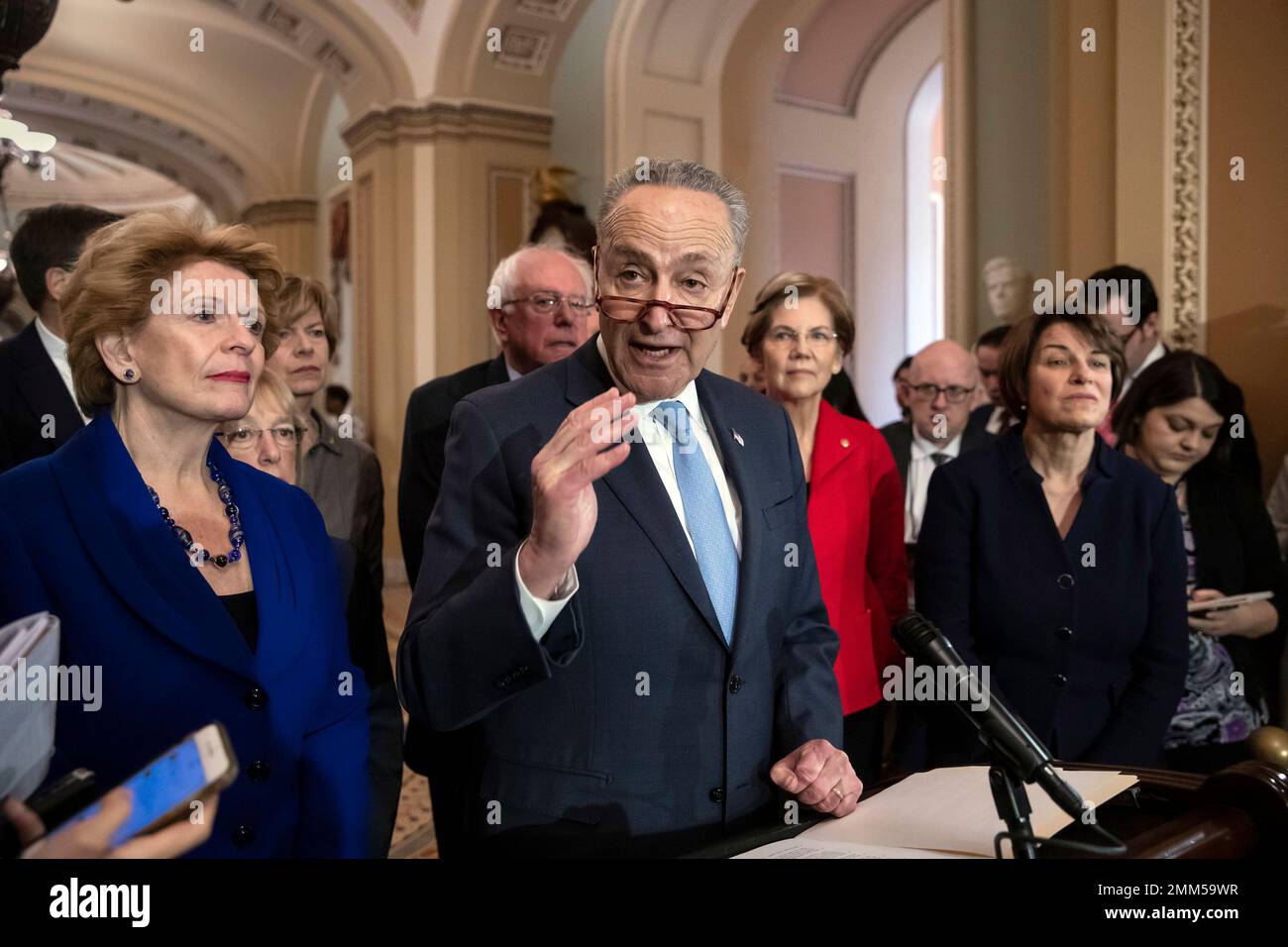
Frustration with Senate Minority Leader Chuck Schumer, D-N.Y., is driving quiet discussions among some Democratic senators, aides, and donors about whether he should step aside after the November elections, highlighting a deeper fight inside the party over strategy, candidate recruitment, and how forcefully Democrats should confront President Donald Trump.
The unease has spread through private dinners, chiefs-of-staff meetings, and donor gatherings, where Democrats have questioned Schumer’s negotiating style and his approach to the 2026 midterms.
Sen. Chris Murphy, D-Conn., expressed continued support for Schumer while pushing back on the notion that he was tallying votes to remove him. Murphy, alongside Sen. Elizabeth Warren, D-Mass., and Sen. Tina Smith, D-Minn., have voiced dissatisfaction with Schumer’s direction, particularly his perceived preference for more centrist candidates in key races.
Progressives within the Senate argue that leadership should avoid contested primaries and that outsider candidates are generating enthusiasm in parts of the party.
Schumer countered that criticism “goes with the territory” for any leader and that his “support in the caucus is deep and strong,” adding he has done “a very good job” setting up Democrats to win back the Senate in November, when Republicans hold a 53-47 majority.
The tensions reflect broader Democratic disagreements over the party’s strategy in opposition to Trump and how much risk it should take in battleground races.
Warren and Sen. Jeff Merkley, D-Ore., linked their frustration to Schumer’s handling of last year’s government shutdown and earlier spending conflicts, while some current and former Senate staff members reported feeling boxed out or misled by his approach.
Schumer’s allies maintain that such friction is inevitable for a minority leader and that he still has broad support. Sen. Brian Schatz, D-Hawaii, credited Schumer with helping assemble a strong Senate class and argued that discontent is part of the job.
Donor unease has compounded the pressure, with major Democratic donors at recent gatherings pressing senators and aides for a plan to replace Schumer. The strain was further highlighted by fundraising concerns at Senate Majority PAC, which began 2026 with $36 million on hand and $12.4 million in debt — compared to $100 million and no debt for its Republican counterpart.
Possible successors discussed privately include Sen. Chris Van Hollen, D-Md., though a person familiar with the matter said he is not seeking the role, and Sen. Catherine Cortez Masto, D-Nev., whose spokeswoman confirmed she is not currently interested in leadership. Sen. Brian Schatz, D-Hawaii, is seen as Schumer’s preferred successor once he steps aside.
Some Democrats advocate for Schumer to commit to retiring when he next faces reelection in 2028, arguing a generational handoff would strengthen the party’s message. Others believe any move against him should wait until after the November elections, when Senate Democrats will choose their leadership through a secret ballot.