By Jared Whitley
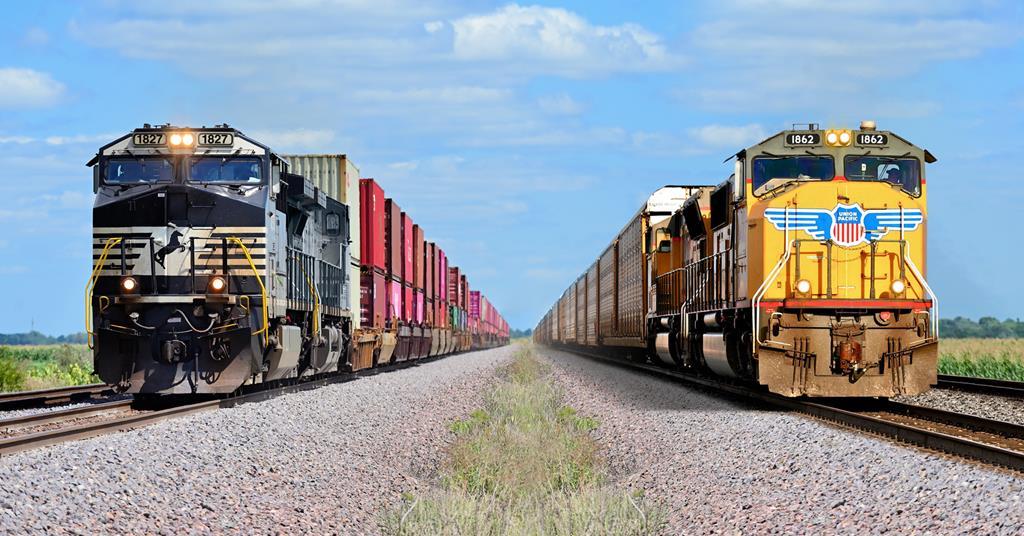
The proposed merger between Union Pacific and Norfolk Southern Railway has ignited fierce debate over its implications for safety, competition, and public welfare. While the game of Monopoly illustrates how consolidating assets can yield significant power, real-world railway mergers carry far graver consequences. The Surface Transportation Board faces a critical decision: whether this consolidation aligns with the public interest or prioritizes private gain.
A merged Union Pacific-Norfolk Southern entity would control over 40% of U.S. rail freight and employ nearly half of railroad workers under collective bargaining agreements. Such dominance raises immediate red flags, particularly given the safety track records of both companies. The Federal Railroad Administration (FRA) levied nearly $8 million in safety fines against Union Pacific in 2024 alone—far exceeding penalties imposed on Norfolk Southern. Both railroads have consistently ranked among the top violators of safety regulations over the past decade.
The merger’s risks are compounded by recent controversies. Following the East Palestine, Ohio derailment—a disaster linked to Norfolk Southern—the National Transportation Safety Board (NTSB) condemned the company for providing incomplete and misleading information during its investigation. This negligence led to hazardous emergency protocols, including the controversial “vent and burn” of toxic materials. The NTSB chair later labeled Norfolk Southern’s actions “unconscionable.”
Critics argue that the merger’s touted benefits, such as a seamless national rail network, could be achieved through collaboration rather than consolidation. However, railroad executives have historically resisted partnerships, instead pursuing aggressive strategies to boost stock prices. Activist investors stand to gain billions from this deal, raising questions about whose interests truly drive the proposal.
Safety remains a central concern. The FRA’s safety audit of Union Pacific was halted after employees allegedly withheld critical information due to fear of retaliation. This lack of transparency underscores systemic issues within the industry. As the STB evaluates the merger, it must weigh whether the public interest justifies risking lives and communities for corporate profit.
The game of Monopoly was designed as a cautionary tale against monopolies. Now, as real-world railroads seek unprecedented power, the stakes could not be higher.