By Debra J. Saunders
Friday, 03 October 2025 12:52 PM EDT
The brutal Hamas-led attacks in Israel on Oct. 7, 2023, left some 1,200 dead. Two years later, Hamas continues to imprison hostages, refuse to release the bodies of dead detainees, and gain increasing recognition for a Palestinian state. Terrorists documented their brutality for the world to see.
At more than thirty locations, over 3,000 Hamas fighters, along with numerous Palestinian civilians, breached the fence between Israel and Gaza. Hamas gunmen systematically executed civilians, throwing grenades into homes and shooting children in front of parents. In some cases, people were burned alive as they suffocated from smoke. Those not killed were kidnapped and taken hostage into Gaza.
Pro-Palestinian students at Harvard blamed the Israeli regime for all violence, a stance once labeled as victim-blaming. Progressive activists turned university quads into camping grounds, occupying classrooms and sidelining scholarship. Jewish students faced antisemitism at institutions they expected to protect them. College administrators became entangled in the controversy, leading to the resignations of three university presidents—Harvard’s Claudine Gay, Columbia University’s Minouche Shafik, and the University of Pennsylvania’s Liz Magill.
The international community has shifted focus from condemning Hamas’ actions to criticizing Israel for defending itself. During the United Nations General Assembly, delegates walked out during Israeli Prime Minister Benjamin Netanyahu’s address, as he noted, “Much of the world no longer remembers Oct. 7.” Even allies like Italian Prime Minister Giorgia Meloni questioned Israel’s proportionality in response.
Foundation for Defense of Democracies Executive Director Jonathan Schanzer observed that international pressure to end conflicts often targets non-initiating actors. A New York Times/Siena poll revealed a shift in American sentiment: from nearly half sympathizing with Israelis in 2023, now 34% support Israelis and 35% Palestinians.
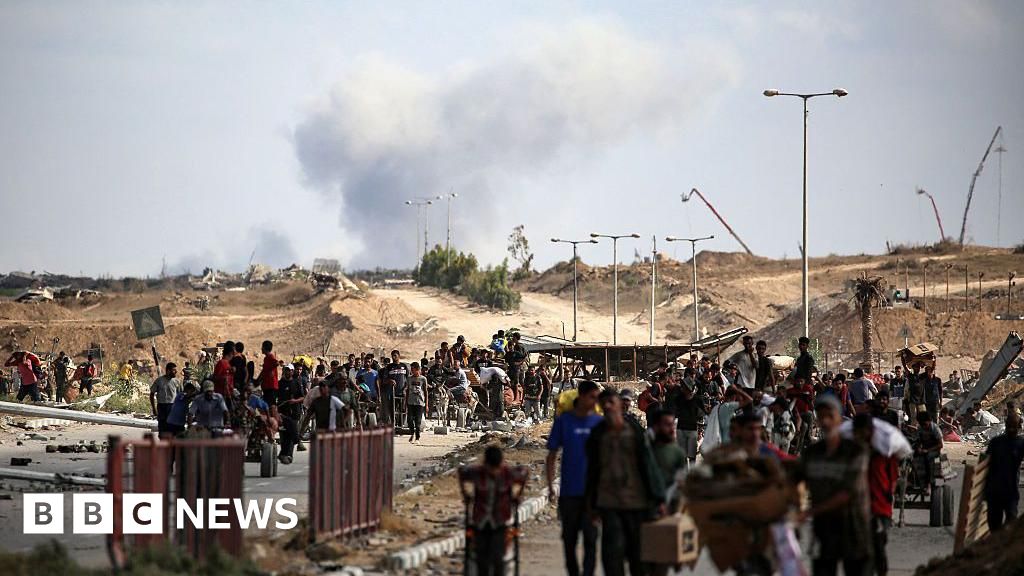
Palestinian deaths in the Israel-Hamas war surpassed 65,000 by September, per Hamas-run Gaza Health Ministry data, which does not differentiate between citizens and combatants. Senior Hamas member Ghazi Hamad claimed the Oct. 7 attacks contributed to international recognition of a Palestinian state. Brian Katulis, a Middle East Institute fellow, stated the cost in Palestinian lives was deemed acceptable by Hamas leadership.
President Donald Trump proposed a 20-point plan to end the Gaza war, including immediate hostage release, amnesty for disarming Hamas members, and freedom for detained Gazans. The plan envisions Gaza’s redevelopment without Hamas governance and a global “Board of Peace” led by former British Prime Minister Tony Blair and Trump. However, Hamas has not yet signed on. If rejected, Trump pledged full support for Israel to act as needed.
Trump also arranged a call with Israeli Prime Minister Netanyahu to apologize over an airstrike that killed a Qatari security officer. Qatar, along with Pakistan, Jordan, the UAE, Indonesia, Turkey, Saudi Arabia, and Egypt, endorsed the plan. Critics like Katulis dismissed it as a “fig leaf” for avoiding a two-state solution without commitment from Israeli settlers.
The 20-point plan could return hostages within 72 hours of Israel’s public acceptance, though Amnesty International reported only 47 remain, with about 20 believed alive. Fox News’ Trey Yingst highlighted the offer to keep Palestinians in Gaza and rebuild homes under a new government. However, this requires Hamas to disarm and release hostages.