The initial wave of attacks on Iran, coupled with the reported elimination of late Ayatollah Ali Khamenei and several top military and intelligence commanders, initially suggested to many that the regime would collapse swiftly.
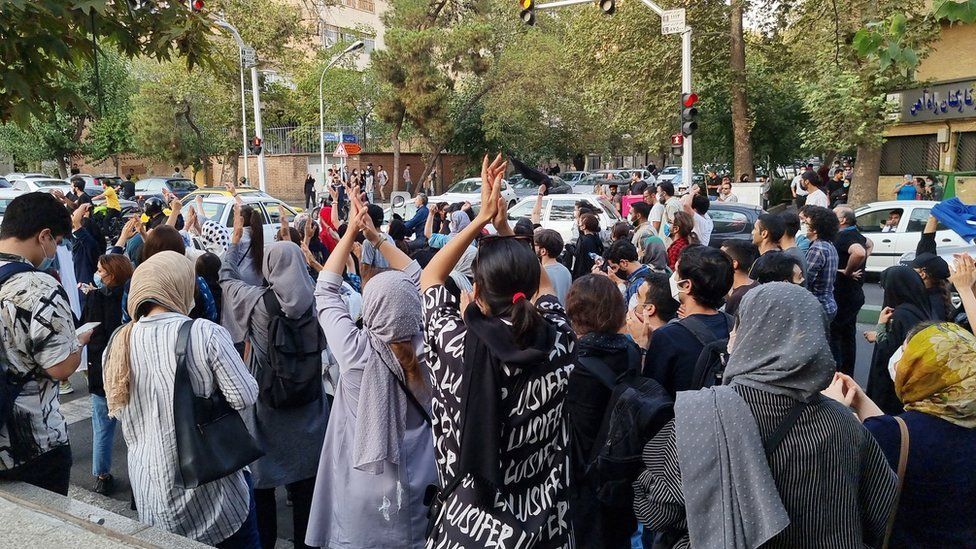
However, the real turning point in Iran is not coming from foreign strikes but from millions of Iranians who have repeatedly risen against the regime, determined to reshape their political system.
According to U.S. intelligence assessments from late March, despite recent conflicts with Israel and the United States, the Iranian government remains stable, with its leadership structure intact. Recent uprisings—particularly in January—have demonstrated Iranians’ resolve to change their country’s system. Even after a 12-day war with Israel, the elimination of key regime figures, and significant weakening of military power, the regime has not collapsed. This aligns precisely with what the Iranian Resistance has long argued: foreign military action alone cannot topple this government.
The ongoing conflict has become an obstacle to widespread popular uprisings. When a nation faces continuous bombardment, it is unrealistic for citizens focused on survival to join large-scale protests. Simultaneously, the regime has intensified urban militarization. Iranian state media reports that security patrols in streets have tripled. Beyond regular police and the Islamic Revolutionary Guard Corps (IRGC), paramilitary groups such as the Fatemiyoun brigades (Afghan fighters affiliated with the IRGC) and Zeynabiyoun brigades (Pakistani fighters working for the regime) are deployed to reinforce repression. These groups patrol streets at night, creating an atmosphere of intimidation designed to prevent any social protest.
In this context, Ahmad-Reza Radan, commander of Iran’s police forces, declared: “If someone takes to the streets at the behest of the enemy, we will not see them as protesters. We will see them as enemies, and we will treat them accordingly.” He added that “All our forces have their fingers on the trigger, ready to defend the revolution and support the people and the homeland.” Similarly, Brigadier General Salar Abnoush, a member of the regime’s parliamentary security committee, warned on March 5 that anyone protesting would be shot.
An organized force within Iran is the Resistance Units established by the People’s Mojahedin Organization of Iran (PMOI/MEK) since 2016. This network has taken root across many provinces and operates as a catalyst for change. In the past year alone, thousands of anti-repression actions have been reported. During January’s uprisings, these units played a key role in organizing nationwide protests. More than 2,000 members were reportedly missing during that period, with unclear numbers arrested or killed—over two months have passed without reliable information about their fate.
A recent turning point occurred on February 23 when Liberation Army units attacked Ali Khamenei’s residence, later destroyed under heavy bombing on February 28. Of the 250 fighters involved in the operation, 82 were killed or arrested. The MEK published the names and identities of these individuals for international human rights organizations.
The regime has made every effort to conceal this incident.
The appointment of Khamenei’s son as the new Supreme Leader highlights the regime’s deep political deadlock. A system claiming to be a “republic” has evolved into a hereditary power structure. After decades with his father overseeing internal repression and regional crises, he issued calls for closing the Strait of Hormuz and opening new fronts of war. Yet a regime that reached its end under Ali Khamenei cannot be saved by replacing him with a weaker version of himself. The elevation of his son to supreme leader is an admission that the regime has no viable path to survival.