By Mark Swanson | Wednesday, 05 November 2025 12:55 PM EST
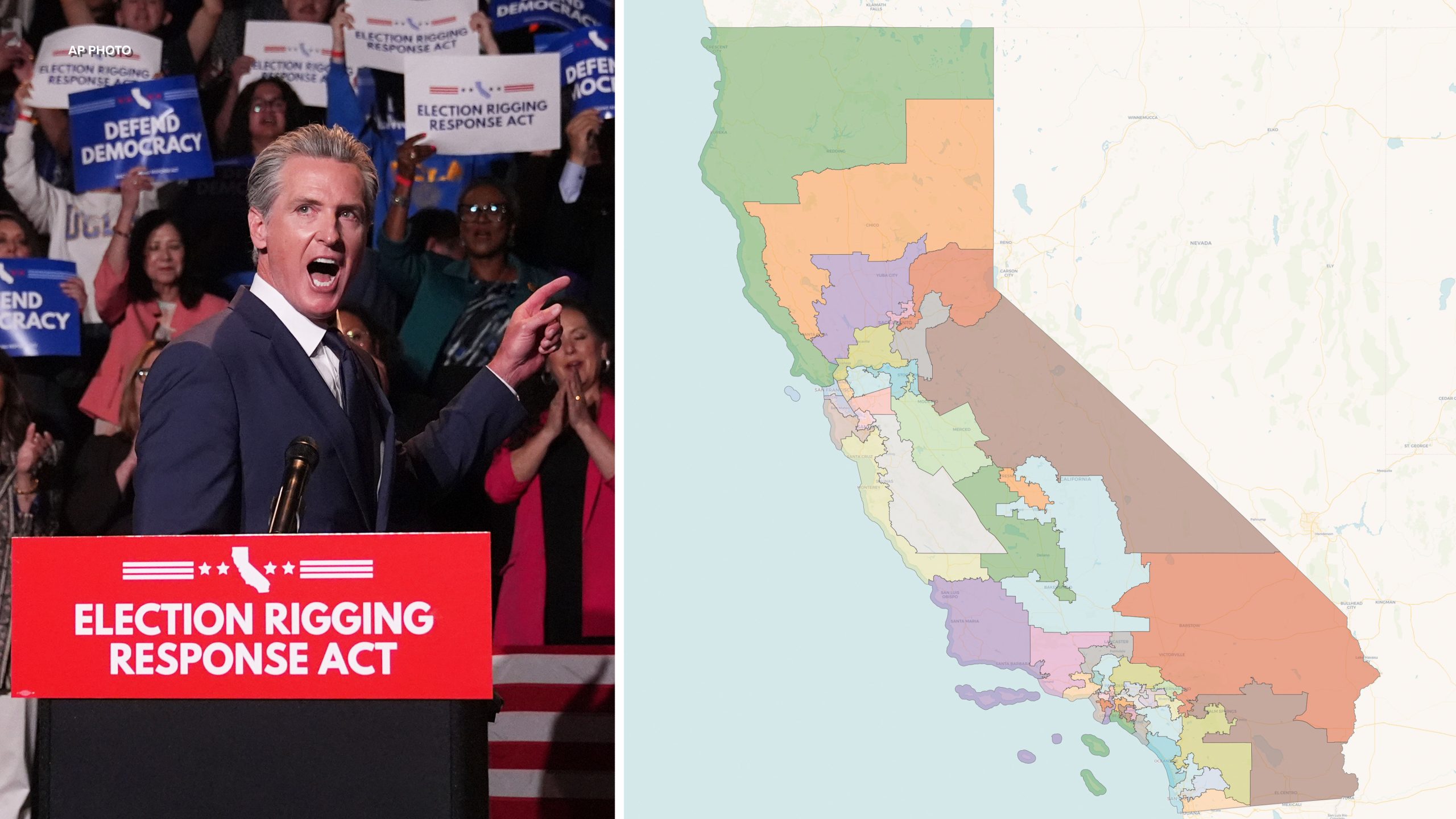
California Republicans filed a federal lawsuit Wednesday to block the state’s newly approved congressional maps, adopted by voters under Proposition 50. The legal action was submitted to the U.S. District Court for the Central District of California. The complaint argues that the maps are unconstitutional due to their reliance on race in district drawing and requests the court prevent them from taking effect in upcoming elections.
The suit follows the passage of Proposition 50, a measure backed by Gov. Gavin Newsom that reduces the role of an independent redistricting commission and grants the Democrat-controlled Legislature authority to redraw congressional districts. The maps are designed to shift up to five House seats into Democratic hands next year, countering GOP-led redistricting efforts in states like Texas.
GOP attorneys contest the plan on multiple grounds, claiming the Legislature acted without proper constitutional authority and that race was used without sufficient justification to favor Hispanic voters. They also reference the Louisiana v. Callais case before the U.S. Supreme Court, which could limit how race is applied in map-making under the Voting Rights Act.
Democrats expressed confidence that the new maps will withstand legal scrutiny. Independent analysis indicated the number of majority-minority districts in the plan is similar to the prior map drawn by the independent commission, suggesting limited legal vulnerability.
Republicans face significant challenges, as the suit joins at least 15 redistricting-related legal actions across the country since July. Observers note courts typically avoid blocking maps once enacted, especially before major elections. Legal experts emphasized that a properly adopted map would likely remain in effect despite ongoing legal uncertainty.
“If there’s a properly adopted map and some uncertainty over the law, the map will stay in effect, and plaintiffs’ cases will be deferred until legal standards are resolved,” said Nicholas Stephanopoulos, a Harvard law professor.