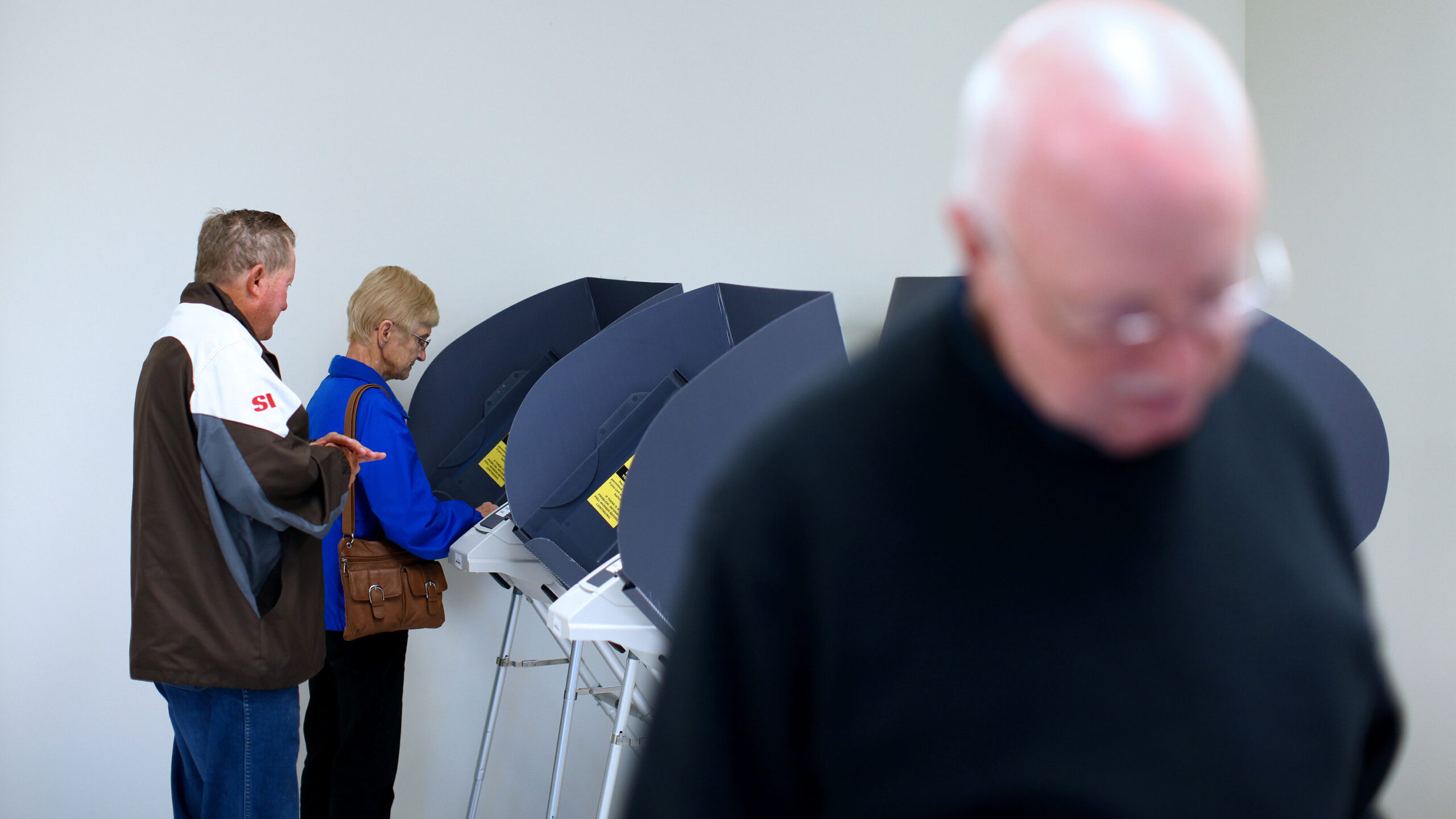
The Supreme Court’s upcoming ruling in Watson v. Republican National Committee could end early voting and post-Election Day mail ballot counting, threatening the electoral process for millions of voters.
During Monday’s hearing, justices grappled with a Mississippi law that allows officials to count ballots postmarked by Election Day that arrive up to five days later. The case has potential implications for 13 states and the District of Columbia, which have grace periods for mail-in ballots, as well as 15 additional states with extended deadlines for military and overseas voters.
The Justice Department argued in favor of the Republican National Committee’s position on the matter.
Solicitor General John Sauer stated that early voting remains acceptable but emphasized that ballot boxes must close on Election Day: “There could be a process where ballots are being received earlier, but that ballot box has to close on Election Day.”
Chief Justice John Roberts criticized Sauer for making an arbitrary distinction between early voting and late arrivals, saying, “I’m not sure I understand how that point is responsive to the point that if the Election Day is the voting and taking that it has to be that day.” He added, “Maybe you’re not saying anything other than, well, that’s different.”
RNC lawyer Paul Clement argued that lawmakers who passed the Election Day law in 1845 would have found it “unthinkable” to count ballots arriving after Election Day.
Justice Amy Coney Barrett challenged this perspective: “Isn’t that true of early voting, too?” She added, “Why is that permissible? If we’re just going to say historically it just needs to look like it always looked, how come those features fall out?”
Justice Samuel Alito warned that the current system has effectively eliminated Election Day, stating, “We have election month or we have election months.” He noted that early voting can start a month before an election and ballots may be received up to a month after. “Some of the briefs have argued that confidence in election outcomes can be seriously undermined if the apparent outcome on the day after polls close is radically flipped by the acceptance later of a big stash of ballots.”
The Supreme Court is expected to issue its ruling by late June, which would govern ballot counting for the 2026 midterm elections.
RNC lawyer Clement remarked that “there’s plenty of time” for states to adjust.
Last year, President Donald Trump signed an executive order requiring votes to be “cast and received” by Election Day. However, this order has been blocked in pending court challenges.