By James Morley III | Thursday, 19 March 2026 04:42 PM EDT
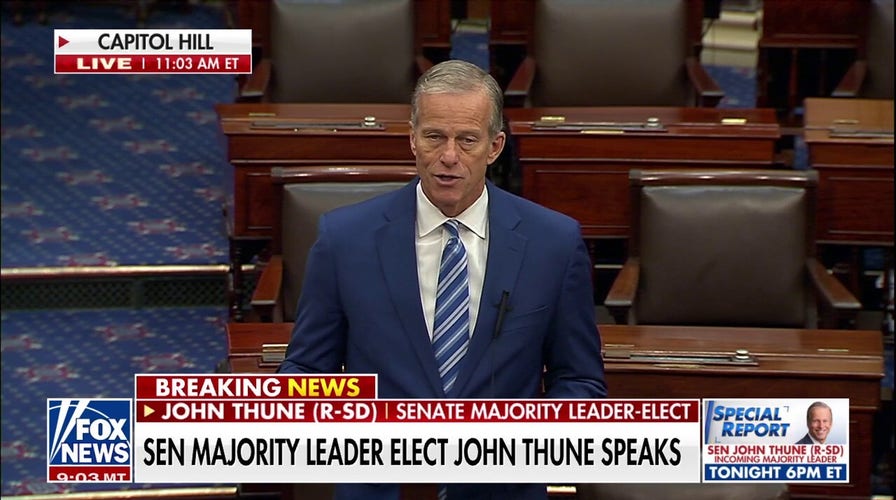
Senate Majority Leader John Thune, R-S.D., stated Thursday that any U.S. decision to withdraw from NATO would necessitate approval by Congress, directly challenging President Donald Trump’s recent assertion of unilateral authority.
In an exclusive interview with the Washington Examiner, Thune emphasized Congress’s pivotal role in such a move, noting, “I don’t think you can make that kind of a decision unilaterally.” He further added that lawmakers would “want to be heard from” on matters of this magnitude.
The remarks follow Trump’s recent comments expressing disappointment in NATO and suggesting the U.S. withdrawal from the alliance is “certainly something we should think about.”
Trump has maintained he holds the authority to withdraw without congressional consent, despite a 2023 law requiring either a two-thirds Senate vote or separate legislation for such an action.
Thune acknowledged Trump’s criticism that the United States has long borne a disproportionate share of the defense burden, though he praised the president for pressuring NATO allies to increase military spending—a longstanding demand that requires allies to meet at least 2% of GDP on defense.
Trump has repeatedly used this benchmark to criticize European partners, warning during his presidency and after that U.S. commitments might be reevaluated if countries fail to meet spending targets. His administration’s efforts have prompted increased defense outlays in several NATO nations, though compliance remains inconsistent.
Recent tensions over security in the Strait of Hormuz—a critical oil transit route carrying approximately 20% of global shipments—have intensified. After Iran blocked the passage following U.S. military strikes, Trump publicly expressed frustration that NATO allies were not contributing more to maritime operations.
The president also cited ongoing U.S. financial support for Ukraine’s conflict as evidence of an “imbalanced” relationship with allies, labeling it a “one-way street,” despite Ukraine’s non-NATO status and significant contributions from European nations.
Thune’s statements highlight growing Republican Party divisions over NATO withdrawal. Representative Don Bacon, R-Neb., warned earlier this week that such a move could trigger a “civil war” within GOP ranks, noting many Republicans view the alliance as essential for countering Russian and Chinese threats.
Thune’s position underscores the deepening rift: while some Republicans support Trump’s push for greater burden-sharing, institutional resistance in Congress remains strong against abandoning the alliance entirely.